

In early recovery, the hardest part isn’t always cravings—it’s the loneliness. You’re doing everything right. You’ve stopped drinking, maybe you’ve started treatment, and the chaos is starting to fade. But in that quiet, something else rises: the ache of isolation. You might wonder, Is it always going to feel like this?
At Lion Heart Behavioral Health, we work with people every day who ask the same thing. And the truth is: no, it won’t always feel this way. But early sobriety is often the loneliest part—and that’s exactly why community is key.
Why Is Community So Important in Alcohol Addiction Treatment?
Because addiction isolates—and recovery reconnects.
Alcohol addiction isn’t just about the drinking. It’s about shame. Hiding. Feeling misunderstood. Many people who seek help describe a double life: showing up for work, family, or friends while quietly falling apart inside.
Community is the antidote to that secrecy.
In recovery, being part of a community means:
- You don’t have to carry your pain alone
- You get to be honest without being judged
- You learn how to trust again—yourself and others
Whether it’s a support group, therapy cohort, or just one safe person, connection helps rebuild what addiction tried to destroy.
What If I Don’t Feel Like I Belong?
That’s more normal than you think.
A lot of people enter treatment or peer support spaces feeling like outsiders. Maybe you think:
- “I wasn’t that bad.”
- “Everyone else here seems to get it—but I don’t.”
- “I don’t want to talk in a group. That’s not me.”
Here’s the thing: belonging doesn’t come first—showing up does.
You don’t have to feel ready. You don’t have to have the right words. You just have to come as you are. And slowly, if the space is right, it will start to feel like yours.
Can I Recover Without Community?
It’s possible—but a lot harder.
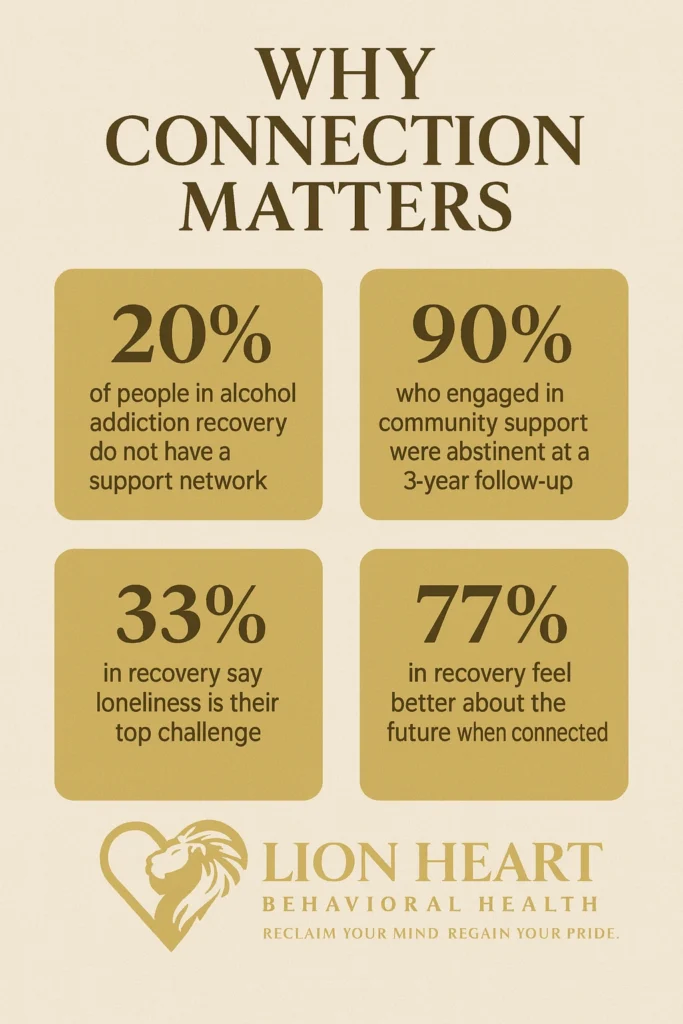
Some people try to white-knuckle sobriety on their own. Maybe they’ve had bad experiences with groups in the past, or they don’t want to burden anyone. But research consistently shows that people in recovery who have strong social support are more likely to:
- Stay sober longer
- Return to recovery faster if they slip
- Feel more confident and hopeful about the future
Why? Because community keeps you connected to life.
It reminds you that you’re not just quitting alcohol—you’re building something better. And you don’t have to do it alone.
What Does “Community” Actually Look Like in Treatment?
It doesn’t mean one thing.
At Lion Heart, we help you explore and define what community looks like for you. It might be:
- Group therapy where you find people who say the things you were too scared to admit
- Peer support from someone just a few steps ahead of you
- Staff relationships with counselors and clinicians who treat you like a whole person, not a case file
- Local recovery networks that let you stay connected after treatment
Some people find community quickly. For others, it builds slowly—but we’ll help you find your fit.
I’m Lonely Now. What Can I Do Tonight?
Start with something small.
Loneliness doesn’t mean you’re failing—it means you’re healing. You’ve put space between yourself and alcohol. Now it’s time to gently fill that space with something real.
Here are a few tiny steps you can take:
- Text someone who feels safe, even if you just say: “Hey, thinking of you.”
- Read a story from someone in recovery—blogs, books, forums, anything that reminds you you’re not alone.
- If you’re in Massachusetts, explore treatment near New Bedford or Raynham—even just reaching out can help.
You don’t need to fix your life tonight. You just need to survive tonight—and that’s enough.
But I’m Still Struggling to Connect. What’s Wrong With Me?
Nothing. Really.
Early recovery is full of contradictions. You might feel more emotionally awake than ever—and also totally disconnected. That’s not failure. That’s transition.
Your brain and body are adjusting. You’re figuring out who you are without alcohol. You’re re-learning how to be around people, how to trust, how to speak from a place that isn’t numb or defensive.
Be patient with yourself.
Belonging doesn’t come with a deadline. The right people will meet you where you are.
FAQ: Community & Alcohol Addiction Treatment
Q: I’m an introvert. Does community still matter for me?
Yes. Community doesn’t have to mean being the loudest person in the room or sharing everything. For many introverts, even one consistent relationship—like a therapist or peer mentor—can offer powerful support.
What if I’ve been burned by people in the past?
Many people in recovery have experienced betrayal, abandonment, or emotional harm. That’s why safe, trauma-informed community spaces—like those we offer at Lion Heart—are so important. You deserve to heal at your own pace.
Can I build a sober community outside of treatment?
Absolutely. Treatment is a great place to start, but long-term recovery often involves:
- Local peer groups (like AA, SMART Recovery, or Refuge Recovery)
- Online support forums
- Sober social meetups and events
We’ll help you explore options in Raynham, Bristol County, and beyond.
What if I relapse—will my community reject me?
No. Real recovery community knows that relapse isn’t failure—it’s part of some people’s process. At Lion Heart, we believe in second chances, open doors, and welcoming you back without shame.
How can I tell if a treatment center really values community?
Look for programs that:
- Offer group therapy, not just individual sessions
- Include peer support or alumni networks
- Focus on connection, not just compliance
- Treat you like a person, not a checklist
At Lion Heart, community is at the heart of how we heal. It’s not optional—it’s built into everything we do.
📞 You Deserve to Be Seen—Let’s Start There
Loneliness in early sobriety doesn’t mean you’re doing it wrong. It means you’re healing. It means your heart is making space for something real.
If you’re seeking alcohol addiction treatment in Raynham, MA, or wondering if you’re ready to talk, we’re here. Call us at (774) 238-5533 or visit our alcohol treatment page to learn more. We’ll walk with you—honestly, gently, and together.