

I didn’t wake up one day and lose everything.
There wasn’t a moment where it all collapsed or some obvious breaking point that made it clear.
If anything, it was the opposite.
It came back quietly. Slowly. Almost politely.
And that’s what made it so easy to miss.
If you’ve been through this before—if you’ve had time, done the work, built something stable—you might know exactly what I mean.
That subtle shift. That feeling you can’t quite name yet.
If you’re starting to notice it, even just a little, you can explore anxiety support options without committing to anything right away.
It Didn’t Feel Like Relapse at First
That word felt too big for what was happening.
Relapse sounded like chaos. Like losing control. Like something obvious.
This wasn’t that.
This was:
- Staying up a little later because my mind wouldn’t shut off
- Replaying conversations again
- Feeling that familiar tightness creeping back into my chest
I told myself it was stress.
That it would pass.
That I just needed a few good nights of sleep.
But deep down, I think I knew.
I Started Managing Instead of Living Again
There’s a difference. And if you’ve been here before, you can feel it.
At first, I didn’t notice how much of my energy was going toward managing everything.
Managing my thoughts.
Managing how I showed up.
Managing what I let people see.
I was still functioning. Still doing what I needed to do.
But it felt like I was holding everything together with tension.
Like if I relaxed even a little, something would slip.
That’s not living.
That’s maintenance.
The Old Patterns Didn’t Come Back Loudly
That’s what threw me off.
I expected anxiety to come back the same way it had before.
Loud. Overwhelming. Obvious.
Instead, it was quieter this time.
More constant.
Less panic, more pressure.
Like background noise that never turned off.
And because it wasn’t as intense, I minimized it.
Told myself:
“This isn’t that bad.”
“I’ve handled worse.”
But “not as bad” still wasn’t okay.
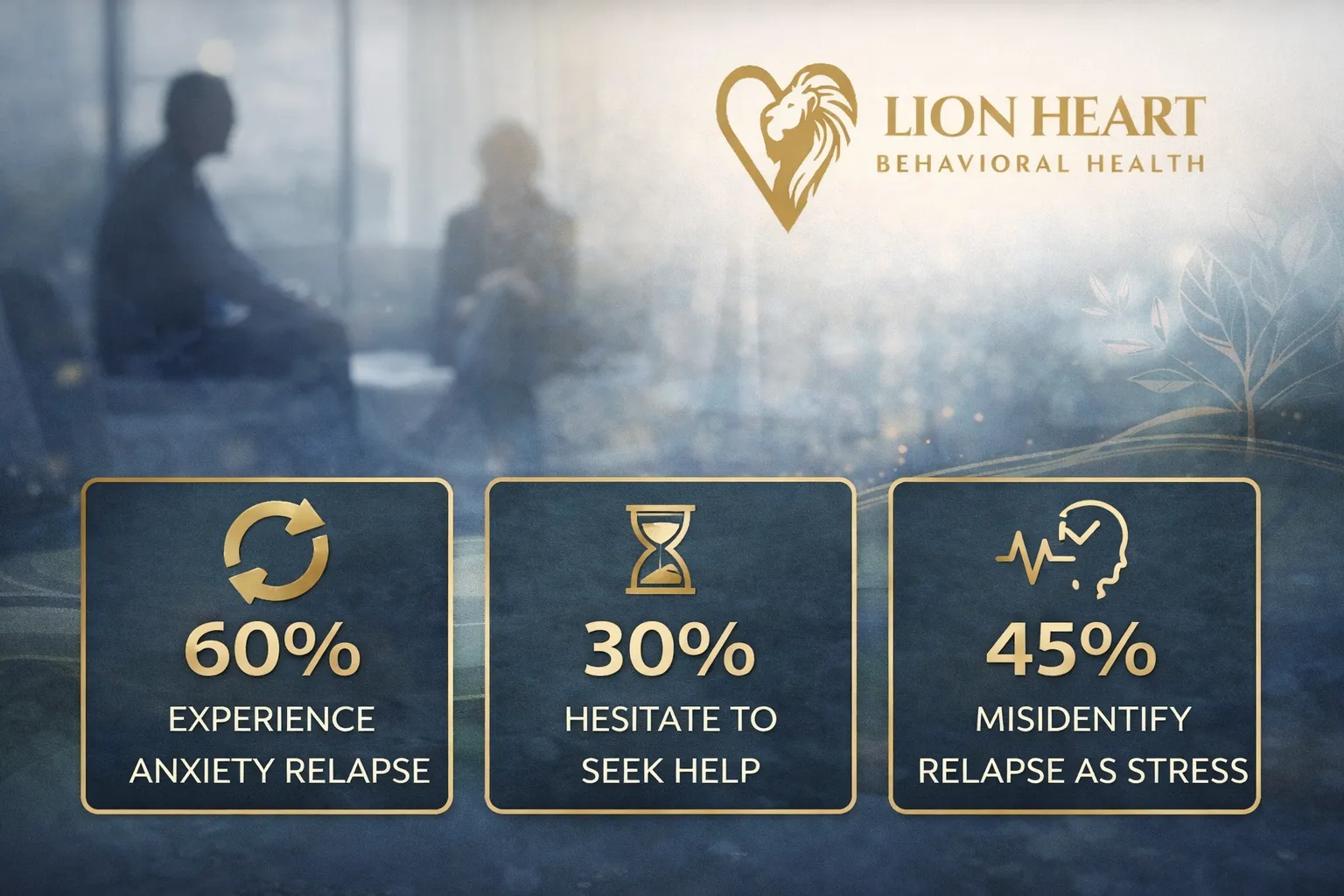
I Kept Thinking I Could Handle It Alone
This part is hard to admit.
Because you want to believe everything you learned will be enough.
And a lot of it is.
But not always in the way you expect.
I used the tools I had. I really did.
But instead of using them to support myself, I started using them to avoid asking for more help.
There’s a difference between coping and isolating.
I didn’t see it at first.
The Shift From Awareness to Avoidance Is Subtle
At some point, something changes.
You stop checking in with yourself honestly.
You start pushing things aside.
You avoid certain thoughts. Certain conversations. Certain truths.
And it doesn’t feel like avoidance.
It feels like control.
Like you’re staying ahead of it.
But really, you’re just not looking directly at it anymore.
The Moment I Realized Something Was Off Again
It wasn’t dramatic.
I wish it had been.
It would have been easier to respond to.
Instead, it was quiet.
I remember sitting alone, nothing particularly wrong happening, and still feeling… tight.
Restless.
Like my body was bracing for something that wasn’t there.
That’s when it hit me.
I wasn’t okay again.
Not in the same way.
But enough that it mattered.
Admitting It Felt Like Failure
This part hurt more than the anxiety itself.
Because I thought I was past this.
I thought I had done enough.
I thought I wouldn’t have to come back to this place again.
And saying “I need help again” felt like undoing everything.
Like I had lost ground.
Like I had let myself down.
But none of that was actually true.
It just felt true in the moment.
You Don’t Lose What You’ve Learned
This is something I had to relearn.
Nothing I had done before was wasted.
The awareness was still there.
The insight was still there.
The ability to recognize what was happening—that was still there too.
That’s why I noticed it.
That’s why I’m even able to say this now.
You don’t go backward.
You move through different versions of the same work.
Anxiety Can Come Back Smarter
That’s the part no one really talks about.
It adapts.
It doesn’t always show up the same way twice.
This time, it didn’t overwhelm me.
It blended into my life.
Made itself look normal.
Made me question whether it was even a problem.
That’s why it stayed longer than it should have.
I Didn’t Need to Hit Bottom—I Just Needed to Be Honest
This changed everything.
I kept waiting for a clear sign.
Something that would justify getting help again.
Something that would make it obvious.
But that moment never came.
What came instead was a quieter realization:
“I don’t feel like myself anymore.”
That was enough.
It had to be.
Going Back Felt Different Than the First Time
The first time, everything was unfamiliar.
There was fear of the unknown.
This time, it was different.
Still hard. Still uncomfortable.
But not unfamiliar.
There was a part of me that knew what it meant to be supported.
That remembered what it felt like to not carry everything alone.
That made it easier to take the step I had been avoiding.
This is where something like an Anxiety Therapy Program can come back into your life—not as a reset, but as a continuation.
There’s No Shame in Needing Support Again
I know how easy it is to feel like there should be.
Like you were supposed to “get it right” the first time.
Like coming back means you didn’t do enough.
But that’s not how this works.
Healing isn’t a straight line.
It’s more like a spiral.
You come back to similar places—but with more awareness each time.
The Second Time Taught Me Something Different
The first time, I was trying to get better.
The second time, I was trying to understand myself better.
That shift matters.
I stopped fighting everything I felt.
Stopped trying to eliminate every anxious thought.
Instead, I focused on:
- Recognizing patterns earlier
- Asking for help sooner
- Not waiting until it became overwhelming
That changed how I moved through it.
If You Feel It Creeping Back, Trust That
You don’t need proof.
You don’t need a crisis.
You don’t need anyone else to confirm it.
If something feels familiar in a way that makes you uneasy—that’s worth paying attention to.
I’ve seen people in New Bedford, Massachusetts ignore that feeling for months, hoping it would pass.
It rarely does on its own.
You’re Allowed to Respond Before It Gets Worse
This might be the most important part.
You don’t have to wait.
You don’t have to let it build.
You don’t have to prove anything.
You can step in earlier this time.
You can choose support before it becomes necessary.
That’s not weakness.
That’s awareness.
Coming Back Isn’t Starting Over
It just feels like it.
But it’s not.
You’re bringing everything with you:
- What you’ve learned
- What you’ve experienced
- What you now recognize sooner
I’ve seen this with people in Raynham, Massachusetts too—the second time often looks different, not because they failed, but because they’re more aware.
That awareness is what changes the outcome.
FAQs
Does needing help again mean I failed?
No. It means you’re paying attention. Relapse or return of anxiety is part of many people’s experience. It doesn’t erase your progress.
Why does this feel different than before?
Because it is. Anxiety can show up differently over time. Your awareness has also changed, which makes the experience feel different.
How do I know if I should go back to support?
If you’re questioning it, that’s usually enough. You don’t need to wait for things to get worse.
What if I feel embarrassed about coming back?
That feeling is common—but it doesn’t reflect reality. Most people who return to support are met with understanding, not judgment.
Will this process be the same as before?
Not exactly. You’re different now. The way you engage with support will reflect that.
Can I handle this on my own this time?
Maybe parts of it. But you don’t have to. Support exists so you don’t have to carry everything alone again.
What’s the biggest mistake people make at this stage?
Waiting too long because things “aren’t that bad yet.”
That delay is often what makes things harder than they need to be.
You don’t have to go through this alone again.
Call (774) 341-4502 to learn more about our Anxiety Therapy Program in Massachusetts.