

If you’re here, you’ve already lived through more heartache than most people realize. You’ve been hopeful, cautious, terrified—and now your child has relapsed. Maybe they’re 20 years old, maybe younger, maybe older. Either way, you’ve done your best. And still, here you are.
Let’s start here: relapse is not a reflection of your parenting. It’s a painful but common part of the recovery process for many people. Blame doesn’t help. Shame keeps families stuck. Support programs exist because families need help during times like this—help that’s built on hope, boundaries, and guidance.
Why Relapse Doesn’t Erase Progress
One of the most damaging lies families tell themselves after relapse is: “Everything was for nothing.” It wasn’t.
Every recovery attempt builds some kind of muscle memory. Skills were learned. Healthier coping tools may have been introduced. Your child may not be using them right now, but those tools are still there, waiting to be picked up again.
It’s also true for you. You likely learned new ways of communicating, setting boundaries, and handling stress during their treatment. You don’t need to “start over.” You can continue forward. A family support program helps you carry those skills into this hard chapter, while learning new ones along the way.
What You Can Do to Help—Without Losing Yourself
In moments like these, your instincts might clash. You want to fix it. You want to rescue them. You want to shut it all out and pretend it’s not happening. Here’s what actually helps you and your child:
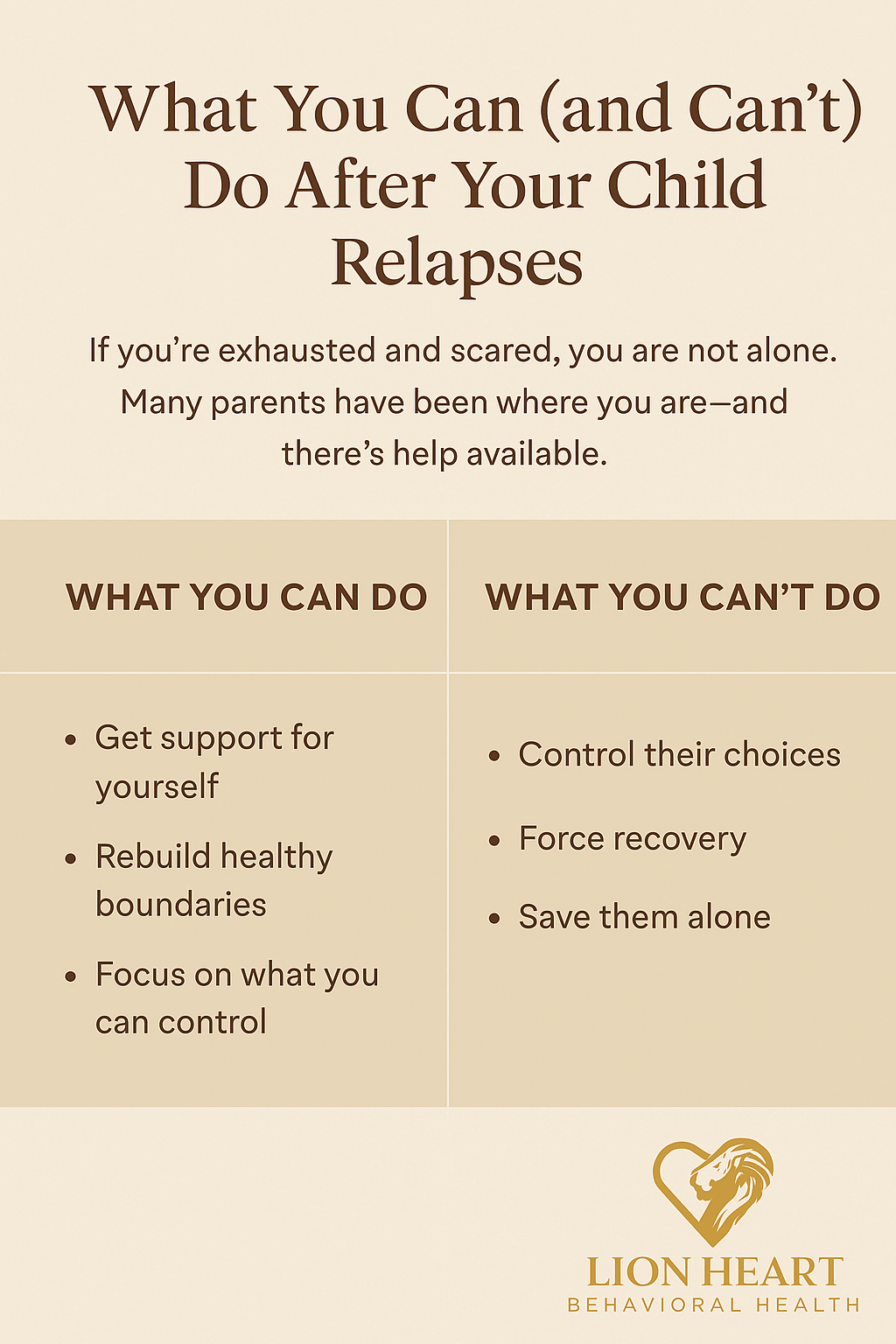
1. Get Support for Yourself
Addiction impacts the whole family, but parents often push their own needs aside. Now is the time to reclaim them. Whether it’s therapy, Al-Anon, or a structured family support program in Raynham, you need a safe place to unload your fears, guilt, and grief.
2. Rebuild Healthy Boundaries
Boundaries aren’t punishments—they’re lifelines. Setting clear, compassionate limits helps prevent burnout and keeps you emotionally available when it counts. This could be something as simple as not answering calls after midnight or not offering financial help without accountability.
3. Focus on What’s Yours to Control
You can’t control their sobriety, but you can control your responses, your home environment, and your personal health. Those things matter more than you think. When parents stabilize themselves, it shifts the entire family dynamic.
What You Can’t Do—And Why That’s Okay
There’s hard truth here, but it’s freeing when you really absorb it.
You Can’t Control Their Choices
Your child is an adult, or close to it. You cannot police every action or decision they make. Trying to will only drain you, and likely drive disconnection.
You Can’t Force Recovery
You can encourage treatment. You can express concern. But you cannot make someone want sobriety. Sustainable recovery has to be their choice.
You Can’t Save Them Alone
Addiction is a complicated condition. Even the most loving, attentive parents can’t heal it on their own. This is why professional support exists—so you don’t have to shoulder this impossible burden by yourself.
How a Family Support Program Brings Relief and Real Help
Lion Heart Behavioral Health offers a family support program in Raynham, Massachusetts designed specifically for moments like this. Here’s what that really means:
A Space to Be Honest
You can show up angry, sad, confused, or just numb. No judgment. Family programs are built to hold your emotions while providing practical support.
Skills That Protect Your Energy
You’ll learn how to navigate tough conversations, hold boundaries with love, and avoid common traps like enabling.
Connection with Other Families
Isolation feeds shame. Being in a group where people get it—where you don’t have to explain every detail—is a game-changer for your mental health.
Clarity on Next Steps
Programs help you get out of survival mode and into solution mode. You’ll get clear guidance on when to intervene, how to encourage treatment, and how to protect your own well-being through it all.
Why Family Support Isn’t Just for “Crisis Mode”
Many parents wait until things are at their absolute worst before reaching out for help. But family support is most powerful when it’s ongoing. Relapse may happen more than once. Emotions may shift weekly or even daily. Programs give you long-term support, helping you stay steady through unpredictable waters.
Some families also find that after engaging in their own support, their child is more likely to re-engage with treatment themselves. Sometimes, the shift starts with you.
Local Help in Raynham, Massachusetts
If you live in Raynham or the surrounding areas, Lion Heart Behavioral Health’s family support program offers an accessible, compassionate resource. You don’t have to travel far to get quality help—and you don’t have to navigate this alone.
Whether your child returns to treatment soon or not, you can start healing today. You can build skills. You can reclaim hope.
Frequently Asked Questions About Family Support Programs
What is a family support program?
A family support program provides education, emotional support, and practical tools for families dealing with a loved one’s addiction or relapse. It focuses on helping family members improve their own well-being while learning healthier ways to support their loved one.
Does my child need to be in treatment for me to join?
No. Family support programs are for you, not just your child. Whether your child is actively using, in treatment, or disengaged from recovery, you can benefit from participating.
How does a family support program help if my child refuses help?
It teaches you to maintain healthy boundaries, avoid enabling, and protect your own mental health—skills that are especially important when your child isn’t engaging with treatment. Many parents report feeling more confident and less emotionally drained after joining.
Will a family support program tell me what to do?
Not exactly. Programs provide education and guidance but respect your autonomy. You’ll receive tools and perspectives, but you’ll always decide what’s best for your unique situation.
Can family support improve my relationship with my child?
Yes, many parents find that as they focus on their own health and communication skills, their relationship with their child becomes less combative and more constructive—even if relapse is still part of the picture.
Call for the Support You Deserve
Relapse doesn’t have to be the end of hope for your child or for you. Support is here—real, local, and built for families like yours.
📞 Call (774)238-5533 or visit our family support program in Raynham, Massachusetts to learn more about how we can walk alongside you. You are not powerless. You are not alone. Let’s move forward together.