
I didn’t fail. I just stopped doing the things that kept me well.
That sentence took me months to say out loud—and even longer to believe. When I relapsed after 90 days sober, the shame was immediate and crushing. I felt like I’d let everyone down: my counselor, my family, my friends, my sponsor… but mostly, I’d let down the version of myself who really believed she was done.
If you’re here reading this because you relapsed—or because you’re teetering on the edge of it—I want you to hear something early: You didn’t ruin everything. And you don’t have to start over from scratch. You can begin again from right where you are.
This isn’t about sugarcoating what happened. This is about understanding it. And if your story looks anything like mine, maybe it’s time to stop blaming yourself and start getting honest about what you’re not doing—and what you still can.
I Thought I “Graduated” from Recovery
I didn’t say that out loud, of course. But once I hit the 90-day mark, something shifted.
I told myself I was still “in recovery,” but the behaviors said otherwise. I stopped reaching out. I skipped a couple group sessions. I didn’t open up at therapy. And I definitely wasn’t working the steps with any real heart.
To the outside world, I looked okay. But inside? I was tired. Flat. Almost… bored. Like I’d hit the halfway point in a race and decided I could just walk the rest of the way.
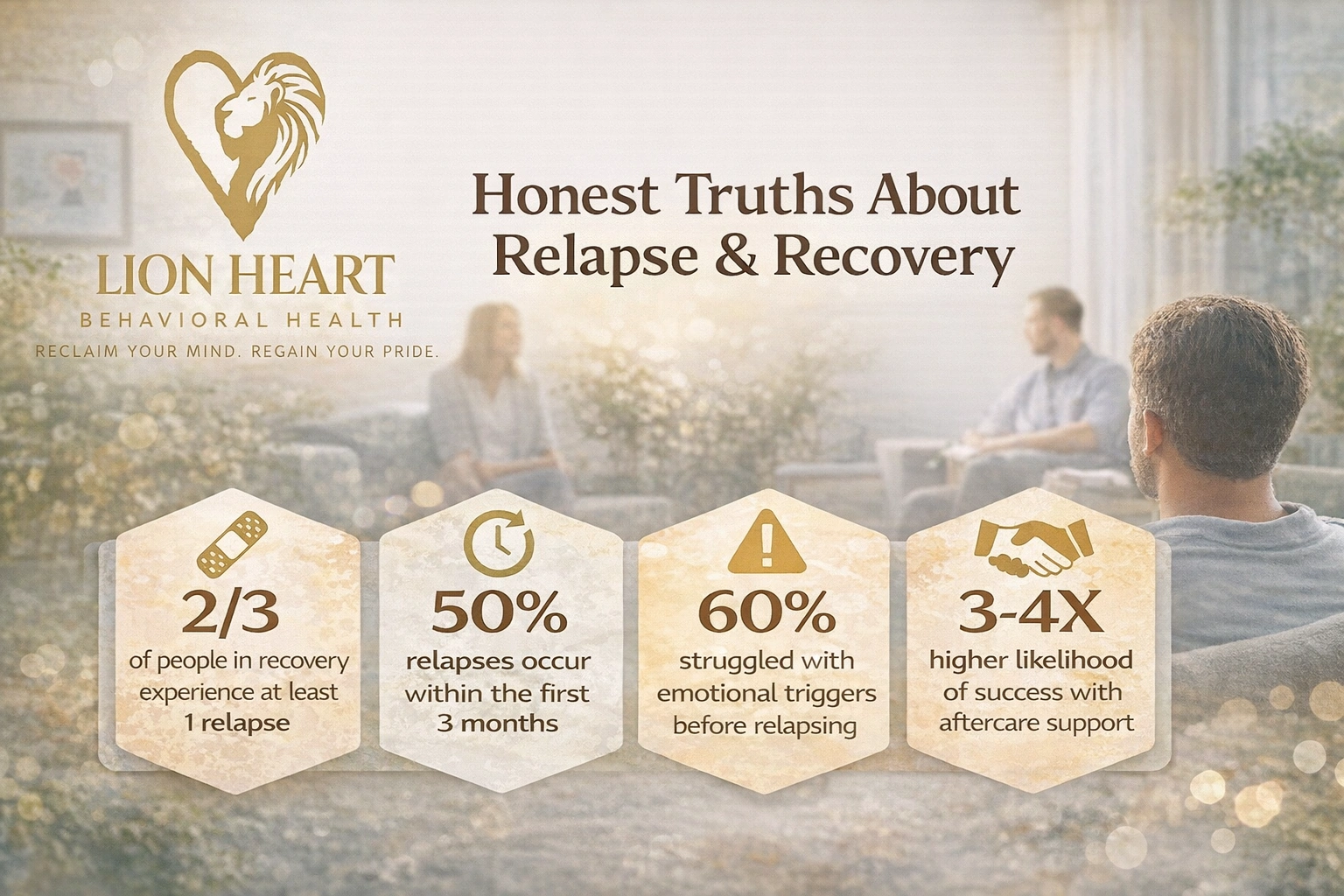
But here’s the thing no one tells you when you finish an alcohol treatment program: You don’t graduate. You continue. Or you don’t. And when you don’t, the disease notices.
What Slipped First: The Small Stuff
Before I picked up a drink, I stopped doing the things that had kept me from picking one up in the first place.
It wasn’t one dramatic decision. It was a slow leak of habits I thought were optional:
- Journaling turned into “I’ll do it later.”
- Meetings became “Maybe next week.”
- Check-ins with sober friends got replaced with endless scrolling.
- Honesty turned into half-truths.
By the time I relapsed, it felt inevitable. But looking back, the warning signs were everywhere—I just didn’t want to see them.
The Lie That Hurt Me Most: “I Should Know Better”
When I relapsed, the loudest voice in my head wasn’t the craving. It was the critic.
“You should know better.”
“People like you don’t come back from this.”
“You just proved them right.”
I had 90 days. I had a support system. I had done the work—and I still fell. That messed with my head more than anything.
But what finally helped me shut that voice up was this: Recovery isn’t about never falling. It’s about knowing how to stand back up—and letting people help you.
I Went Back to the Program—and Found Grace, Not Judgment
I thought walking back into the building would feel like admitting defeat. I pictured whispers. Side-eyes. Disappointment.
Instead, someone hugged me.
That was it. No quiz. No scolding. No checklist of failures.
Just, “I’m glad you came back.”
It turns out, the people in treatment get it. They know what it means to slip. And they also know what it means to return.
At Lion Heart Behavioral Health’s alcohol treatment program in Raynham, MA , nobody looked at me like I was broken. They looked at me like someone who belonged. Again.
Picking Up the Tools Again Felt Foreign—Then Familiar
The first few days back, I felt awkward. Like I was trying to fit into clothes I’d outgrown.
But then I started using the tools again—really using them. Not just going through the motions.
And slowly, things began to shift:
- Writing out my triggers before they hit
- Being honest in therapy, even when it stung
- Letting people in when I wanted to isolate
- Showing up for group, even on the bad days
- Making amends to myself, not just others
It wasn’t about “fixing” the relapse. It was about resuming the practice.
Because recovery is a practice. Not a performance.
If You Relapsed, You Didn’t Waste the Work
You didn’t lose everything you built. Not your insight. Not your strength. Not your sobriety streak’s value.
You learned what happens when the tools stay in the toolbox.
That lesson—painful as it is—makes you more honest, more equipped, and more human.
And I promise you this: when you come back, you don’t come back as a failure. You come back as someone who’s not done yet.
That counts. That matters. And it’s allowed.
FAQs About Relapsing After Treatment
What should I do if I’ve relapsed after 90+ days?
First, take a deep breath. Then take a small step—call someone, go to a meeting, tell the truth. The earlier you act, the easier it is to stop the spiral. You don’t have to do everything today. Just do something that brings you closer to help.
Will I be judged if I return to treatment?
Absolutely not. At places like Lion Heart Behavioral Health, relapse is understood—not punished. Staff and peers alike know that recovery is rarely a straight line. You’ll be welcomed with compassion, not shame.
Do I have to start treatment from scratch?
Not always. If you’ve already been through an alcohol treatment program, you may return to a specific level of care like outpatient or IOP depending on your current needs. The goal is to meet you where you are and build forward—not backward.
Why do people relapse even after they “know better”?
Because knowledge alone isn’t protection. Recovery requires consistent practice, support, and honesty. Even people with years of sobriety can relapse if they stop using their tools. It’s not about weakness—it’s about vigilance.
Can I still recover if I’ve relapsed more than once?
Yes. Many people relapse multiple times before finding sustainable sobriety. It doesn’t mean you can’t recover. It means you need more support, new strategies, or deeper healing. Every return holds power.
You’re Not Starting Over—You’re Starting From Experience
There’s this lie that relapse means square one. But that’s not true.
You’re not a blank slate. You’re someone who’s learned something real. And now you know: the tools don’t work if you don’t use them. The people can’t help you if you ghost. The program doesn’t stick if you stop showing up.
You didn’t fail the program. You just stopped practicing it.
But here’s the best part—you can begin again today.
And this time, maybe you’ll hold the tools a little tighter.
You’re still allowed back in.
Call (774) 341-4502 or visit Lion Heart Behavioral Health’s alcohol treatment program to reconnect with care. Our services are here for anyone ready to pick the tools back up—even if you had to put them down for a while.