
Cognitive Behavioral Therapy (CBT) is more than just a popular treatment—it’s considered the gold standard in mental health care for a reason. Grounded in decades of research and clinical success, CBT continues to help people with depression, anxiety, trauma, and more, by empowering them to change the way they think, feel, and behave.
At Lion Heart Behavioral Health, our CBT Therapy Programs in Massachusetts are at the core of the care we provide through our Partial Hospitalization Program, Intensive Outpatient Program, and Outpatient Treatment Program. In this blog, we’ll explore the neuroscience, clinical evidence, and therapeutic power behind CBT—and why it may be the right path for you.
What Is CBT and How Does It Work?
CBT is a structured, time-limited, and goal-oriented psychotherapy. It helps you identify unhelpful thinking patterns (known as cognitive distortions) and replace them with more realistic, balanced thoughts.
The CBT Model is Based on This Simple Concept:
Your thoughts influence your feelings. Your feelings influence your behavior.
By intervening at the level of thought, CBT helps break the cycle of emotional distress and destructive habits.
For example:
- Thought: “I’m a failure.”
- Feeling: Hopeless, anxious.
- Behavior: Withdrawing from work, relationships.
CBT helps reframe this as:
“I had a setback, but that doesn’t define my worth.”
The Neuroscience Behind CBT: Rewiring the Brain
CBT isn’t just psychology—it’s neurology in action. Research shows that CBT can change brain function in areas related to emotion regulation, problem-solving, and threat response:
Key Brain Changes in CBT:
- Amygdala: Decreased overactivation reduces anxiety and fear
- Prefrontal Cortex: Improved logic, planning, and impulse control
- Hippocampus: Better memory processing, crucial in trauma recovery
- Default Mode Network: More adaptive self-reflection, reducing rumination
At Lion Heart, we use CBT not only in Anxiety Therapy Programs and Depression Therapy Programs, but also within our Trauma Therapy Program in Massachusetts—where brain-based healing is critical.
CBT by the Numbers: Clinical Effectiveness
CBT has been rigorously studied across conditions, age groups, and settings. Here’s what the science says:
- 60–80% of people with anxiety disorders see symptom improvement with CBT.
- CBT is equally or more effective than antidepressants for many cases of depression.
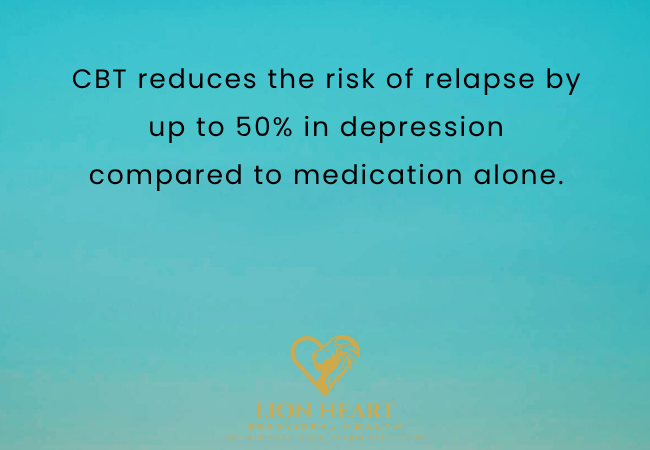
- It reduces relapse risk by up to 50% compared to medication-only treatment.
- Average length of therapy is 12–20 sessions, making it accessible and cost-effective.
Sources: American Psychological Association (APA), National Institute of Mental Health (NIMH), Archives of General Psychiatry
Common Issues Treated with CBT at Lion Heart
At Lion Heart Behavioral Health, we tailor CBT to treat a wide range of mental health challenges, including:
Depression:
Helps identify hopeless thinking, increase activity, and boost mood.
Anxiety:
Reduces avoidance, challenges catastrophic thoughts, and builds confidence.
PTSD and Trauma:
Gently confronts triggers, reshapes belief systems, and restores safety.
OCD and Phobias:
Gradually reconditions fear-based responses through exposure and cognitive work.
Self-Esteem & Stress:
Builds resilience, self-worth, and realistic goal-setting.
CBT vs. Other Therapies: What Makes It Unique?
While many therapeutic modalities are beneficial, CBT stands out for its structure, clarity, and efficiency.
Here’s how CBT compares:
-
CBT vs. DBT (Dialectical Behavior Therapy):
CBT focuses on restructuring thoughts; DBT adds skills like emotional regulation and distress tolerance—ideal for those with intense mood swings or self-harm behaviors. Lion Heart’s DBT Therapy Programs in Massachusetts offer both when needed. -
CBT vs. Psychodynamic Therapy:
Psychodynamic therapy explores unconscious motives and childhood experiences. CBT is more present-focused and action-oriented, with quicker symptom relief. -
CBT vs. EMDR:
While CBT reshapes thoughts, EMDR helps process trauma using bilateral stimulation. Both can be used in tandem for clients in our Trauma Therapy Program in Massachusetts.
CBT’s appeal lies in its evidence-based results, practical tools, and adaptability across diagnoses and demographics.
CBT Tools We Use at Lion Heart Behavioral Health
Our CBT therapists don’t just talk—they teach. You’ll leave sessions with real-life tools, including:
-
Thought Records: Worksheets that help you track and challenge irrational beliefs.
-
Behavioral Activation: Structured plans to re-engage in meaningful activities and break the cycle of avoidance.
-
Cognitive Restructuring: Techniques to identify thinking traps like catastrophizing, black-and-white thinking, or overgeneralizing.
-
Exposure Exercises: Gradual, supported activities to confront fears in anxiety and PTSD treatment.
-
Relaxation and Mindfulness Tools: Breathing techniques, grounding practices, and guided imagery to calm the nervous system.
These tools are embedded in every level of our care—from PHP to outpatient therapy.
CBT’s Global Reach and Endorsements
CBT isn’t just an American standard—it’s used and recommended worldwide:
-
World Health Organization (WHO) lists CBT as the first-line treatment for depression and anxiety globally.
-
UK’s National Health Service (NHS) provides CBT through its public health system.
-
United Nations High Commissioner for Refugees (UNHCR) uses CBT-based programs in trauma recovery for displaced populations.
At Lion Heart Behavioral Health, we bring this global gold standard to your community—right here in Massachusetts.
CBT in Our Levels of Care
We integrate Cognitive Behavioral Therapy in Massachusetts across all care levels:
Partial Hospitalization Program (PHP)
- Daytime structured care with multiple CBT-based groups and individual sessions
- Ideal for those needing crisis stabilization or more intensive support
Intensive Outpatient Program (IOP)
- Flexible therapy 3–5 days a week for people managing work, school, or family obligations
- Focus on applying CBT skills in daily life
Outpatient Treatment Program
- Weekly sessions designed for long-term healing, relapse prevention, and personal growth
- Supports patients transitioning out of higher levels of care
Our team also integrates DBT Therapy Programs and Dialectical Behavior Therapy in Massachusetts for clients needing emotion regulation, distress tolerance, and interpersonal skill-building.
Why CBT Works Long-Term
CBT’s success isn’t just in symptom relief—it’s in skill development. Clients leave therapy with:
- A toolkit to challenge irrational thoughts
- Techniques to manage stress and anxiety
- Greater self-awareness and emotional regulation
- Confidence in solving problems and setting goals
This is especially beneficial in Depression Therapy Programs and Anxiety Therapy Programs in Massachusetts, where relapse prevention is key.
CBT Myths—Busted
Myth: CBT is only for mild problems.
Truth: CBT is effective for everything from general stress to severe trauma.
Myth: CBT just teaches you to “think positive.”
Truth: CBT focuses on accurate, balanced thinking—not toxic positivity.
Myth: CBT doesn’t go deep.
Truth: While CBT is present-focused, it often addresses core beliefs shaped by past experiences, especially in trauma-informed care.
Why Lion Heart Behavioral Health Is Your Ideal CBT Partner
We don’t offer cookie-cutter care. Our therapists are trained in advanced CBT techniques and trauma-informed practices that go deeper than surface-level symptom management.
- We adapt CBT for cultural sensitivity, LGBTQ+ clients, and neurodivergent individuals.
- We offer psychiatric support when a combined therapy + medication plan is most effective.
- We help you create real, lasting change—not just temporary relief.
Conclusion
Cognitive Behavioral Therapy isn’t just another option—it’s a science-backed, skill-building, life-changing approach to mental health. Whether you’re navigating anxiety, depression, trauma, or stress, CBT empowers you to rewire harmful thinking patterns and build lasting resilience.
At Lion Heart Behavioral Health, our expert clinicians integrate CBT into every level of care—from our Partial Hospitalization Program to our Intensive Outpatient and Outpatient Treatment Programs in Massachusetts—because we believe real healing starts when you gain the tools to transform your thoughts, habits, and life. If you’re ready to move beyond symptoms and start creating real, sustainable change, we’re here to guide you every step of the way. Call us today at 774.238.5533 to schedule your consultation and discover how CBT can help you reclaim control over your mental health—with courage, clarity, and care.
Frequently Asked Questions (FAQs)
How long does CBT typically take?
Most individuals experience noticeable improvement within 12 to 20 sessions, depending on the severity of symptoms and consistency in applying skills between sessions.
Is CBT only for depression and anxiety?
No—CBT is highly effective for a wide range of mental health conditions, including trauma, OCD, phobias, eating disorders, substance use disorders, and even chronic pain or insomnia.
Can I do CBT as part of a structured treatment program?
Absolutely. At Lion Heart Behavioral Health, CBT is integrated into all levels of care, including our Partial Hospitalization Program, Intensive Outpatient Program, and Outpatient Treatment Program in Massachusetts.
Will I have homework in CBT?
Yes—CBT often involves practice assignments between sessions. These may include journaling, thought tracking, or behavioral experiments that help reinforce what you learn in therapy.
Is CBT covered by insurance?
Most insurance plans cover CBT when deemed medically necessary. Lion Heart Behavioral Health can assist with verification and billing to help make care accessible.