
Ninety days.
For a long time, that number meant everything to me.
Ninety days of progress.
Ninety days of rebuilding trust.
Ninety days of waking up believing I was finally moving forward.
Then I hit a wall.
Not all at once.
Slowly.
Quietly.
The kind of struggle that doesn’t always look dramatic from the outside but feels enormous when you’re living it.
My motivation started slipping.
The coping skills that had once felt effective suddenly felt harder to use.
The thoughts I thought I’d left behind began showing up again.
At first, I told myself it was temporary.
Then I told myself I could handle it.
Then I told myself I definitely didn’t need more treatment.
Looking back, that was probably the moment I needed help the most.
Because the hidden cost of a setback isn’t always the setback itself.
It’s the story we tell ourselves afterward.
I convinced myself that needing additional support meant I had failed.
That belief kept me stuck far longer than the symptoms did.
When I eventually began exploring structured daytime mental health support, I wasn’t looking for a fresh start.
I was looking for a way forward.
There’s a difference.
The Shame Was Heavier Than The Symptoms
What surprised me most wasn’t the anxiety.
It wasn’t the depression.
It wasn’t the emotional exhaustion.
It was the shame.
I kept replaying the same thought:
“You should be further along than this.”
Maybe you’ve had a version of that conversation with yourself.
Many alumni do.
You put in the work.
You make progress.
You start believing you’re finally on stable ground.
Then life happens.
Stress shows up.
Relationships become complicated.
Old emotions return.
Suddenly you’re struggling again and wondering whether all your previous effort mattered.
That’s where shame does its best work.
It convinces you that difficulty is evidence of failure.
It tells you that setbacks erase growth.
Neither is true.
But when you’re hurting, shame can sound very convincing.
Recovery Doesn’t Usually Fall Apart Overnight
One thing I wish someone had explained earlier is that most setbacks don’t happen suddenly.
They’re usually a collection of small moments.
A little more isolation.
A little less honesty.
A little more stress.
A little less self-care.
A few skipped coping skills.
A few difficult weeks.
Like a leak in a roof, the damage often happens slowly before anyone notices.
That’s one reason so many people feel confused when they realize they’re struggling again.
There isn’t always a single cause.
Often it’s the accumulation of many small things.
And when those small things build long enough, they become difficult to ignore.
The Exhaustion Of Starting Over
This was the part I feared most.
The idea of beginning again.
The idea of returning to treatment.
The idea of admitting I needed more support.
It felt exhausting before it even started.
I think many alumni understand this feeling.
You don’t necessarily doubt treatment.
You doubt your ability to go through another difficult process.
You wonder if you have the energy.
The emotional bandwidth.
The motivation.
What I eventually learned is that getting help again wasn’t starting over.
I wasn’t returning to the beginning.
I was returning with experience.
With insight.
With a deeper understanding of myself.
That’s not the same thing as starting from scratch.
Why Trying To Push Through Alone Made Things Worse
For months, I convinced myself I could handle everything independently.
I told myself I just needed more discipline.
More willpower.
More determination.
The problem is that recovery isn’t a test of endurance.
It’s not something you win by suffering longer than everyone else.
The harder I pushed alone, the more isolated I became.
The more isolated I became, the harder it was to recognize what was actually happening.
Isolation is strange that way.
It doesn’t just separate you from other people.
It separates you from perspective.
And perspective is often what people need most during difficult seasons.
The Day I Stopped Asking Whether I Deserved Help
There was a moment when everything shifted.
Not dramatically.
Not overnight.
I simply stopped asking myself whether I deserved support.
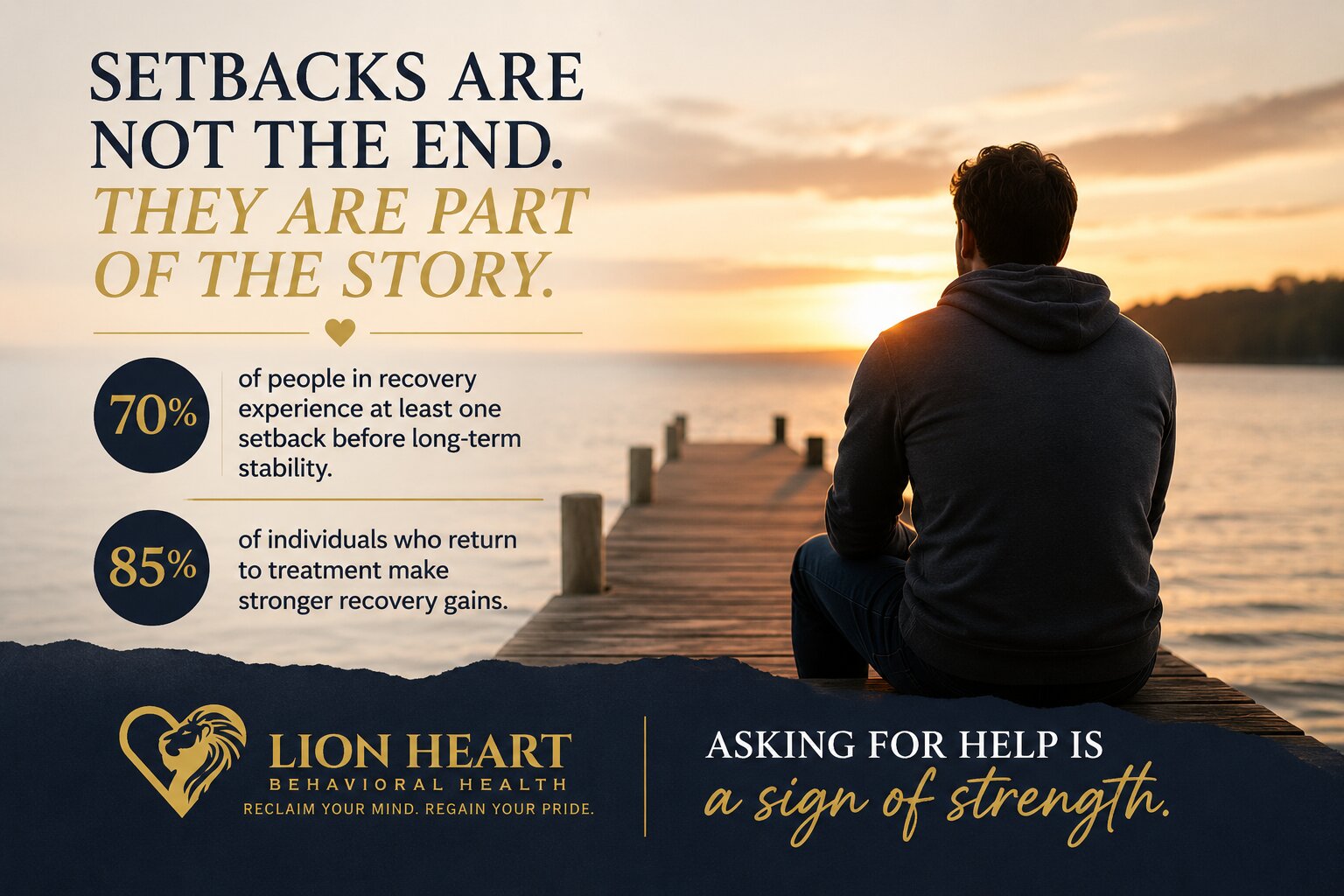
And started asking whether support might help.
That question changed everything.
Because those are two completely different conversations.
The first assumes help is something you have to earn.
The second recognizes help as a tool.
Many alumni unknowingly believe they need to prove they’re struggling enough before they can ask for support.
The truth is much simpler.
If you’re hurting, that’s enough.
If you’re struggling, that’s enough.
If you’re exhausted from carrying everything alone, that’s enough.
What I Found Wasn’t What I Expected
I expected judgment.
I expected disappointment.
I expected people to focus on what had gone wrong.
Instead, I found something different.
Understanding.
Support.
Perspective.
People who cared less about my setback and more about what came next.
That mattered.
Because when you’re trapped in self-criticism, hope can feel impossible.
Sometimes you need someone else to hold hope for you until you’re ready to carry it yourself.
That’s what support often provides.
Not answers.
Not perfection.
Just enough hope to keep moving.
The Value Of Structure When Everything Feels Uncertain
One thing I didn’t appreciate until later was how powerful structure can be.
When emotions become overwhelming, decision-making becomes exhausting.
Every choice feels harder.
Every day feels unpredictable.
Every problem feels larger.
Structure reduces some of that noise.
It creates consistency when your thoughts feel inconsistent.
It creates momentum when motivation feels unreliable.
Think of it like guardrails on a winding road.
The road is still challenging.
But you’re less likely to drive off the edge.
That’s why many people exploring options like partial hospitalization Massachusetts programs are often looking for more than treatment.
They’re looking for stability.
They’re looking for something solid to hold onto while they regain their footing.
Progress Became Visible Again
One of the hardest parts of a setback is that progress becomes difficult to see.
You focus on what’s wrong.
You focus on what you’ve lost.
You focus on what hasn’t improved.
Over time, something interesting happened.
I started noticing progress again.
Not dramatic breakthroughs.
Smaller things.
I became more honest.
I asked for help sooner.
I handled difficult emotions differently.
I stopped expecting perfection.
I stopped measuring success by whether I struggled.
Instead, I measured success by how I responded when I did.
That shift changed everything.
Because life isn’t about avoiding every difficult moment.
It’s about learning how to move through them.
The Story Was Never About Failure
Looking back now, I realize something important.
The setback wasn’t the story.
The response was.
The real story wasn’t that I struggled.
The real story was that I kept going.
The real story was that I asked for help.
The real story was that I stopped treating support like a punishment and started seeing it as an opportunity.
Many alumni spend months believing their difficult chapter defines them.
It doesn’t.
One difficult season does not erase your growth.
One setback does not erase your effort.
One relapse does not erase your recovery.
The chapter matters.
But it is not the entire book.
What I’d Tell Someone Standing Where I Once Stood
If you’re reading this and wondering whether you need more support, I want you to know something.
You do not need to earn help.
You do not need to justify your pain.
And you do not need to prove that you’re struggling enough.
The hidden cost of avoiding support is often much greater than the discomfort of asking for it.
Because every day spent carrying unnecessary suffering is a day you don’t get back.
The encouraging news is that support exists.
And asking for it isn’t evidence that you’ve failed.
It may be evidence that you’re finally giving yourself the same compassion you would offer someone else.
Call (774) 341-4502 or visit our Day Treatment (PHP) Program to learn more about our Day Treatment Services New Bedford, MA.
Frequently Asked Questions
Does needing treatment again mean I failed?
No. Many people need additional support at different points in recovery. Seeking help reflects awareness and commitment, not failure.
Why do setbacks feel so overwhelming?
Setbacks often trigger shame, fear, and self-criticism. These emotions can make progress feel invisible even when growth is still occurring.
Is it normal to feel exhausted by the idea of returning to treatment?
Yes. Many alumni worry about starting over or repeating difficult experiences. This reaction is common and understandable.
What if I don’t feel “bad enough” to ask for help?
You don’t need to reach a crisis point before seeking support. If you’re struggling, that’s reason enough to explore your options.
Why does isolation make recovery harder?
Isolation often reduces perspective and support. When people struggle alone, it becomes easier for fear, shame, and negative thinking to grow.
Can progress continue after a relapse or setback?
Absolutely. Many people experience meaningful growth after setbacks because they gain additional insight, resilience, and self-awareness.
What makes structured daytime care helpful?
Structure can provide consistency, accountability, support, and opportunities to practice healthy coping skills during challenging periods.
How do I know if I should reach out?
If symptoms are affecting your daily life, relationships, work, emotional well-being, or recovery, it may be worth having a conversation about available support.