
If you had asked me how I was doing, I would have said the same thing I always said.
“Busy.”
Not anxious.
Not overwhelmed.
Not exhausted.
Busy.
It was a convenient word because people respected it.
People admire busy.
People admire productivity.
People admire the person who shows up, gets things done, and keeps moving forward no matter what.
From the outside, I looked exactly like that person.
I had responsibilities.
I met deadlines.
I answered texts.
I paid bills.
I showed up for family events.
I did everything I was supposed to do.
And yet, almost every day felt like I was carrying something heavy that nobody else could see.
I wasn’t falling apart.
But I wasn’t okay either.
That’s the strange thing about high-functioning anxiety.
You can look successful while feeling miserable.
You can appear confident while questioning every decision.
You can seem calm while your mind races nonstop.
For years, I convinced myself that because I was still functioning, I didn’t really need help.
Then I reached a point where functioning became exhausting.
That’s when I started looking into mental health treatment options that could fit around real life responsibilities.
Not because I had stopped functioning.
Because I was tired of surviving every day through sheer force of will.
The People Who Need Help Don’t Always Look Like They Need Help
This was one of the hardest things for me to accept.
I had a picture in my head of what struggling looked like.
Someone unable to work.
Someone in constant crisis.
Someone whose life was visibly falling apart.
That wasn’t me.
At least not externally.
Internally was a different story.
Every decision felt bigger than it should.
Every mistake felt catastrophic.
Every unexpected email could ruin my concentration for hours.
I constantly felt like I was one bad day away from losing control.
Yet because I continued showing up, I assumed my anxiety couldn’t really be that serious.
Many high-functioning people make the same mistake.
We use productivity as evidence that we’re okay.
The reality is that productivity can sometimes become a disguise.
A way of hiding how much we’re struggling.
A way of avoiding conversations we don’t want to have.
Especially the conversation with ourselves.
I Thought Success Would Make Anxiety Go Away
This belief followed me for years.
I told myself I would relax after the next promotion.
After I earned more money.
After I achieved a certain goal.
After life became more stable.
The problem was that every milestone simply created a new source of pressure.
The promotion created new expectations.
The success created new responsibilities.
The accomplishments created new fears about losing them.
Anxiety kept moving the finish line.
Every time I thought I’d finally earned peace, it found another reason to stay.
Looking back, I realize I wasn’t struggling because I lacked achievement.
I was struggling because I had built my entire identity around achievement.
And when achievement becomes your coping mechanism, slowing down starts to feel dangerous.
Nobody Saw The Hours After Work
That’s where the real struggle lived.
Not during meetings.
Not during presentations.
Not while I was checking tasks off my list.
The difficult part came afterward.
The drive home.
The quiet evenings.
The moments when there was nothing left to distract me.
That’s when the thoughts showed up.
Did I say the wrong thing?
Did I disappoint someone?
Did I make a mistake?
What if something goes wrong tomorrow?
What if I’m not actually capable?
The workday ended.
My anxiety shift began.
And unlike my job, anxiety never clocked out.
Night after night, I carried those thoughts alone.
Eventually, the exhaustion started affecting everything.
My sleep.
My relationships.
My patience.
My ability to enjoy things I once loved.
That’s when I realized anxiety wasn’t just affecting how I felt.
It was affecting how I lived.
The Breaking Point Didn’t Look Dramatic
I think people expect a dramatic moment.
A crisis.
A breakdown.
A life-changing event.
Mine was much quieter.
One evening I sat in my car after work and couldn’t bring myself to go inside.
Nothing terrible had happened.
The day had actually gone well.
That’s what scared me.
If a good day still left me feeling this exhausted, what exactly was I waiting for?
I realized I had spent years trying to manage anxiety instead of addressing it.
Years convincing myself I could handle it alone.
Years hoping it would eventually disappear.
That moment forced me to ask an uncomfortable question:
What if white-knuckling my way through life wasn’t strength?
What if it was simply exhaustion disguised as resilience?
The Fear Wasn’t Getting Help
The fear was losing my life.
When I first considered treatment, I immediately imagined worst-case scenarios.
Would I have to stop working?
Would everything change?
Would I lose the routines that kept me afloat?
Those fears kept me stuck.
Many people searching for support experience the same concern.
They don’t necessarily resist treatment.
They resist disruption.
They want help.
They just don’t want to abandon their responsibilities to get it.
That was me.
I needed support that fit into reality.
Support that acknowledged I still had a life to manage.
Support that could help me heal without forcing me to disappear from everything important.
The Biggest Relief Was Realizing I Wasn’t Alone
This sounds simple.
It wasn’t.
For years I believed my anxiety was a personal flaw.
Something I should have been able to control.
Something other people handled better than I did.
Then I started hearing stories from people whose lives looked remarkably similar to mine.
People with careers.
Families.
Responsibilities.
Accomplishments.
People who appeared fine from the outside while privately struggling.
That realization hit me harder than any coping skill ever could.
Because anxiety thrives in isolation.
It convinces you that nobody understands.
That you’re the only one feeling this way.
That everyone else is managing life more easily.
The moment that illusion breaks, healing becomes possible.
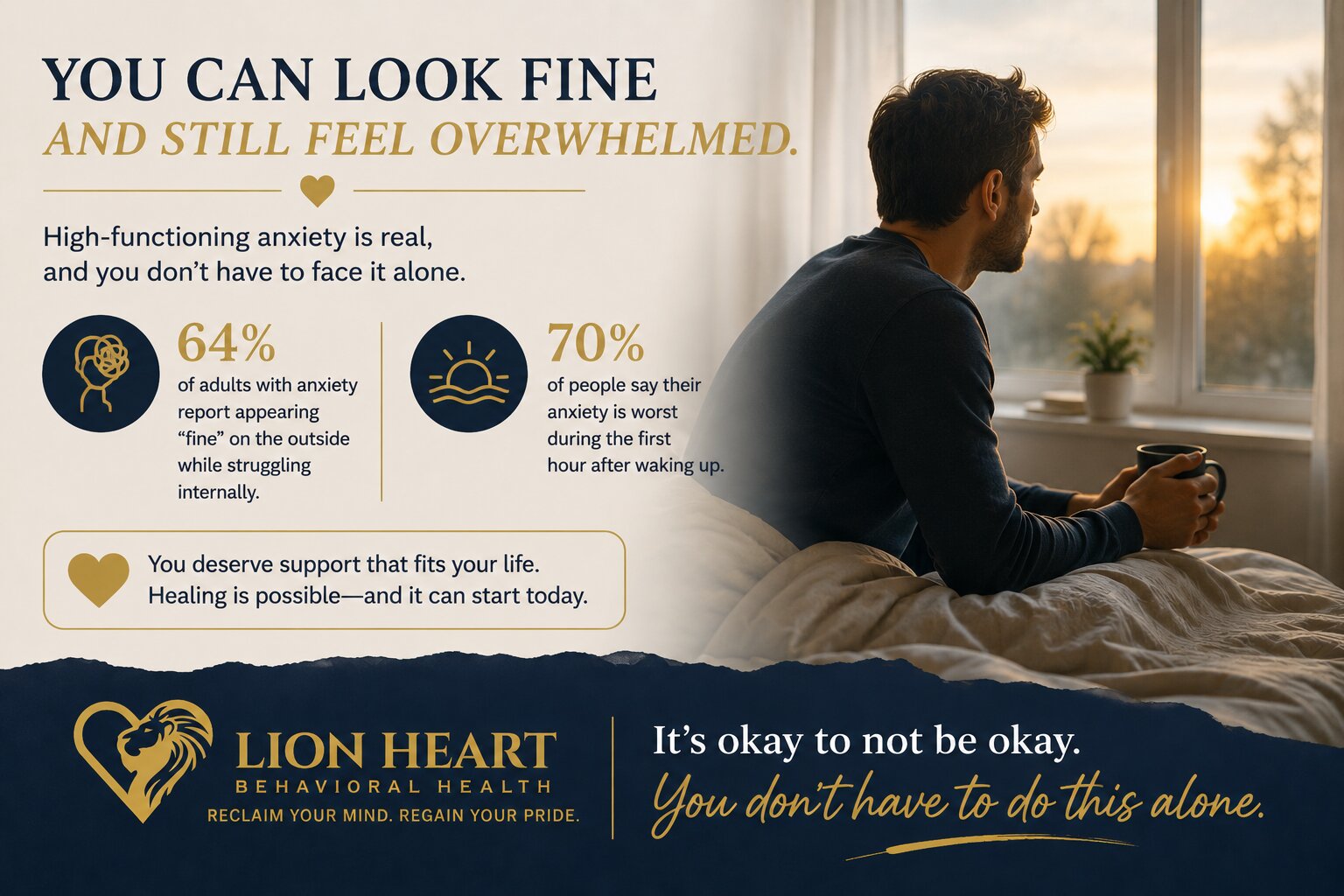
I Didn’t Need To Stop Being Productive
I Needed To Stop Using Productivity As Proof I Was Okay
This may have been the most important lesson of all.
For years, I measured my mental health based on performance.
If I got everything done, I was fine.
If I met expectations, I was fine.
If I looked successful, I was fine.
The problem is that performance and well-being are not the same thing.
You can be productive and overwhelmed.
Successful and anxious.
Reliable and exhausted.
Capable and struggling.
Learning that changed how I viewed myself.
It also changed how I viewed recovery.
Recovery wasn’t about becoming someone different.
It was about learning how to care for the person I already was.
The Progress Was Smaller Than I Expected
And More Meaningful Than I Realized
At first, nothing dramatic happened.
I didn’t wake up feeling transformed.
I didn’t suddenly stop worrying.
I didn’t become fearless.
Instead, small things changed.
I slept better.
I recovered faster after stressful days.
I spent less time replaying conversations.
I stopped treating every anxious thought like an emergency.
The changes were subtle.
But they accumulated.
Like turning a ship one degree at a time.
You barely notice the adjustment at first.
Months later, you’re headed somewhere completely different.
That’s how real growth often works.
Not through dramatic breakthroughs.
Through small shifts repeated consistently.
The Search I Never Thought I’d Make
There was a time when I would have laughed if someone suggested treatment.
Not because I thought it didn’t work.
Because I thought I didn’t qualify.
I thought treatment was for people struggling more than me.
People in crisis.
People who couldn’t function.
Then I found myself searching for answers anyway.
People looking for intensive outpatient therapy Fall River options are often in a similar place.
They’re still working.
Still functioning.
Still showing up.
But they’re tired.
They’re carrying more than anyone realizes.
And they’re beginning to wonder whether life is supposed to feel this hard.
I understand that question.
Because I asked it myself.
What I’d Tell Another High-Functioning Person
If you’re reading this while convincing everyone—including yourself—that you’re fine, I want you to know something.
You don’t have to wait for a breakdown.
You don’t have to lose your job.
You don’t have to hit a crisis point.
And you don’t have to prove your suffering before you’re allowed to ask for support.
One of the biggest lies anxiety ever told me was that I wasn’t struggling enough to deserve help.
The truth is much simpler.
If you’re exhausted, overwhelmed, anxious, or carrying more than you can manage alone, that’s enough.
You don’t need permission.
You don’t need a dramatic story.
You don’t need to fall apart first.
Sometimes strength looks exactly like admitting you’re tired of carrying everything by yourself.
Call (774) 341-4502 or visit our mental health programs with flexible treatment options to learn more about our programs, IOP services Bristol County, MA.
Frequently Asked Questions
Can someone have severe anxiety and still be successful?
Yes. Many people with high-functioning anxiety maintain careers, relationships, and responsibilities while experiencing significant emotional distress behind the scenes.
Why do high-functioning people delay seeking help?
Many believe their ability to function means their struggles aren’t serious enough. Others fear treatment will disrupt work, family responsibilities, or daily routines.
What are signs that anxiety is becoming harder to manage?
Persistent worry, sleep problems, exhaustion, difficulty concentrating, irritability, physical symptoms, and feeling overwhelmed by everyday responsibilities can all be signs.
Is it normal to feel anxious even when things are going well?
Yes. Anxiety doesn’t always depend on circumstances. Many people continue experiencing significant anxiety even during successful periods of life.
Can treatment help if I’m not in crisis?
Absolutely. Many people seek support before reaching a crisis point. Early intervention can help prevent symptoms from becoming more disruptive.
What if I feel guilty asking for help?
Feeling guilty is common, especially among people who are used to handling everything themselves. Seeking support is not selfish or weak. It is often a sign of self-awareness and courage.
Can anxiety affect physical health?
Yes. Anxiety can contribute to fatigue, muscle tension, headaches, digestive issues, sleep disturbances, and other physical symptoms.
How do I know when it’s time to seek support?
If anxiety is affecting your quality of life, relationships, sleep, work satisfaction, or overall well-being, it may be worth speaking with a professional about your options.