

Even when you know it’s time for help, getting started can feel like stepping off a cliff.
You’re not in denial. You’re not pretending it’s all fine. But maybe your days still feel like you’re barely treading water. Everything is technically okay, but inside? It’s not.
That’s where a Partial Hospitalization Program (PHP) can help—bridging the gap between total crisis and a life you can actually live in.
If you’re exploring options in Massachusetts, Lion Heart’s outpatient programs in Raynham is here to offer a structured path forward, without judgment or pressure.
When Weekly Therapy Stops Feeling Like Enough
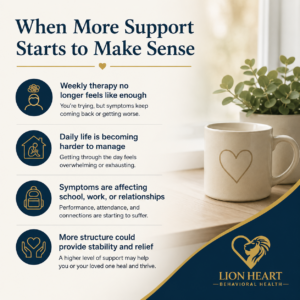
Sometimes you are doing all the “right” things—going to therapy, taking medication, trying to keep up with work and family responsibilities—but still feel like you are barely holding things together.
You may notice that your symptoms are becoming harder to manage. Anxiety feels constant. Depression makes it difficult to get through the day. Trauma responses are interfering with your ability to function. Even with support, it may feel like you need more structure and consistency than one or two sessions a week can provide.
That does not mean you have failed. It may simply mean you need a more intensive level of care for a period of time.
Programs like Partial Hospitalization Programs (PHPs) are designed for moments like this, offering daily therapeutic support while allowing you to continue living at home.
Signs You May Need More Structured Support
It can be difficult to know when your current treatment approach is no longer enough. Many people reach this point gradually.
Some common signs include:
- Feeling emotionally overwhelmed most days
- Struggling to work, care for responsibilities, or maintain relationships
- Experiencing worsening anxiety, depression, or trauma symptoms
- Returning to unhealthy coping behaviors
- Feeling unsafe when alone, even if you are not in immediate crisis
- Leaving a hospital or inpatient setting and needing continued support
Needing more structure is not a sign that things are hopeless. Often, it is an opportunity to stabilize, learn new coping skills, and begin feeling more in control again.
What Daily Support Can Look Like
For many people, healing becomes more manageable when support is built into each day.
Rather than waiting a week between therapy sessions, structured treatment provides regular opportunities to process emotions, practice coping skills, and receive guidance from licensed clinicians and peers who understand what you are experiencing.
This consistency can create momentum. You are not expected to figure everything out on your own between appointments. Instead, you have a dedicated space each day to focus on recovery and emotional well-being.
You Can Receive Intensive Care and Still Live at Home
One of the reasons many people consider structured daytime treatment is that it offers significant support without requiring an overnight stay.
That means you can continue sleeping in your own bed, staying connected to loved ones, and applying what you are learning in real life as treatment progresses.
For many individuals, this balance makes it easier to get the help they need while maintaining a sense of familiarity and independence.
What If You’re Still Not Sure?
It is completely normal to have questions about whether a higher level of care is necessary.
Many people worry that seeking more support means their situation is “serious enough” to justify treatment. In reality, structured care exists to help before things become even more overwhelming.
If you are struggling to function, feeling emotionally exhausted, or unsure what kind of help would be most appropriate, speaking with a professional can provide clarity.
Sometimes the most important step is simply finding out what your options are.
FAQ: Partial Hospitalization Programs
Can I still live at home while receiving treatment?
Yes. Structured daytime treatment allows many people to receive intensive therapeutic support while returning home each evening.
Is treatment covered by insurance?
In many cases, yes. Most commercial insurance plans include behavioral health benefits. A treatment center can verify your benefits and explain any potential out-of-pocket costs before you begin.
Ready to Learn More?
If you have been feeling like weekly therapy is no longer enough, a more structured level of care may be worth exploring.
Learn more about Lion Heart’s Partial Hospitalization Program to understand how this level of treatment can provide daily support while allowing you to continue living at home.
Call (774) 238-5533 or verify your insurance to take the next step.