

When your child is spiraling—missing school, shutting down emotionally, using substances, or making choices that feel unsafe—every option can feel either too extreme or not strong enough.
Maybe outpatient therapy has helped some, but the progress is not holding. Maybe there has already been a hospital visit, a crisis call, or a moment when you realized your family cannot keep managing this alone.
That does not necessarily mean your child needs to be sent away. It may mean they need more structure, more consistency, and more clinical support than weekly therapy can provide.
For many families, the hardest part is not caring enough. It is knowing what kind of help fits the moment you are in. This article is meant to help you recognize when a higher level of support may be worth exploring—and how to think through whether a Partial Hospitalization Program might be the right next step without panic or shame.
When Weekly Therapy No Longer Seems Like Enough
Watching your child struggle can leave you feeling helpless. You may see their mood becoming more unpredictable, school attendance slipping, or substance use beginning to affect daily life. Even when they are attending therapy, it may feel like the support they are receiving is not enough to create lasting stability.
This can be an incredibly difficult position for parents. You want to help, but you may not know what level of care is appropriate.
In some situations, a more structured treatment program can provide the consistency, accountability, and clinical support needed to help your child regain a sense of balance.
What More Structured Support Can Look Like
When a young person is struggling emotionally, additional support often means more than simply increasing the number of therapy sessions.
Structured treatment typically includes a combination of individual counseling, group therapy, family involvement, and psychiatric support when needed. This allows your child to receive help on a consistent basis while building coping skills and addressing the underlying issues contributing to their distress.
For many families, this kind of daily support provides both stability and a clearer path forward.
Signs Your Child May Benefit From a Higher Level of Care
It may be time to consider more structured support if your child is:
- Missing school or withdrawing from normal activities
- Experiencing worsening anxiety, depression, or trauma symptoms
- Engaging in substance use or other risky behaviors
- Struggling after a recent hospitalization or crisis
- Showing significant changes in mood, sleep, or behavior
- Finding it difficult to function despite ongoing therapy
Seeking more intensive support does not mean your child is beyond help. In many cases, it is the most proactive step a family can take, especially when broader mental health treatment options may provide the structure and support they need.
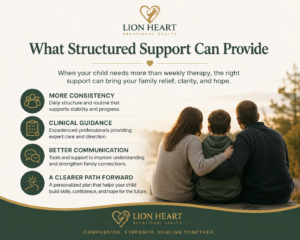
What Structured Treatment Can Mean for Families
When a child is struggling, the entire family feels the impact.
Parents often find themselves constantly worrying, second-guessing decisions, and wondering how to create stability at home. Structured treatment can help by bringing experienced clinicians, a clear treatment plan, and regular communication into the process.
This can reduce uncertainty and help families move from crisis management to meaningful progress.
What to Expect at Lion Heart Behavioral Health
At Lion Heart Behavioral Health, we work closely with families to determine the most appropriate level of care for each individual.
Our team provides compassionate, evidence-based treatment for mental health and substance use concerns, with programming designed to support adolescents, young adults, and adults who need more than traditional outpatient therapy.
From your first phone call, we will help you understand your options and answer your questions so you can make an informed decision about the next step.
Frequently Asked Questions
Does my child need to be in crisis to need structured treatment?
No. Many families seek additional support when they notice that symptoms are worsening or that weekly therapy is no longer providing enough stability.
Will my child be able to continue living at home?
In many cases, yes. Some structured treatment options provide intensive support during the day while allowing clients to return home each evening.
Is treatment covered by insurance?
Most commercial insurance plans include behavioral health benefits. Our team can verify coverage and explain your options before treatment begins.
We’re Here to Help You Understand Your Options
If you are concerned that your child needs more support than they are currently receiving, speaking with a professional can help you determine what level of care may be appropriate.
Learn more about Lion Heart’s Partial Hospitalization Program and other treatment options, or call (774) 341-4502 to speak with our admissions team. You can also verify your insurance online. We are here to help your family find the right next step.