

Some people don’t stop going to therapy because they don’t care about getting better.
They stop because life keeps happening.
Work emails pile up while you’re sitting in the parking lot trying to convince yourself to go inside. Your boss needs something “urgent.” Your kids still need dinner. Bills still show up. And somewhere in the middle of all of it, your mental health quietly starts slipping through the cracks.
A lot of adults around New Bedford are carrying more than anyone realizes. From the outside, they look functional. They’re still employed. Still answering texts. Still making it through the week somehow.
But internally, things feel different.
Heavy. Exhausting. Hard to manage alone.
If you’ve started wondering whether structured outpatient support could help without forcing you to step away from your entire life, you are far from the only person thinking that way.
Some Struggles Don’t Look Like a Crisis From the Outside
Not everyone reaches a dramatic breaking point before realizing they need more support.
For many people, it happens slowly.
You notice you’re becoming emotionally numb. Small tasks feel impossible. You spend most of your day mentally drained before noon even arrives. Therapy helps temporarily, but by the middle of the week, you’re back in survival mode again.
That’s often where people begin searching for answers.
Not because they’re “falling apart,” but because they can feel themselves slipping further away from who they used to be.
And sometimes, that realization is connected to something difficult to admit:
weekly therapy not enough support may be true right now.
That doesn’t mean therapy failed you.
It may simply mean your nervous system, stress level, mental health symptoms, or substance use challenges need more consistent care than one hour a week can realistically provide.
Trying to Heal While Pretending Everything Is Fine Is Exhausting
A lot of people carry an invisible second job:
pretending they’re okay.
They rehearse conversations before meetings because anxiety is through the roof. They hold back tears in grocery store parking lots. They drink more than they planned at night just to quiet their thoughts enough to sleep.
Then the next morning, they go to work and smile through it.
That level of emotional masking burns people out fast.
One client described it this way:
“I wasn’t falling apart publicly. I was disappearing privately.”
That sentence lands for a lot of people because high-functioning struggle is still struggle.
You do not have to wait until your life completely implodes before you deserve support.
The Fear of Losing Your Job Stops Many People From Reaching Out
This fear is real.
People worry that treatment means:
- Missing weeks of work
- Explaining personal issues to employers
- Falling behind financially
- Being judged by coworkers
- Losing professional momentum
- Looking “unstable”
So instead, they try to white-knuckle their way through another month.
Maybe another year.
But flexible multi-day weekly treatment options exist specifically because life does not pause for mental health struggles or substance use issues.
Many outpatient programs are designed for people who:
- Need support but still want to work
- Have children or caregiving responsibilities
- Cannot step away completely from daily life
- Want structure without overnight care
- Need more consistency than weekly counseling alone
For some people near New Bedford, this middle level of support finally feels realistic.
Not all-or-nothing. Not disappearing from life. Just additional help during a difficult season.
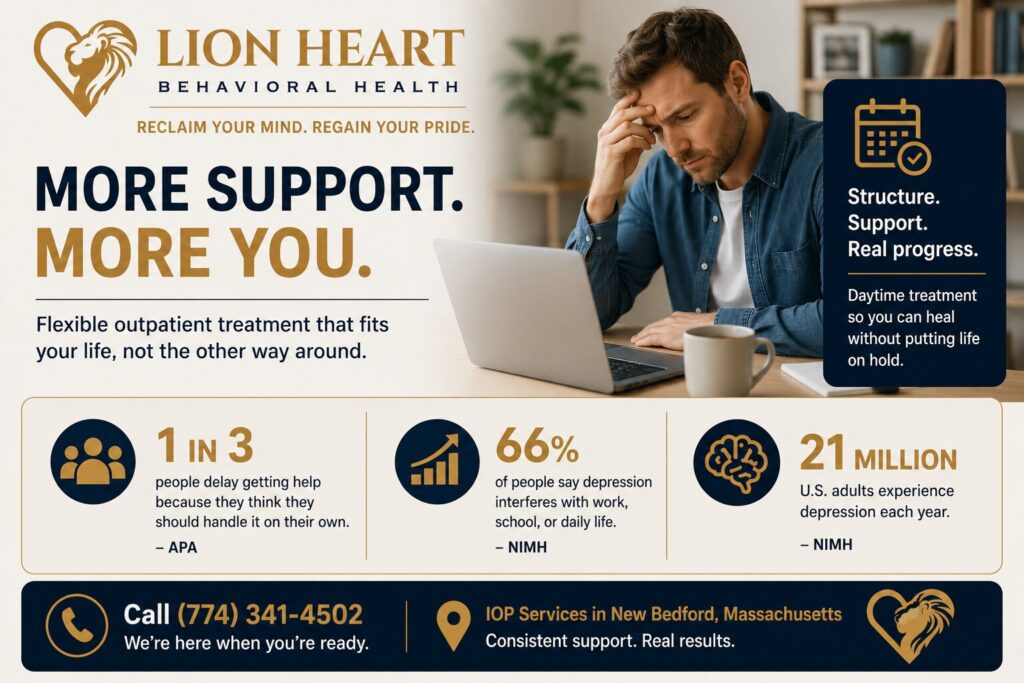
It’s More Common Than You Think to Leave Treatment and Come Back
People rarely talk about this part openly.
Sometimes someone starts treatment and genuinely wants help—but then shame, fear, logistics, or overwhelm take over.
They miss one session.
Then another.
Then enough time passes that returning feels embarrassing.
Many people quietly assume:
“They probably don’t want me back.”
“They’re going to judge me.”
“I already messed this up.”
But recovery and mental health treatment are not school attendance records. People pause care all the time for complicated human reasons.
Sometimes symptoms get worse before people know how to talk about them. Sometimes work becomes overwhelming. Sometimes someone returns to old coping patterns because they’re exhausted.
That doesn’t erase the part of them that still wants help.
At Lion Heart Behavioral Health, we understand that people don’t disappear because they’re lazy or hopeless. Most disappear because they’re overwhelmed, ashamed, or scared.
And often, what helps most is simply hearing:
“You can come back.”
Weekly Support Sometimes Stops Being Enough
There are seasons of life where weekly therapy provides exactly the right amount of support.
Then there are seasons where everything becomes heavier all at once.
Relationship stress. Panic attacks. Depression. Burnout. Increased substance use. Grief. Trauma responses. Isolation.
In those moments, a single therapy session can start to feel like trying to refill an empty tank with a teaspoon.
You may leave therapy feeling grounded on Tuesday and emotionally flooded again by Thursday.
That gap matters.
More consistent treatment can help create stability between sessions instead of asking someone to hold themselves together alone for six difficult days in a row.
For many people searching around New Bedford, realizing weekly therapy not enough support applies to them can feel emotional at first. There’s often guilt attached to needing “more.”
But needing additional care is not weakness.
It’s information.
You’re Allowed to Need More Help Without Hitting Bottom
A lot of people think treatment only exists for people in extreme crisis.
That belief keeps many struggling adults isolated much longer than necessary.
You do not need:
- A dramatic collapse
- A DUI
- A psychiatric hospitalization
- A public breakdown
- A destroyed career
- A ruined relationship
to deserve support.
Sometimes the most painful place to live is the middle ground where you’re functioning just enough to avoid intervention—but suffering too much to enjoy your life.
People in this space often say things like:
- “I should be able to handle this.”
- “Other people have it worse.”
- “I just need to push through.”
- “I don’t have time to fall apart.”
But emotional pain does not become less valid simply because you’re still showing up to work.
One of the hardest things high-functioning people learn is this:
survival mode can become so normal that they forget what calm even feels like.
What Flexible Outpatient Support Can Look Like
For many adults near New Bedford, flexible outpatient care offers a middle path between weekly counseling and live-in treatment.
Support may include:
- Multiple therapy sessions during the week
- Group counseling for connection and accountability
- Emotional regulation support
- Coping skills for stress, anxiety, or substance use
- Structured schedules that still allow work or family responsibilities
- Continued care without overnight stays
The goal is not to remove someone from their life completely.
The goal is to help them stay connected to their life without drowning inside it.
And for many people, structure itself becomes relieving.
Not because they’ve failed—but because carrying everything alone stopped working.
Healing Does Not Have to Look Dramatic
Sometimes healing starts quietly.
It looks like:
- Answering a call you almost ignored
- Returning after missing weeks of treatment
- Admitting you’re more overwhelmed than you’ve been saying
- Letting someone help you carry things for a while
- Realizing exhaustion is not the same thing as strength
There is no perfect time to ask for support.
Most people who finally reach out wish they had done it sooner.
Not because life suddenly became easy afterward—but because they stopped trying to survive everything alone.
FAQ: Flexible Mental Health and Outpatient Support Near New Bedford
Can I keep working while attending outpatient treatment?
In many cases, yes. Flexible outpatient programs are often designed for people balancing work, family, or school responsibilities. Scheduling may include daytime or evening options depending on individual needs.
What if I already stopped attending therapy or treatment before?
You are not the only person who has stepped away from care and considered returning later. Many people pause treatment because of stress, shame, finances, scheduling issues, or worsening symptoms. Reaching back out is more common than you think.
How do I know if weekly therapy is no longer enough?
Some signs include:
- Feeling emotionally overwhelmed between sessions
- Increased anxiety, depression, or substance use
- Struggling to function at work or home
- Feeling isolated most of the week
- Repeating the same crisis patterns without stability
Needing more support does not mean therapy failed. It may simply mean you need more consistency right now.
Is outpatient treatment only for severe situations?
No. Many people seek additional support before reaching a major crisis point. Outpatient care can help individuals stabilize symptoms, rebuild routines, and receive more structure without requiring overnight treatment.
What if I’m nervous about asking for help?
That’s normal.
A lot of people feel embarrassed, uncertain, or worried they’ll be judged. But reaching out does not require you to have everything figured out. Often, the first conversation is simply about understanding what kind of support could help.
You Don’t Have to Carry This Alone Anymore
If you’ve been quietly wondering whether you need more support—but feel afraid of what that means for your job, your schedule, or your life—you are not failing.
You are human.
For people exploring compassionate treatment options near New Bedford, there are ways to receive consistent care while still staying connected to work, family, and daily responsibilities.
Call (774) 341-4502 or explore our iop services to learn more about our programs.