
Somewhere between your third “just one” and that lingering sense of meh, a question quietly surfaces: What if I feel better without alcohol? You haven’t hit a dramatic rock bottom. You’re not falling apart. But you’re also not thriving. That inner nudge? It matters.
At Lion Heart Behavioral Health’s Alcohol Addiction Treatment program in Raynham, MA, we help people unlearn the cultural conditioning that made alcohol feel essential—without forcing labels or ultimatums. This is for the sober curious. The in-between. The quietly exhausted.
1. Recognize the Script You’ve Been Following
You didn’t invent your relationship with alcohol—society helped write it.
From brunch mimosas to post-work happy hours, alcohol is baked into how we celebrate, grieve, network, unwind, and cope. Commercials show laughter and clinking glasses, not hangovers and self-doubt. Even when it’s hurting us, drinking often feels like the default, not the problem.
When you start questioning alcohol, you’re not just challenging a personal habit—you’re pushing back on a whole cultural system. That takes guts.
🧠 Stat to Know:
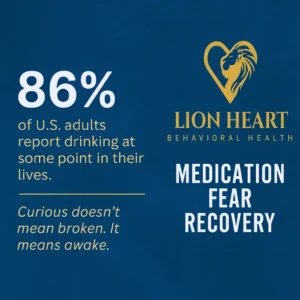
86% of U.S. adults report drinking at some point in their lives, but that doesn’t mean it’s always serving them. Curious doesn’t mean broken. It means awake.
2. Break Free from the “All or Nothing” Trap
You don’t need a dramatic story to deserve support.
Many people think alcohol addiction treatment is only for those who’ve “lost everything.” But here’s the truth: a growing number of people seek support because they don’t want to lose everything. They see the early cracks—fatigue, irritability, brain fog, anxiety—and they choose to address it before it spirals.
Treatment doesn’t have to mean abstinence forever. It can mean exploration. It can mean clarity. It can mean asking: What would my life look like if alcohol didn’t run the show?
3. Name What Alcohol Was Actually Doing for You
This part? It’s honest. Maybe even a little raw.
Alcohol isn’t just a drink. For many, it’s a coping tool, a social lubricant, a stress reliever. It’s how we quiet our brains, soften awkwardness, or feel temporarily free. And it worked—until it didn’t.
Unlearning alcohol’s role starts with truth-telling: What was it giving me? What was it covering up? This is the kind of conversation you can have in treatment—without judgment. At Lion Heart, we help you replace alcohol with tools that are actually sustainable. Breathing, not numbing. Connecting, not escaping.
4. Reimagine Social Life Without Booze
This fear is real: What if sobriety makes me boring?
Drinking often becomes our go-to for socializing. First dates. Holiday parties. Family reunions. It can feel impossible to imagine feeling loose, confident, or included without it.
But here’s the reframe: alcohol doesn’t create connection—it imitates it. When you remove the haze, what’s left is clarity. Real laughter. Present conversations. Emotional intimacy you don’t forget the next morning.
If you feel unsure how to navigate social settings while sober or sober-curious, group therapy can help. You’ll meet others asking the same questions—and building new ways of being.
5. Learn How to Sit with Yourself, Not Escape Yourself
This is the part most people avoid—but it’s also where healing lives.
Alcohol can act like a mute button for hard emotions. It gives temporary relief, but it doesn’t solve anything. Choosing to explore sobriety means facing those feelings with open eyes—and that can be terrifying.
But here’s the truth: you don’t have to do it alone. In our alcohol addiction treatment programs, we teach emotional regulation, mindfulness, and trauma-informed strategies that help you stay with yourself. Not punish yourself. Not shame yourself. Just stay.
That’s where real peace begins.
6. Embrace the Gray Area
Maybe you’re not ready to quit forever. That’s okay.
Maybe you’re testing the waters with a Dry January. Or maybe you’re a few weeks alcohol-free and wondering, What now? There’s no one path. No one label. No one outcome you have to chase.
At Lion Heart, we believe in gray-area recovery. That means helping people explore what works for them—not what worked for someone else. Whether you want to cut back, quit completely, or just talk to someone who gets it, you’re welcome here.
7. Hear from Others Who’ve Walked the Path
“I didn’t hit rock bottom. I just hit a point where I wanted more. More energy. More clarity. More me.”
– Alcohol Treatment Client, 2024
“At first, I was scared treatment meant I had to give up fun. But honestly? I didn’t lose fun. I lost regret.”
– Lion Heart Group Member
“Lion Heart never made me feel like I had to call myself an addict. They helped me figure out what kind of life I actually wanted.”
– Alumni, Raynham MA
FAQ: Alcohol Addiction Treatment for the Sober Curious
Do I have to be “addicted” to seek alcohol treatment?
No. You don’t need to meet a diagnostic label to benefit from support. Many people in our programs are exploring their relationship with alcohol—not trying to prove anything.
Is alcohol treatment only for people who want to quit forever?
Not at all. Treatment can support harm reduction, moderation, or full sobriety. The focus is on what feels right and sustainable for you.
What if I’ve never been to treatment before?
That’s completely fine. Most of our sober-curious clients are first-timers. We’ll walk you through what to expect, help you feel safe, and make sure you never feel judged or pushed.
Will my privacy be protected?
Yes. Our alcohol addiction treatment services are completely confidential. We take your privacy and dignity seriously.
I live in Raynham—can I get help locally?
Absolutely. Our alcohol treatment center in Raynham, Massachusetts offers outpatient services that are flexible, accessible, and deeply supportive for the local community.
📞 You don’t have to have it all figured out.
Whether you’re questioning your habits, struggling quietly, or just ready to feel something different—Lion Heart Behavioral Health is here to support your next step.
Call us at (774) 341-4502 or visit our Alcohol Addiction Treatment program page to explore what recovery could mean for you. No pressure. If you’re near New Bedford, or Bristol County, Lion Heart offers programs with that same approach. Just clarity.