

Starting over can feel heavier than starting fresh. If you’ve left an intensive outpatient program (IOP) before, the idea of coming back might stir up all kinds of uncomfortable feelings—shame, doubt, even frustration. At Lion Heart Behavioral Health’s Intensive Outpatient Program in Raynham, Massachusetts, we meet people every week who feel this way. Here’s the truth: leaving isn’t failure, and returning isn’t weakness. Sometimes, it’s the smartest move you can make for yourself.
Here’s how to make IOP work for you the second time—on your terms, with fewer shoulds, and more understanding.
Why Leaving an Intensive Outpatient Program Doesn’t Mean You Failed
It’s easy to think, “If I left, maybe I’m just not cut out for treatment.” That’s not how it works. Treatment isn’t a straight line, and IOP isn’t designed to be perfect on the first try. Life outside of group doesn’t pause when you’re in recovery. Stress, triggers, relationships, and responsibilities all pile up—and sometimes, it’s too much. Or maybe the first program just wasn’t the right fit. None of this means you aren’t capable of recovery.
At Lion Heart Behavioral Health, we see IOP more like learning to walk again after a tough fall. Every attempt builds muscle. Every return brings new awareness. And yes—people who leave and return often end up more engaged because they know what to ask for this time around.
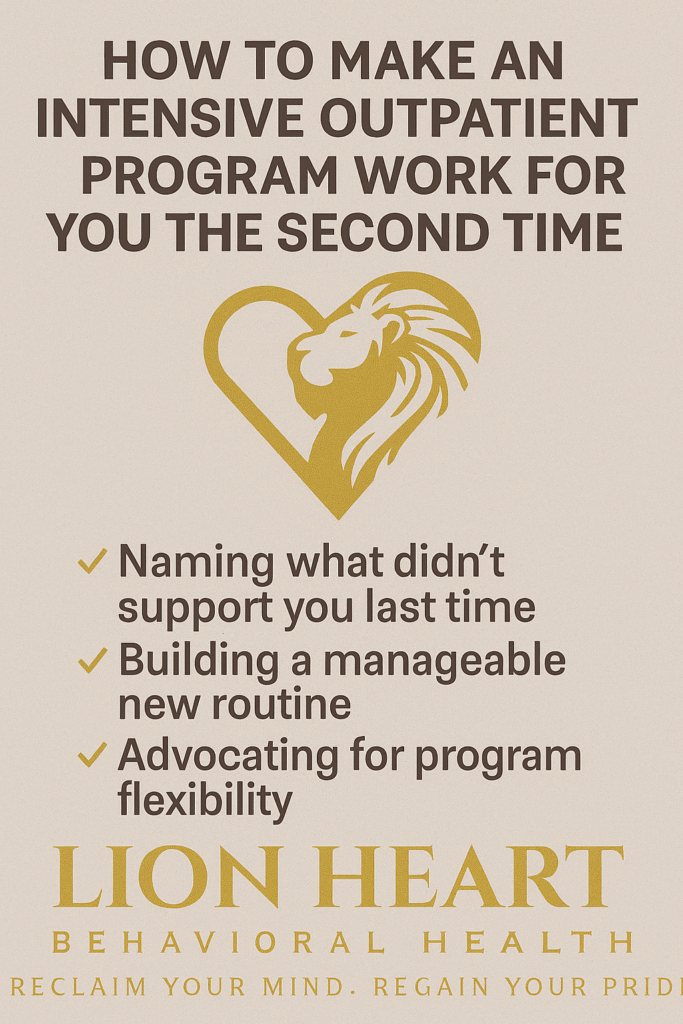
Start by Naming What Didn’t Work Last Time
Before jumping back in, take a breath. Instead of powering through the same routine, ask yourself some honest questions:
- Did I feel overwhelmed by the schedule?
- Did I connect with the group, or did it feel awkward?
- Were outside responsibilities like work or family pulling me in too many directions?
- Was I holding something back in sessions?
Getting clear on what didn’t work can make a huge difference. Maybe mornings were impossible, and evening groups are better for you. Maybe you need individual therapy alongside group. Maybe you didn’t feel safe enough to open up last time. Lion Heart offers flexibility to adjust these pieces so your IOP experience can be more aligned with your actual life.
Build a Realistic Outside Routine
IOP isn’t just about what happens during group hours. The other 21 hours of your day matter, too. One of the most overlooked ways to succeed in IOP is to build simple, supportive habits around it. That doesn’t mean changing your whole life overnight—it means adding steady anchors.
Start with basics:
- Can you meal prep one easy lunch for your group days?
- Could you spend 10 minutes after group writing down takeaways before the world gets noisy again?
- Would a short walk after sessions help your brain settle?
At Lion Heart, we encourage clients to keep outside routines manageable—especially for second-timers who already know how easy it is to burn out.
Focus on Connection, Not Perfection
If you left IOP before, you may feel pressure to “do it right” this time. Let’s clear that up: there’s no perfect attendance award, no perfect share in group, no gold star for performing recovery. The point is connection—staying connected to people who understand, to strategies that help, and to yourself.
Our clinicians at Lion Heart often remind returning clients: showing up imperfectly is still showing up. Bad days happen. Anxiety happens. Even relapse happens. What matters most is practicing connection, especially when it feels difficult. Progress in IOP is measured in reconnection—not perfection.
Let Your Goals Change This Time Around
Your goals aren’t set in stone just because you’ve done treatment before. Sometimes, the first time around, people set goals like “fix everything” or “never feel anxious again.” This time, it’s okay to set goals that feel smaller but more real:
- “Learn how to ask for help without guilt.”
- “Show up to group even when I feel like hiding.”
- “Make one sober connection outside of treatment.”
At Lion Heart, your treatment goals can evolve. Your clinician will check in with you regularly to make sure what you’re working on feels relevant and supportive—not overwhelming.
Advocate for Yourself: You Deserve Custom Support
One advantage of returning is that you already know more about yourself. You can advocate for what works best for you. Need more one-on-one time? Say it. Prefer smaller groups? Let us know. Want help building up your outside supports like family or housing? It’s okay to ask.
At Lion Heart Behavioral Health, we believe your treatment should flex around your needs—not force you to fit into a rigid mold. Returning to IOP gives you the chance to make your voice part of the process.
Frequently Asked Questions About Returning to Intensive Outpatient Programs
Can I rejoin IOP if I left without completing it?
Absolutely. Many clients return after taking time away, and we understand that life happens. At Lion Heart, we keep the door open for clients to come back without judgment or shame.
Will I have to start from the very beginning?
Not necessarily. We meet you where you are. Depending on how long you were away and your goals, you might rejoin mid-stream or start fresh with updated goals. It’s always a collaborative decision.
What if I relapsed after leaving IOP?
Relapse does not disqualify you from returning—it’s more common than you think. We treat relapse with compassion, not punishment. Coming back after relapse shows strength, not failure.
How is Lion Heart’s IOP in Raynham different for second-time clients?
Our team pays extra attention to helping returning clients personalize their plan. We’ll talk about what worked, what didn’t, and help you adjust your schedule, group focus, or individual sessions to make it feel more sustainable.
Is it worth trying again if I felt disconnected the first time?
Yes. Sometimes a new group, different schedule, or fresh clinical perspective can make all the difference. Many clients report feeling more connected the second time because they’re clearer on what they want out of it.
You Are Always Welcome Back at Lion Heart
Starting over takes courage, but you don’t have to do it alone. Whether it’s been weeks or months since you left, Lion Heart Behavioral Health’s Intensive Outpatient Program in Raynham, Massachusetts is here when you’re ready to reconnect. Call (774)238-5533 or visit our IOP program page to talk to someone who gets it—and to take your next step forward.