

If you’re here, it probably means your child is struggling—and not in a way that can be shrugged off as just “having a rough patch.”
Maybe it started subtly: a shift in their mood, slipping grades, changes in friends. Then came the drinking. The anger. The shutdowns. Maybe you found empty bottles or watched them spiral through something they couldn’t explain. Maybe it all came to a head in one moment you can’t unsee.
Whatever brought you here, one thing is clear: you’re scared. You’re exhausted. And you’re trying to figure out if now is the moment to get more serious help—like an alcohol treatment program.
This blog won’t tell you what to do. But it will help you breathe through the question and walk toward answers that feel rooted in care, not panic.
Why This Hurts So Much: The Parent Crisis That No One Prepares You For
You thought your role would be clearer. That by the time your child reached adulthood, the big decisions would be behind you. But now you’re googling treatment centers at 2 a.m., wondering if you’re overreacting—or not reacting fast enough.
Let’s start here:
If your gut says something is off, it probably is.
And if your child is drinking in ways that are escalating, impacting their safety, or altering who they are—you’re not wrong to wonder whether a structured alcohol treatment program could help.
You’re not “sending them away.” You’re reaching for support they actually need.
What Alcohol Use Looks Like During a Crisis
Alcohol in young adults often masks deeper pain: anxiety, trauma, identity stress, social pressure, shame. That’s why it doesn’t always look like “alcoholism.” It might look like:
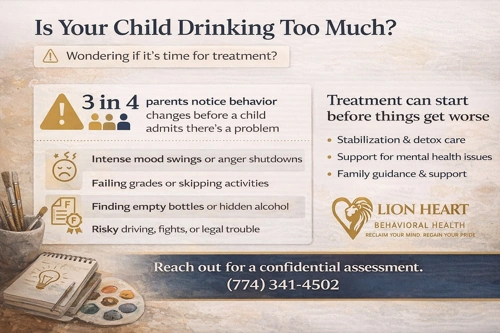
- Sudden mood swings or isolation
- Intense panic or depressive crashes after drinking
- Academic or work disruptions
- Legal trouble, fights, or impulsive risk-taking
- Telling you “I’m fine,” but physically or emotionally falling apart
The drinking itself is often a symptom, not the whole story. Which is why an alcohol treatment program must address more than just the substance.
At Lion Heart Behavioral Health in Raynham, we offer integrated support that includes therapy, trauma-informed care, psychiatric services, and family engagement.
Why You Don’t Have to Wait for Rock Bottom
So many parents carry the belief that they’re “not allowed” to consider treatment unless their child has hit a textbook rock bottom—homeless, arrested, hospitalized.
But that delay can cost precious time. And it can reinforce the idea that things have to get worse before they’re allowed to get better.
What if treatment was the thing that prevented a rock bottom?
You don’t need your child to fail harder before they qualify for help. You just need to see that they’re hurting—and that what’s happening now isn’t something they can fix on their own.
“What If They Don’t Want Help?”
This is one of the most heartbreaking realities for parents.
You’re ready for help. But your child may not be. They might say:
- “I can handle it.”
- “It’s not that bad.”
- “I don’t want to go to some rehab.”
They’re not being defiant for fun. Denial is a protective defense—especially when alcohol has become their coping mechanism.
It’s common for young adults to minimize, deflect, or push back when treatment is introduced. That doesn’t mean it’s the wrong idea. It means they’re scared. Embarrassed. Or not ready to imagine life without the substance that’s been helping them survive.
That’s why compassionate intervention is key. At Lion Heart, we don’t wait for perfect motivation. We create space for it to grow.
What an Alcohol Treatment Program Offers That Home Can’t
You’ve likely tried a lot already. Conversations. Boundaries. Consequences. Maybe even outpatient therapy.
But if your child is stuck in a cycle of relapse, emotional volatility, or self-harm—even with support in place—it may be time for something more structured.
In a professional alcohol treatment program, your child will receive:
- Stabilization and safety during detox or crisis moments
- Clinical support for mental health and trauma
- Skill-building around coping, communication, and self-awareness
- Medication management if needed
- Peer support from others close in age and experience
- Family collaboration to repair ruptures and rebuild trust
This isn’t about controlling them. It’s about supporting them in a way that’s hard to do alone.
What “Success” Might Look Like
Treatment doesn’t always look like a miracle transformation. But real success shows up in small, powerful shifts:
- Your child cries during a therapy session—for the first time in years
- They text you a genuine “thank you” after group
- They admit they’re scared, instead of pretending to be fine
- They go 30 days without drinking—and start to believe it’s possible
- They laugh again, without alcohol in their system
We’ve seen this happen—in our Raynham alcohol treatment program and in families across Massachusetts. We’ve watched parents reconnect with kids they thought they’d lost.
You deserve that too.
The Parent Experience: You’re Allowed to Get Support, Too
This isn’t just your child’s crisis. It’s yours too.
It’s sleepless nights. Shame you shouldn’t carry. Fear of saying the wrong thing. Guilt that maybe this is your fault. (It’s not.)
At Lion Heart, we work directly with parents to make sure you’re not alone. Our care includes:
- Family therapy and check-ins
- Psychoeducation about addiction and recovery
- Support navigating boundaries, expectations, and next steps
- Space for your grief, hope, and hard questions
You are allowed to get help for yourself, even as you seek help for them.
When You’re Unsure What to Do—Start With a Conversation
You don’t have to be 100% sure before reaching out. You don’t need the right diagnosis, the perfect backstory, or the cleanest language.
You can say:
“My child is drinking more and I’m worried.”
“We’ve tried therapy, but it’s not enough.”
“They’re falling apart, and I don’t know what to do.”
And we’ll meet you there.
If you’re looking for an alcohol treatment program in New Bedford, MA or anywhere nearby, know that Lion Heart offers quiet clarity in moments of chaos.
Frequently Asked Questions From Parents
What if my child isn’t legally an adult yet?
Our alcohol treatment program supports adults 18+. If your child is under 18, we’re happy to help you connect with reputable adolescent programs in the region.
Is this inpatient or outpatient care?
We offer various levels of care—including PHP, IOP, and outpatient programs—that can be matched to your child’s needs. A full assessment will determine the best fit.
Will I get updates about my child’s progress?
Yes. With consent, our team communicates regularly with parents and families. We also include you in family therapy when appropriate.
How long is the program?
It varies by individual. Some stay 30–90 days; others continue in outpatient after that. We design care around progress, not a preset timeline.
What if my child has mental health issues in addition to alcohol use?
That’s common—and it’s part of what we treat. We’re equipped to support co-occurring disorders like depression, PTSD, anxiety, or bipolar disorder as part of the alcohol treatment plan.
You’re Not Failing—You’re Fighting for Them
This isn’t easy. But it’s brave.
If you’re even considering an alcohol treatment program, it means you’re showing up for your child in one of the hardest moments of your life.
Call (774) 341-4502 or visit our Alcohol Treatment Program page to learn more about services in Raynham, Massachusetts.
We’re here to help you figure out what’s next—and to remind you: there is still a way forward.