

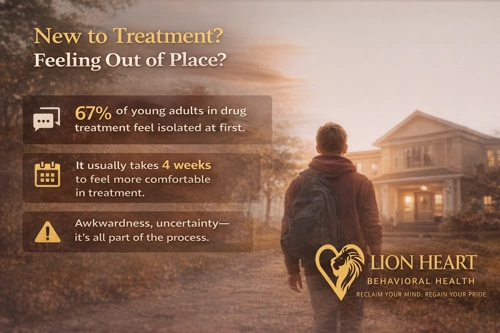
Walking into a drug treatment program for the first time feels a little like transferring schools mid-semester. Everyone seems to know the rules but you. There are inside jokes, routines, unspoken rhythms—and you’re just trying to remember the name of the group leader.
If you’re young, newly sober, and caught in that early-treatment headspace of “Do I even belong here?”—you’re not broken. You’re just early. The beginning can feel weird, but it doesn’t stay that way.
Here are ten painfully real, totally normal moments almost everyone goes through in treatment before things finally start to click. If you’ve had these? You’re right on schedule.
1. The “Everyone Else Knows What to Say” Feeling
You’re in group. People are sharing openly, maybe even crying. Someone throws out a term like “radical acceptance,” and everyone nods like it’s Tuesday.
Meanwhile, you’re sitting there like: Do I say something? What if I say it wrong? Or worse—what if I actually start crying and can’t stop?
It’s okay. No one expects you to be polished. Most people are way more focused on what they just said than judging your silence or stumble. The fact that you’re there is already enough.
2. Overthinking Your First Share (and Then Cringing Later)
You finally speak up in group—and then immediately regret it.
You replay it over and over afterward, thinking: Was that too personal? Did I sound fake? Did I make it weird?
The truth? Everyone does this. Even the people who seem confident. Sharing in a drug treatment program is vulnerable. But that’s also what makes it powerful.
The more you practice, the less scary it gets. The cringe fades. The connection builds.
3. Wondering If You’re “Sober Enough” to Be There
Maybe your story doesn’t sound like the ones you’ve heard. Maybe you still question if you really “qualify.” You’re not homeless. You didn’t overdose. You still got good grades. So what are you doing in treatment?
Here’s what: You were hurting. That’s enough.
Treatment isn’t about hitting rock bottom. It’s about realizing you deserve better—and deciding not to wait until it gets worse.
If you’re in the room, you belong in the room.
4. Feeling Like the “Young One” in the Room
Being the youngest in a group can feel isolating. The life experiences are different. The references are different. Sometimes it feels like you’re listening to people talk about marriages, divorces, or parenting while you’re just trying to stay off Snapchat for 24 hours.
But emotional pain isn’t age-specific. Neither is healing.
Many older clients say they wish they’d had the insight to start earlier. And many young people say they didn’t feel how lucky they were to start young—until later.
5. Missing Your Old Life (Even If It Was Wrecking You)
This one is complicated. You might miss the chaos, the people you used with, even the confidence you felt when you were high.
Grieving your old life doesn’t mean you want to go back to it. It means it was familiar. Comfortably uncomfortable.
Early recovery often feels flat and weird. It takes time to build a life you actually want—and that life can’t be rushed. But it’s coming.
6. Not Knowing How to “Act” in a Drug Treatment Program
Are you supposed to be serious? Funny? Quiet? Raw?
It can feel like everyone else got the emotional memo, and you’re still figuring out what version of yourself to bring.
Good news: You don’t have to perform.
The most respected people in a treatment program aren’t the ones with the best stories. They’re the ones who show up honestly—even when it’s messy.
7. Feeling Weirdly Exhausted (Even Though You’re “Just Sitting”)
This is real.
You go to a few groups, eat a meal, maybe talk to a counselor—and by mid-afternoon, you feel like you ran a marathon. Emotionally. Socially. Existentially.
Early sobriety is draining because you’re processing everything without numbing. That kind of emotional lifting takes energy. It’s okay to be tired. It’s not weakness—it’s growth.
8. Thinking Everyone Else Is Making Friends But You
You see other people swapping numbers, laughing before group, sharing rides home—and think: Great. I missed the connection train.
You didn’t.
Most friendships in treatment don’t happen instantly. They grow from quiet, awkward moments—like two people grabbing the same granola bar or side-eyeing the same group exercise. Belonging isn’t loud. It’s built.
9. Having a “Why Am I Even Here?” Day
You wake up one day and suddenly the whole thing feels pointless.
You’re not sure if treatment is working. You feel disconnected from your emotions. You’re bored. You’re irritated. You’re floating.
That’s normal.
Those “blah” days often come right before a breakthrough. They don’t mean nothing’s happening. They mean you’re resting between waves of change.
10. Realizing, One Day, That It Feels… Less Weird
There’s no big moment. It just sneaks up on you.
Maybe you laugh without overthinking it. Maybe someone remembers your name. Maybe you walk into group and don’t feel like hiding.
You’re not totally at home yet—but you don’t feel like a stranger anymore. That shift? That’s how you know something’s working.
You’re Not Broken. You’re Just Early.
If you’re young and new to recovery, treatment can feel like wearing clothes that don’t fit yet. But you grow into them.
And if you’re looking for a drug treatment program in Raynham, MA, or near areas like New Bedford or Bristol County, Lion Heart Behavioral Health creates space for those early, awkward, necessary moments of recovery.
They know what it’s like to be the young one trying to figure it all out. And they’ll meet you where you are.
Frequently Asked Questions
Is it normal to feel out of place in treatment?
Yes. Almost everyone feels weird or unsure at the beginning—especially young people. It takes time to feel like you fit in. That doesn’t mean something’s wrong. It means you’re adjusting.
What if I don’t have a “rock bottom” story?
That doesn’t disqualify you. Many people enter treatment because they don’t want to hit rock bottom. Pain is pain. Your story matters—even if it looks different.
How do I make connections in a program?
Start small. Say hi to someone. Sit near someone new. Be open to awkward conversations. Friendships in treatment usually start from shared discomfort, not shared hobbies.
Do younger people have different treatment needs?
Sometimes, yes. Many younger clients benefit from peer-focused groups, flexible communication styles, and support navigating early adult stressors. Lion Heart’s drug treatment program can help match you to the right environment.
What if I’ve tried before and still feel disconnected?
Try again. The “fit” matters—and sometimes you don’t find it the first time. New environment, new timing, new staff—it can change everything.
You’re Not the Only One Wondering If You Belong
And the answer is: you do.
You don’t have to be confident. Or ready. Or totally sure. You just have to be curious enough to take the next step.
Call (774) 341-4502 or visit our Drug Treatment Program page to learn more about our services in Raynham, Massachusetts.
It might still feel weird at first. But you won’t stay the “new kid” forever.