

You’re still showing up.
Work gets done. Emails are answered. Bills are paid. From the outside, life appears stable — maybe even successful.
But inside, there’s a quiet exhaustion that’s getting harder to ignore.
Many people who eventually explore an intensive outpatient recovery program describe this exact feeling. They were still managing their responsibilities, but the effort required to keep everything together was becoming overwhelming.
High-functioning struggle is difficult to recognize because nothing has “collapsed.” Life continues moving forward. Careers continue. Families depend on you.
And yet something inside feels heavier every week.
That tension — between outward stability and internal pressure — is often where real change begins.
When Everything Looks Fine But Doesn’t Feel Fine
High-functioning individuals often carry two versions of life.
The public version looks steady.
You meet deadlines. You support your family. You keep commitments. Friends may even describe you as the reliable one — the person who always holds things together.
But the private version tells a different story.
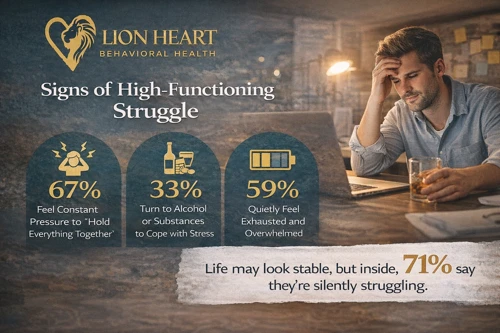
Sleep becomes harder. Stress feels constant. Drinking or using substances slowly becomes the fastest way to quiet your mind after long days.
You might promise yourself you’ll cut back tomorrow.
Then tomorrow comes, and the same stress returns.
The cycle continues because life never slows down enough to address the real problem.
The Pressure Of Being The Person Who Always Handles Everything
Many high-functioning people carry an identity built around responsibility.
You’re the dependable one.
The person people call when things go wrong.
The one who solves problems instead of creating them.
That identity can make it incredibly hard to admit you’re struggling.
Because if you’re the strong one, who do you turn to?
So the stress stays internal.
You keep moving forward, even as the effort required to maintain that image grows heavier.
Eventually the pressure starts to leak into everyday life.
Small frustrations feel larger. Fatigue builds. Focus becomes harder.
But because you’re still functioning, it’s easy to convince yourself everything is manageable.
Why High-Functioning Struggle Often Stays Hidden
One reason high-functioning addiction or burnout goes unnoticed is that success can hide it.
You may still be performing well at work.
Your social life might still appear normal.
You might still be meeting expectations in every visible area of life.
But internally, things may feel different.
Some people describe it as running on emotional fumes.
Others describe it as carrying a backpack that gets heavier every day — but no one else can see it.
And because the outside world still sees competence, it becomes easier to dismiss the internal strain.
The Moment When Quiet Concern Turns Into Awareness
For many people, there’s a specific moment when the quiet concern becomes harder to ignore.
It might happen during a sleepless night.
Or after noticing how often stress pushes you toward alcohol or other coping habits.
Or during a moment when you realize the things that once helped you relax no longer feel optional.
They feel necessary.
That realization can be unsettling.
But it can also be the moment where change becomes possible.
Some individuals navigating these moments in Bristol County, Massachusetts begin exploring structured recovery support not because life collapsed — but because they realized they didn’t want it to.
Structure Can Create Breathing Room
High-functioning people are often incredibly disciplined.
They know how to push through stress. They know how to meet expectations.
But personal change rarely happens through willpower alone.
It requires space.
Structure creates that space.
Consistent sessions, guided reflection, and practical strategies allow people to step out of the daily rush long enough to understand what’s actually happening beneath the surface.
Many people entering an IOP setting discover something unexpected.
Relief.
Not because life suddenly becomes easy, but because they finally have a place where honesty is allowed.
A place where they don’t have to maintain the image of having everything under control.
Keeping Your Responsibilities While Rebuilding Your Life
One of the biggest fears high-functioning individuals have about treatment is disruption.
They imagine having to disappear from work.
Explaining long absences.
Pausing their responsibilities.
But structured outpatient care often works differently.
It allows people to continue working, maintaining family roles, and staying present in daily life while receiving support.
This balance matters.
Because real recovery doesn’t happen in isolation from life — it happens while life continues.
People learn how to handle stress differently in the exact environments where that stress occurs.
The Surprising Relief Of Honest Conversations
For someone who has spent years holding everything together, honesty can feel unfamiliar at first.
You may not be used to talking openly about exhaustion.
Or about how often alcohol or substances have become a shortcut to turning your brain off after long days.
But something shifts once those conversations begin.
The tension of hiding disappears.
The constant pressure to appear fine begins to loosen.
Many people say the most powerful moment in structured support isn’t the first breakthrough.
It’s the first time they say something real out loud — and realize they’re not judged for it.
They’re understood.
Small Changes That Start Adding Up
Recovery rarely begins with dramatic life changes.
Instead, it often starts with small adjustments that gradually reshape daily routines.
Better sleep habits.
Recognizing emotional triggers before they escalate.
Learning healthier ways to decompress after work.
Creating boundaries around stress instead of absorbing it endlessly.
These changes may seem simple.
But consistency transforms them into powerful shifts.
Energy begins returning. Mental clarity improves. The constant background pressure slowly fades.
For individuals navigating this process in Raynham, Massachusetts, these small improvements often become the foundation for larger life changes.
Strength Looks Different Than Most People Think
Many high-functioning individuals believe strength means handling everything alone.
But real strength often looks very different.
It looks like noticing when something isn’t sustainable.
It looks like admitting you need support before things spiral further.
It looks like choosing long-term health over short-term coping.
That decision doesn’t erase responsibility or ambition.
In fact, it often strengthens both.
Because once the weight of constant stress begins lifting, people rediscover the energy and focus that helped them succeed in the first place.
You Don’t Have To Wait For A Crisis
One of the most common misconceptions about recovery is that it only begins after everything falls apart.
But many of the most successful recoveries start much earlier.
They begin with a quiet realization.
Life still works — but it doesn’t feel healthy anymore.
If you’re holding your responsibilities together while something inside feels increasingly unsustainable, that awareness matters.
It’s often the first sign that change is possible.
FAQs
Can someone still have a problem if they are functioning well in daily life?
Yes. Many high-functioning individuals maintain careers, relationships, and responsibilities while privately struggling with stress, alcohol use, or substance dependence.
Why do high-functioning individuals delay seeking help?
Because life still appears stable. Many people believe they need to reach a crisis point before seeking support, even when internal pressure is growing.
What makes structured recovery helpful for people with busy lives?
Structured outpatient care allows individuals to receive consistent support while continuing to manage work, family, and daily responsibilities.
Is recovery possible without stepping away from work completely?
Yes. Many programs are designed to fit around professional and family obligations, allowing people to rebuild healthier habits while remaining engaged in daily life.
What are early signs someone might benefit from structured support?
Common signs include increasing reliance on alcohol or substances to relax, chronic stress, sleep problems, emotional exhaustion, and difficulty managing pressure.
Why do many people feel relief once they begin structured support?
Because they finally have a space where honesty is possible. The pressure to maintain a perfect image disappears, allowing real healing to begin.
Call (774) 341-4502 to learn more about Intensive Outpatient Program in Bristol County, MA.