

Sometimes the shift happens quietly.
You’re still sober. Life is technically working. Your responsibilities are intact. From the outside, nothing appears broken.
But internally, something feels different.
The connection you once had to recovery feels faded. The routines that used to keep you grounded feel distant. You’re not in crisis — but you’re not exactly thriving either.
A lot of long-term alumni eventually land in this space. And when they do, some begin exploring options like structured daytime recovery support not because they’ve failed, but because they recognize something honest:
Recovery sometimes needs a reset.
If you’re reading this and something in you quietly relates to that feeling, you’re not alone. Many people who have built years of sobriety eventually discover that staying engaged in recovery requires adjustment, reflection, and sometimes renewed support.
The Quiet Drift That Can Happen After Years of Sobriety
Early recovery tends to be intense.
You may remember how much structure existed in those early days. Meetings were frequent. Therapy was active. Conversations about sobriety felt immediate and necessary.
Recovery had momentum.
But as time passes, life naturally fills that space.
Work responsibilities grow. Family commitments expand. Schedules get busier. The focus gradually shifts toward building a normal life again.
That’s a healthy part of recovery.
But sometimes something subtle happens along the way.
The routines that once kept you emotionally connected to recovery start fading into the background.
At first, nothing feels wrong.
But slowly, a quiet drift begins.
When Sobriety Becomes Maintenance Instead of Connection
Many people describe this stage in similar ways.
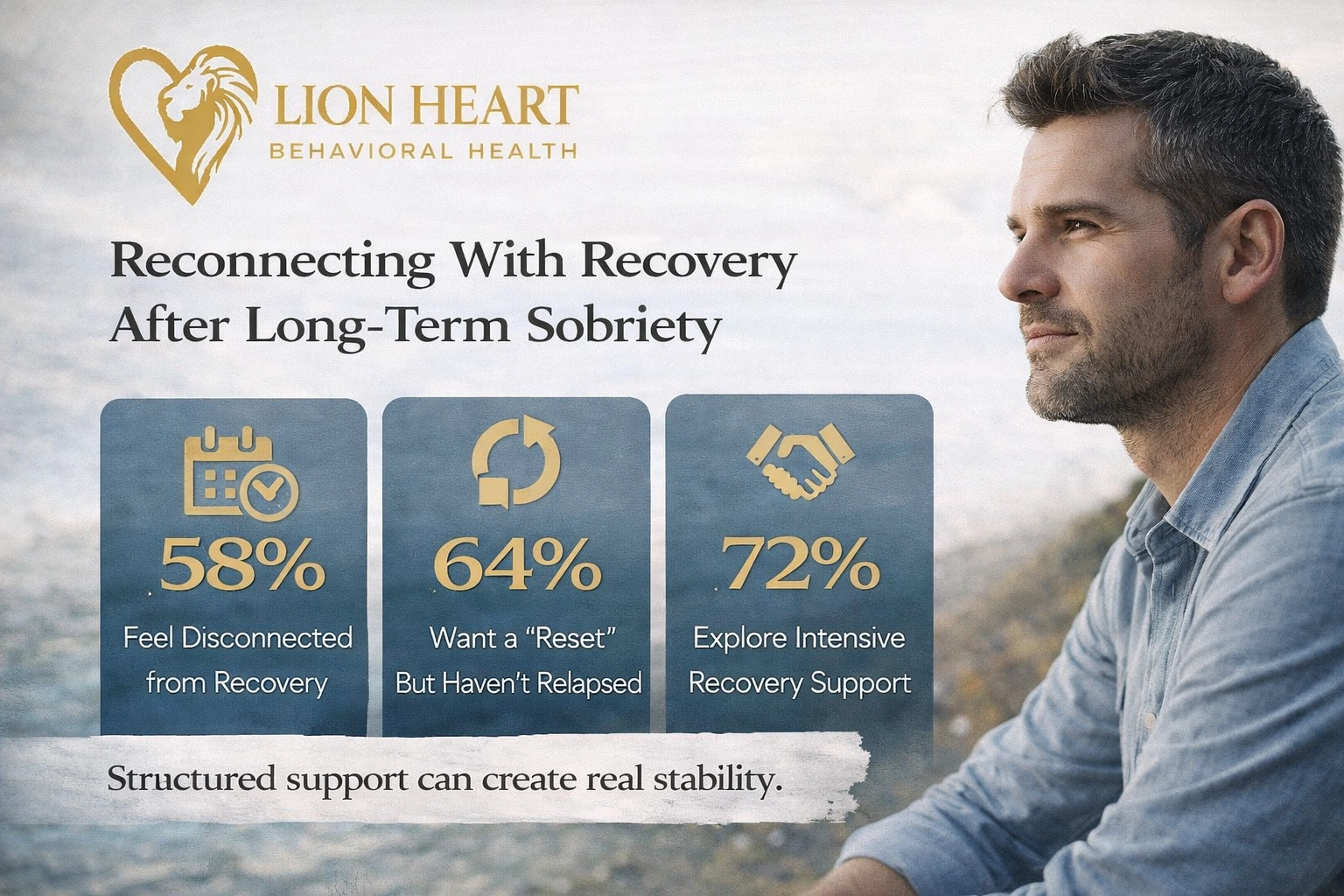
They’re still sober. They’re still responsible. But the emotional connection to recovery feels weaker than it once did.
Sobriety becomes maintenance instead of growth.
You may still follow the rules you once learned, but the sense of purpose behind them isn’t as strong.
Some people describe it as emotional flatness.
Others say it feels like the spark that once fueled their recovery has quietly dimmed.
You’re doing the right things — but the meaning behind them feels less alive.
This stage doesn’t mean recovery has failed.
It means recovery may be asking for attention again.
Why Returning for Support Can Feel Complicated
Many alumni hesitate to revisit treatment or structured care because of how it might look.
There’s often an internal voice that says:
“You should have this figured out by now.”
“You already did treatment once.”
“Going back means something went wrong.”
Those thoughts are common, but they aren’t accurate.
Recovery is not a single chapter. It’s a long relationship with your wellbeing.
And like any relationship, there are times when you reconnect, reassess, and strengthen what matters.
Returning to structured care years later isn’t about starting over.
It’s about recalibrating.
The Value of Pressing Pause on the Pace of Life
Life rarely slows down on its own.
Work demands continue. Family obligations remain. Stress accumulates quietly.
Structured daytime care creates intentional space to step outside the pace of everyday life.
Instead of constantly reacting to stress, you gain time to observe it.
You start noticing patterns again.
You remember how certain emotional triggers influence your behavior.
For many people revisiting programs, php, the biggest benefit is perspective.
Perspective allows you to reconnect with yourself in ways daily life rarely makes possible.
Reconnecting With the Foundations of Recovery
Years into sobriety, it’s easy to assume you’ve already learned everything you need.
But recovery skills often deepen over time.
Honest conversation.
Emotional awareness.
Understanding stress before it builds too far.
Learning how to reconnect with meaning beyond simply staying sober.
Structured support revisits these foundations in ways that feel surprisingly refreshing.
Not because you forgot them.
But because life slowly buried them under responsibility.
When those tools come back into focus, many alumni rediscover how powerful they still are.
The Courage It Takes to Come Back
Returning to treatment years later requires a different kind of courage than the first time.
The first time often happens during crisis.
Returning later requires something else: honesty.
You have to admit that even though life looks stable, something inside needs attention.
That level of self-awareness takes strength.
Many alumni who return to care say the most powerful moment isn’t the first therapy session.
It’s the moment they realize they no longer have to pretend everything is fine.
That relief alone can feel transformative.
Why a Reset Can Strengthen Long-Term Recovery
Many people assume recovery should look like steady upward progress forever.
But real recovery often moves through cycles.
Growth.
Stability.
Plateaus.
Reflection.
Renewal.
Returning to structured care during a plateau doesn’t erase the years you’ve built.
It strengthens them.
For individuals reconnecting with recovery in Raynham, Massachusetts, stepping back into structured support often feels less like repair and more like renewal.
They aren’t rebuilding from scratch.
They’re reinforcing the foundation that helped them build their lives in the first place.
Rediscovering Purpose Beyond Simply Staying Sober
One of the most powerful things alumni often rediscover during a reset is purpose.
In early recovery, the goal is often survival and stability.
Years later, the question becomes deeper:
What kind of life do I want to keep building?
When recovery reconnects with purpose, sobriety begins to feel alive again.
Instead of simply avoiding relapse, people begin building lives that genuinely fulfill them.
For many individuals reconnecting with care in New Bedford, Massachusetts, this shift becomes the moment recovery transforms from maintenance back into meaningful growth.
Recovery Is a Relationship That Evolves Over Time
One of the most important truths about long-term sobriety is that recovery evolves.
The person you were five or ten years ago isn’t the same person you are today.
Your life has changed.
Your responsibilities have grown.
Your emotional needs may look different now.
Returning to structured care is not about fixing something broken.
It’s about continuing the relationship you’ve built with your wellbeing.
And sometimes that relationship needs renewed attention.
FAQs
Is it common for long-term alumni to feel disconnected from recovery?
Yes. Many people experience periods where recovery feels routine or emotionally distant. This doesn’t mean sobriety has failed — it often means deeper reflection is needed.
Why do some people return to treatment years later?
Some individuals return to reconnect with recovery tools, address new life stressors, or regain emotional clarity when they feel stuck or disengaged.
Does returning to care mean someone relapsed?
Not at all. Many alumni seek additional support before relapse occurs because they recognize early signs of emotional disconnection.
Can structured daytime care help even after years of sobriety?
Yes. Many people find that revisiting recovery principles in a supportive environment strengthens long-term stability and personal growth.
Is it normal to feel embarrassed about returning to treatment?
Yes, but those feelings often fade quickly. Many alumni discover that seeking support again reflects commitment to their wellbeing, not failure.
What changes do people often notice after a recovery reset?
Common outcomes include renewed motivation, stronger emotional awareness, improved stress management, and deeper connection to recovery.
Call (774) 341-4502 or explore our Partial Hospitalization Program in Bristol County, Massachusetts to learn more.