

I’ll say something that many people think but don’t always admit out loud:
The first time I tried therapy, I walked away convinced it didn’t work.
I didn’t storm out. Nothing dramatic happened. I just slowly stopped going. Somewhere in the back of my mind I had decided, “This probably isn’t for me.”
But looking back now, I realize something important.
It wasn’t that help didn’t work.
It was that my expectations were quietly shaping the experience — and not in a helpful way.
What I thought therapy would look like, how fast I expected change, and what I believed progress should feel like all affected how I interpreted every session.
And once I started questioning those expectations, the entire experience shifted.
I Thought Therapy Would Feel Like Immediate Relief
When you’re dealing with anxiety, the desire for relief is intense.
Your mind is constantly scanning for problems. Your body stays tense. Small worries become giant spirals. You lose sleep replaying conversations that happened hours ago.
So naturally, when I first started seeking help, I expected something dramatic to happen.
I thought I would leave sessions feeling lighter, calmer, maybe even “fixed.”
But instead, the first few weeks mostly felt… normal.
Sometimes uncomfortable.
Sometimes confusing.
Sometimes quiet.
And my anxious brain immediately interpreted that as failure.
“If this was working,” I thought, “I’d feel different already.”
But anxiety doesn’t usually unravel in one moment. It’s built from years of thought patterns, stress responses, habits, and emotional reflexes. Untangling those things takes time.
The change often shows up gradually — a little less rumination, a slightly easier morning, one fewer panic spiral during a stressful day.
Small shifts that are easy to miss if you’re waiting for a lightning bolt.
I Expected Someone to Hand Me the Answer
Another expectation I carried without realizing it was the idea that therapy would function like a repair shop.
I explain the problem.
The professional gives the solution.
Problem solved.
But mental health doesn’t work like replacing a broken part in a machine.
Instead of giving me answers, the therapist asked questions. A lot of them.
Some felt simple. Some made me pause longer than I expected. Some made me realize I had been avoiding certain thoughts for years.
At first that felt frustrating.
I remember thinking, “Why are they asking me questions I don’t know the answer to?”
Later I realized those questions were the point.
Therapy isn’t about someone fixing you. It’s about helping you see patterns you couldn’t see alone.
And once you see them, you can begin changing them.
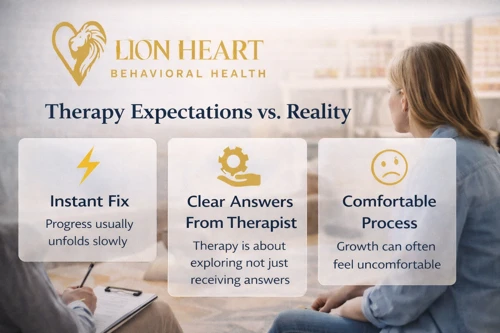
I Thought Feeling Uncomfortable Meant Something Was Wrong
One of the biggest misunderstandings I had was believing therapy should feel comfortable all the time.
If a session left me feeling emotional or reflective, my brain immediately labeled that as a negative experience.
But real change often comes with discomfort.
Not because something is wrong — but because you’re looking at things honestly.
Think about cleaning out a cluttered garage. At first it looks worse. Boxes everywhere. Dust in the air. Things you forgot about sitting in the corner.
But that mess is part of the process.
Emotional growth works in a similar way.
Sometimes you have to look at old fears, habits, or beliefs before you can move past them.
And that moment of reflection — even if it feels uncomfortable — is often where progress begins.
I Didn’t Realize I Was Holding Back
Another expectation that quietly affected my experience was the idea that I had to present myself a certain way.
I thought I needed to sound reasonable.
Put together.
In control.
So I filtered what I shared.
I talked about stress, but not the deeper fears underneath it.
I described anxious moments, but left out the thoughts that felt embarrassing or irrational.
That kind of editing creates distance.
The turning point came the day I finally admitted something simple but honest:
“I feel like my brain never stops analyzing everything.”
That moment changed the entire conversation.
Because therapy works best when the real thoughts — even the messy ones — are allowed into the room.
I Thought Progress Would Be Obvious
Movies and stories often portray breakthroughs as dramatic moments.
Someone suddenly understands everything.
They cry.
They feel better immediately.
Real life tends to be quieter.
For me, the first sign of change was subtle.
One day after a stressful situation, I noticed something strange.
My mind didn’t spiral for hours afterward.
I still felt anxious, but it faded faster than usual.
Another week I realized I had slept through the night without waking up to replay conversations in my head.
Those moments didn’t feel like huge victories at the time.
But looking back, they were clear signals that something was shifting.
The Way Structure Actually Helped Me
Another thing I misunderstood early on was the role of structure.
Before trying it, I assumed a structured anxiety therapy program would feel rigid or clinical.
Instead, the structure created something I didn’t know I needed: consistency.
Regular sessions created a space where reflection became routine instead of occasional.
Techniques that seemed small at first — breathing exercises, reframing anxious thoughts, noticing patterns — slowly started to compound.
It’s a bit like learning a language. The first few lessons feel awkward. But repetition slowly builds fluency.
For some people seeking support in New Bedford, Massachusetts, that kind of steady, guided structure becomes an important part of rebuilding emotional stability.
Expectations Can Quietly Shape Outcomes
Something I’ve learned since then is that expectations don’t just influence how we feel about therapy — they influence how we engage with it.
If you expect it to fail, you may hold back emotionally.
If you expect instant results, you might stop too early.
If you believe nothing will help, your brain looks for evidence to confirm that belief.
But expectations can change.
And when they do, the entire experience can change with them.
People exploring care options in Raynham, Massachusetts often arrive with skepticism for exactly these reasons. They may have tried something before, felt disappointed, and assumed that experience represents the whole picture.
But different settings, different therapists, and different approaches can create very different outcomes.
The Moment My Perspective Shifted
The shift for me wasn’t dramatic.
There was no single breakthrough moment.
Instead, it happened quietly after a session one afternoon.
I was walking back to my car and realized something unusual.
My mind felt… calm.
Not perfectly calm. But calmer than it had been in months.
There wasn’t a loop of worst-case scenarios running in the background.
There wasn’t a constant mental replay of conversations or future worries.
For the first time in a long time, there was just silence.
That moment made me realize something important:
Progress had been happening the entire time.
I just hadn’t noticed it because it didn’t match the story I had imagined in my head.
Why Skepticism About Therapy Is Actually Normal
If you’ve tried therapy before and walked away thinking it didn’t work, you’re far from alone.
Many people carry that same quiet disappointment.
Sometimes the timing wasn’t right.
Sometimes the fit with the therapist wasn’t ideal.
Sometimes expectations were simply out of sync with how the process actually works.
But skepticism doesn’t mean growth is impossible.
In many cases, it simply means someone had a real experience that didn’t meet their expectations yet.
And sometimes, revisiting that experience with a different perspective can open the door to something very different.
What People Often Realize the Second Time Around
One of the most interesting things I’ve heard from people who revisit therapy later is this:
The second experience often feels completely different.
Not necessarily because the treatment changed.
But because the expectations did.
People arrive with more curiosity and less pressure.
They allow themselves to be honest earlier.
They notice smaller signs of progress.
And those shifts can make the entire process feel more meaningful and effective.
FAQs
Why do some people feel like therapy didn’t work for them?
There are many reasons. Sometimes the timing isn’t right, the therapist isn’t the best fit, or expectations don’t match how therapy actually works. Progress can also be subtle, which makes it easy to miss early changes.
How long does it usually take to notice progress?
It varies widely. Some people notice small changes within a few weeks, while others need longer to see consistent improvements. Emotional patterns often take time to shift because they’ve been reinforced for years.
Is it normal to feel uncomfortable during therapy?
Yes. Reflecting on difficult experiences, thoughts, or fears can create temporary discomfort. That discomfort is often part of the process of understanding and changing patterns.
What if I tried therapy once and stopped going?
That happens frequently. People pause therapy for many reasons — schedules, emotional readiness, or feeling unsure about the process. Returning later with new insight can create a very different experience.
How do I know if therapy is helping?
Signs of progress can be small at first. You may notice fewer anxious spirals, better sleep, improved emotional awareness, or an increased ability to pause before reacting to stress.
What makes structured mental health support helpful for anxiety?
Consistency is a big factor. Regular sessions and guided techniques help reinforce healthier thinking patterns and coping strategies over time.
Call (774) 341-4502 to learn more about our anxiety therapy program in Bristol County, Massachusetts.