

I did what they said. I followed the plan. I showed up, took notes, practiced the breathing exercises, challenged my thoughts, and told myself to trust the process.
I was in an anxiety therapy program. I wasn’t skipping sessions. I wasn’t resisting the work.
And still—I was anxious.
Still waking up tense. Still bracing for things that hadn’t happened yet. Still exhausted from trying to “cope” all day long. The hardest part wasn’t the anxiety itself. It was the creeping thought that maybe therapy just didn’t work for me.
Doing Everything Right Can Still Feel Wrong
There’s a specific kind of frustration that comes from trying and not seeing results.
It’s not the same as giving up. It’s worse. You’re putting in the effort, following instructions, and staying hopeful—yet nothing seems to shift. That’s when self-blame creeps in.
Maybe you’re not trying hard enough.
Maybe you’re doing the techniques wrong.
Maybe you’re just too broken for this to work.
That narrative is incredibly common—and incredibly wrong.
When the Tools Help a Little, but Not Enough
Most anxiety therapy programs teach useful skills. Breathing techniques can calm the nervous system. Thought challenges can interrupt spirals. Grounding can pull you back into the moment.
Those tools matter. But sometimes they only work at the edges.
If your anxiety feels embedded in your body, your history, or your identity, surface-level tools may help you function—but not heal. You end up managing symptoms instead of understanding them.
That gap can make it feel like therapy failed you, when really, it just didn’t go deep enough.
Some Programs Focus on Control Instead of Understanding
One thing I didn’t realize at first was how much my program focused on controlling anxiety rather than listening to it.
Every session felt like a strategy meeting. Reduce symptoms. Increase tolerance. Push through discomfort.
But no one asked why my body stayed on high alert. No one asked what my anxiety was protecting me from. No one asked what it cost me to “push through” every day.
If your experience felt mechanical or rushed, you’re not imagining it. Some anxiety therapy programs are built for short-term symptom relief—not long-term change.
What Changed When the Care Actually Fit
The shift didn’t happen because I suddenly worked harder. It happened when the environment changed.
I eventually connected with an anxiety therapy program in Raynham, MA that didn’t treat my anxiety like a malfunction. They treated it like information.
Instead of asking, “How do we get rid of this?” they asked, “What is this doing for you?”
Instead of rushing me toward relief, they slowed the process down.
For the first time, I wasn’t being managed. I was being understood.
You’re Allowed to Say a Program Isn’t Working
This is something more people need to hear:
You can leave a program that isn’t helping you.
That doesn’t mean the therapists were bad. It doesn’t mean therapy is useless. It means the approach didn’t match what you needed at this point in your life.
Staying in care that doesn’t fit can quietly erode trust—not just in the system, but in yourself. Walking away can be an act of clarity, not failure.
Trying Again Doesn’t Mean Starting Over
One of the biggest fears I had was that trying another program meant everything I’d done before was wasted.
It wasn’t.
Every attempt taught me something—about my triggers, my limits, my patterns, my needs. When I entered an anxiety therapy program in New Bedford, MA, I didn’t arrive empty-handed. I arrived informed.
The difference was that this time, the program adapted to me instead of asking me to adapt to it.
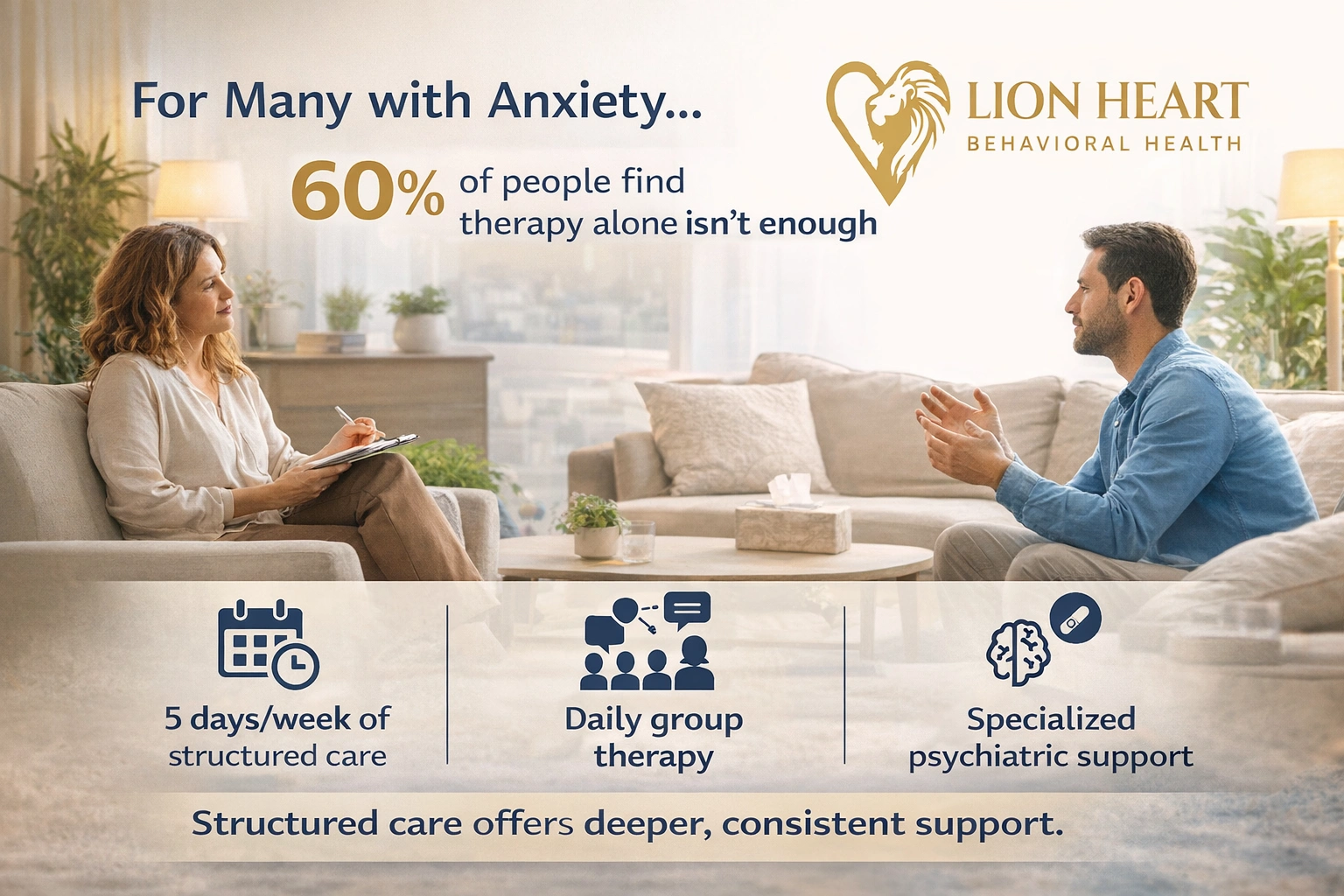
Why Some Anxiety Needs More Structure
Weekly therapy works for many people. For others, it’s not enough.
If anxiety is interfering with your ability to work, sleep, or stay regulated day to day, more consistent support can make a real difference. Structured programs provide repetition, containment, and continuity—things anxiety often disrupts.
More support doesn’t mean you’re worse off. It means you’re responding honestly to what your nervous system needs.
Location Shouldn’t Be a Barrier to Better Care
One thing that surprised me was realizing how much high-quality support existed close to home.
Finding an anxiety therapy program in Bristol County, MA made consistency easier. It reduced the friction that often causes people to drop out of care—long drives, complicated schedules, unrealistic expectations.
When care is accessible, it’s easier to stay engaged long enough for real change to happen.
Progress Doesn’t Always Feel Like Progress
Sometimes progress looks like crying in session instead of intellectualizing. Sometimes it looks like finally admitting you’re angry. Sometimes it looks like feeling worse before you feel steadier.
If your program made space for complexity, you probably noticed subtle shifts before obvious ones. If it didn’t, you may have felt rushed toward “improvement” you didn’t feel yet.
Healing anxiety is not about winning against it. It’s about learning how to live without constantly fighting yourself.
FAQ: When an Anxiety Therapy Program Didn’t Help Like You Hoped
Why do I still feel anxious after completing a program?
Because anxiety often has deeper roots than short-term programs address. This doesn’t mean treatment failed—it means you may need a different approach or level of care.
Is it normal to feel discouraged after therapy doesn’t work?
Yes. It’s incredibly common. Discouragement doesn’t mean you’re out of options—it means you need something that fits better.
How do I know if I should try another program?
If you felt unheard, rushed, or unchanged in ways that matter to you, that’s a sign—not a weakness.
Does switching programs erase previous progress?
No. You bring everything you’ve learned with you. A better-fit program builds on that foundation.
Can anxiety improve even if it’s been there for years?
Yes. Longstanding anxiety can shift when it’s met with the right kind of care, pacing, and understanding.
You Didn’t Fail. You Learned What You Need Next.
You did what they told you. That counts.
If it didn’t work, that’s not proof you’re broken. It’s information. And information gives you power—power to choose differently, ask better questions, and seek care that actually fits.
Call (774) 341-4502 to learn more about our anxiety therapy program in Bristol County, MA.