

When someone you love is struggling with alcohol, the hardest part isn’t always what’s happening—it’s not knowing what to do about it.
You might see the signs: a pattern that used to look like “just stress” now feels like dependency. The defensiveness. The slipping away from things that used to matter. But when you’ve already tried bringing it up—or when they’ve tried treatment before and it didn’t “stick”—you can feel helpless.
What now?
The good news: treatment has evolved. It’s not one-size-fits-all. And starting again doesn’t mean starting over. It means trying a different way—with more clarity, more choice, and more support.
If you’re in Massachusetts, there are many specialized Alcohol Treatment Programs in Massachusetts designed to meet individuals and families where they are, offering tailored approaches that increase the chance of lasting recovery.
This guide will walk you through what alcohol addiction treatment actually involves, how to talk to your loved one about it, and how to be part of their journey without carrying the whole weight yourself.
1. What Is Alcohol Addiction Treatment, Really?
Alcohol addiction treatment is not just one thing.
Think of it like a toolbox, not a single hammer. A quality treatment plan draws from multiple forms of support and adapts to the person’s needs. At Lion Heart Behavioral Health in Raynham, MA, alcohol treatment typically includes:
- Medical Detox (if needed): For people physically dependent on alcohol, this safely manages withdrawal symptoms in a supervised setting.
- Partial Hospitalization or Outpatient Programs: Structured daytime programs that include therapy, group work, and skill-building without requiring overnight stays.
- Individual Therapy: One-on-one counseling to explore trauma, stress, triggers, and emotional patterns that feed drinking behaviors.
- Medication-Assisted Treatment (MAT): Certain medications can reduce cravings or help maintain sobriety long-term.
- Family Education and Support: Helping loved ones understand addiction, set boundaries, and stay engaged in healthy ways.
Treatment isn’t just about getting someone to stop drinking. It’s about creating the conditions that make it possible—and sustainable—to live without needing to.
2. How Do You Know It’s Time?
Most people wait too long because they think it has to get worse first.
But treatment isn’t just for rock-bottom moments. It’s for:
- People who can’t stay stopped, even when they want to
- People who feel shame about how much they’re drinking
- People whose personality shifts when they drink
- People isolating, withdrawing, or missing responsibilities
- People saying things like “I’ve got this under control” while clearly not okay
If you’re noticing those things, your gut is probably right.
You don’t have to have all the evidence. If you’re even wondering if it’s time—it’s worth asking someone who understands addiction. We can help you talk it through, without judgment.
3. What If They Say “Treatment Didn’t Work Last Time”?
This is common—and it’s real.
Many people have tried a program before and walked away feeling disappointed. Sometimes it was too rigid. Sometimes it didn’t address underlying mental health issues. Sometimes they just weren’t ready yet.
The key is to validate that experience without assuming it means treatment can’t work.
Try saying:
- “I believe you. That experience wasn’t what you needed. But there are other options now.”
- “What felt off about it? What would have helped more?”
- “You deserve care that actually fits—not a cookie-cutter solution.”
At Lion Heart, we specialize in re-engagement. That means building a plan around what didn’t work last time—and making space for what might this time.
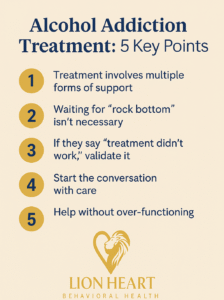
4. How Do You Even Start the Conversation?
This is one of the scariest steps, especially if you’ve been shut down before.
But here’s what we’ve seen: when conversations start from care rather than control, they land differently.
Try phrases like:
- “I love you, and I’ve been scared to bring this up. But I’m worried about your drinking.”
- “What would support look like for you, if you ever felt ready?”
- “I’m here to help find something if you want help. No pressure. Just love.”
Avoid ultimatums unless safety is at risk. If someone feels cornered, they’re more likely to retreat or deny. If they feel invited, they might pause.
Sometimes the conversation won’t change anything that day. But it plants a seed. And you showed up with love, not shame.
5. What Can You Do Once They Say Yes?
Once your loved one says yes to exploring treatment, your role is still vital—but different.
Here’s how you can support without over-functioning:
- Help with logistics. Offer to make a call or attend the intake session with them.
- Respect their pace. Don’t expect instant transformation. Early recovery can be messy and vulnerable.
- Encourage, but don’t micromanage. Let their treatment team guide the process. You don’t have to play case manager.
- Join a family support group. Whether through Lion Heart or another community resource, connecting with others helps you stay healthy, too.
Your presence is powerful. You don’t have to fix them—you just have to stay present in a way that feels healthy and grounded.
Frequently Asked Questions (FAQs)
What if my loved one refuses treatment?
That’s painful, but not uncommon. You can still set boundaries, express your concerns clearly, and encourage small steps (like talking to a counselor). Sometimes people take longer to get ready—but seeds planted now can grow later.
Does insurance cover alcohol addiction treatment?
Often, yes. Lion Heart Behavioral Health works with most major insurance plans, and we can walk you through coverage options. Don’t let cost stop you from asking questions.
How long does treatment last?
It varies. Some people do a few weeks of PHP or outpatient; others stay involved in ongoing therapy or group support for months. What matters is the fit—not the finish line.
Is it safe to detox at home?
Alcohol withdrawal can be dangerous without medical supervision, especially for people drinking heavily or long-term. We strongly recommend medically managed detox to ensure safety.
Can someone work while in treatment?
Yes, especially in outpatient or IOP settings. Many programs are designed to be flexible and support people balancing recovery with real life.
Need Help Starting the Conversation?
Call (774)238-5533 to speak confidentially with a care coordinator at Lion Heart Behavioral Health in Raynham, MA.
Whether your loved one is ready today or you’re just trying to figure out what support could look like, we’re here to help.