

If you’re reading this, there’s a good chance you’ve already spent more time thinking about getting help than anyone realizes.
Maybe you’ve opened treatment websites and closed them again.
Maybe you’ve searched for providers late at night after everyone else was asleep.
Maybe you’ve told yourself that you’re managing fine, even though every day feels harder than it should.
And maybe, if you’re being completely honest, you’re exhausted.
Not necessarily because life is falling apart.
Because holding everything together has become a full-time job.
Many people who are sober curious or exploring changes in their mental health find themselves in a similar position. They aren’t necessarily in crisis. They aren’t necessarily hitting rock bottom. They simply recognize that anxiety has become a bigger part of their life than they want it to be.
Then another concern appears.
Cost.
Insurance.
Coverage.
Paperwork.
The practical side of getting help can feel overwhelming before treatment even begins.
We’ve spoken with many individuals who delayed support not because they didn’t want help, but because they assumed the process would be complicated.
The reality is often much simpler than people imagine.
If you’re exploring anxiety-focused mental health support, understanding the process can make that first step feel a little less intimidating.
Step One: Stop Assuming You Need To Have Everything Figured Out
One of the biggest misconceptions about treatment is that you need clarity before reaching out.
You don’t.
In fact, many people contact us because they feel confused.
They’re unsure whether their anxiety is serious enough.
They’re uncertain what level of support makes sense.
They’re questioning whether what they’re experiencing is even anxiety at all.
That’s normal.
You don’t need a diagnosis before making a phone call.
You don’t need perfect language to describe what you’re feeling.
You don’t need a detailed treatment plan.
You simply need enough curiosity to ask a question.
Many recovery journeys begin with something as simple as:
“I don’t think I want to keep feeling this way.”
That’s enough.
Step Two: Understand That Anxiety Often Hides In Plain Sight
People tend to imagine anxiety as panic attacks.
Sometimes it looks like that.
Often it doesn’t.
We’ve worked with people who appeared highly successful on the outside.
They showed up for work.
Maintained relationships.
Paid their bills.
Handled responsibilities.
Yet internally, they were exhausted.
Their minds never stopped racing.
They constantly anticipated problems.
They struggled to relax.
They used alcohol, distraction, overworking, or busyness to quiet the noise.
Many sober curious individuals discover that anxiety was playing a bigger role in their lives than they originally realized.
Sometimes alcohol wasn’t the problem they were trying to solve.
It was the tool they were using to cope with another problem.
Recognizing that connection can be an important turning point.
Step Three: Don’t Let Insurance Questions Become A Roadblock
We’ve seen people postpone treatment for months because they assumed their insurance wouldn’t help.
Others worried they would spend hours navigating confusing systems.
Some never reached out because they were embarrassed to ask questions.
Please don’t let uncertainty become a barrier.
Insurance verification exists because many people have those exact concerns.
The goal is not to make the process more complicated.
The goal is to help clarify what options may be available.
Many people are surprised by how quickly their questions can be answered once they actually start the conversation.
The fear of the process is often larger than the process itself.
That’s true for anxiety in general.
And it’s often true for treatment as well.
Step Four: Focus On The First Step, Not The Entire Journey
Anxiety has a habit of making everything feel enormous.
A simple phone call becomes overwhelming.
A first appointment feels intimidating.
A future treatment plan feels impossible.
Part of the reason is that anxiety likes to fast-forward.
Instead of focusing on today, it jumps months ahead.
What if it doesn’t work?
What if it’s uncomfortable?
What if I have to make major changes?
What if I fail?
Those questions can keep people frozen.
A more helpful question is often:
What’s the next step?
Not the next year.
Not the next six months.
The next step.
Maybe that’s making a call.
Maybe it’s asking about insurance.
Maybe it’s learning what options exist.
Small steps are still steps.
And recovery is built on many small steps taken consistently.
Step Five: Expect The Experience To Be Different Than You Imagine
Many first-time treatment seekers arrive carrying assumptions.
Some expect judgment.
Others expect pressure.
Many expect to be told exactly what they should do.
What often surprises people is how collaborative the process can be.
Good treatment isn’t about forcing someone into a specific path.
It’s about understanding what’s happening and identifying what support may be helpful.
People are often relieved to discover they don’t have to defend themselves.
They don’t have to justify their struggles.
They don’t have to prove they’re suffering enough.
They simply need to show up honestly.
That honesty creates room for change.
Step Six: Remember That Anxiety Loves To Delay Action
One pattern we see repeatedly is this:
People know they need support.
They intend to seek support.
They continue researching support.
Then weeks become months.
Months become years.
Anxiety often convinces people that waiting is safer than acting.
It tells them to wait until life becomes less stressful.
Until work slows down.
Until they feel more certain.
Until they have more time.
Unfortunately, anxiety rarely disappears while people wait for perfect conditions.
That’s why taking action—even imperfect action—can be so powerful.
Movement often creates clarity.
Waiting rarely does.
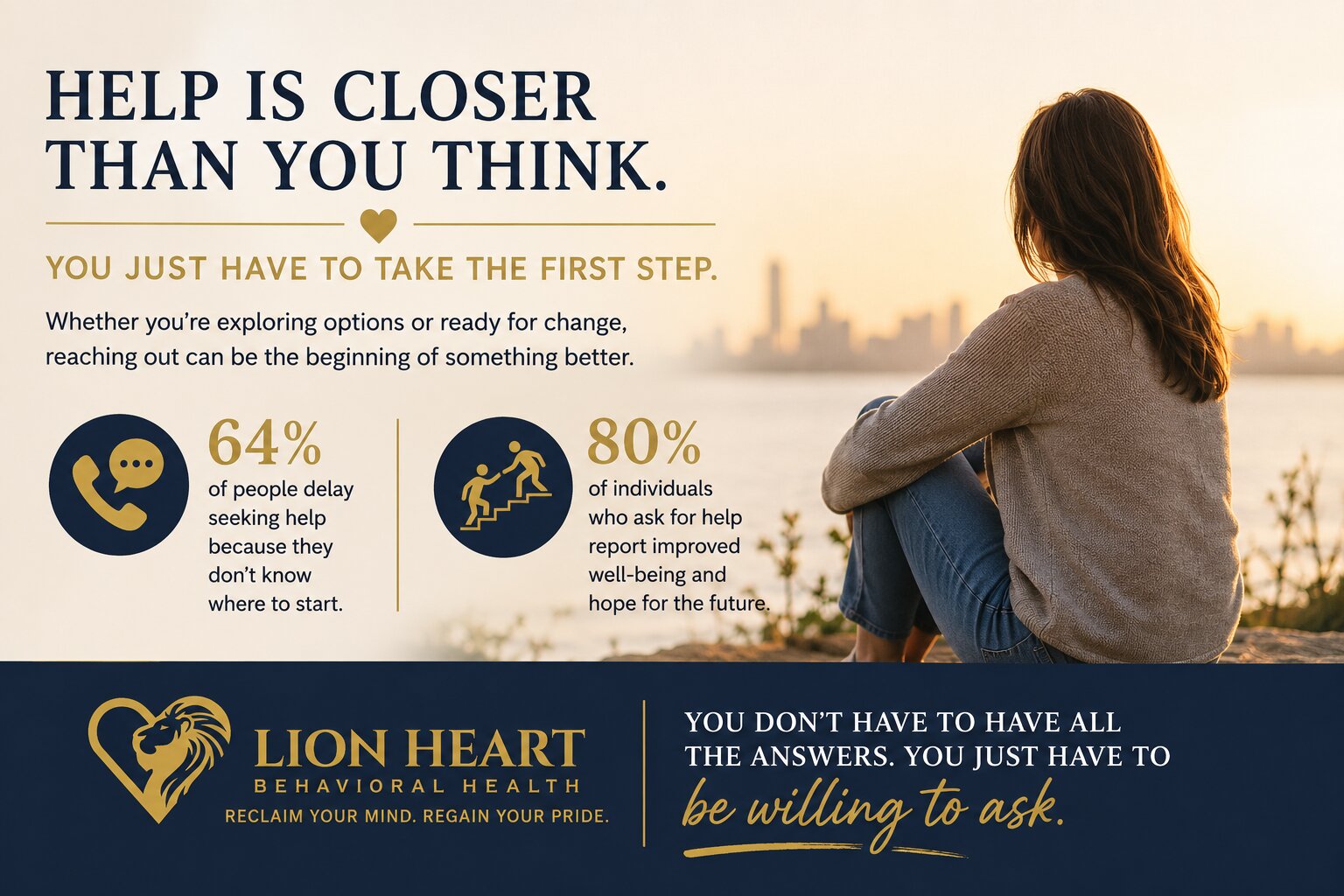
The Story We Hear Most Often
If we could summarize hundreds of conversations into one theme, it would sound something like this:
“I wish I had done this sooner.”
People rarely tell us they regret asking questions.
They rarely regret learning about their options.
What they often regret is the amount of time they spent struggling alone.
Not because they were weak.
Because they were trying so hard to be strong.
Strength is admirable.
But carrying unnecessary suffering by yourself isn’t required.
Support exists for a reason.
When Anxiety And Alcohol Start Sharing The Same Space
Many sober curious individuals begin their journey because they’re noticing patterns.
A drink to unwind.
A drink to calm nerves.
A drink to silence racing thoughts.
Over time, they start asking difficult questions.
Am I actually relaxing?
Or am I avoiding something?
What happens when I don’t drink?
Why do I feel anxious so often?
These questions deserve attention.
Because anxiety and alcohol frequently interact in complicated ways.
People often discover that addressing anxiety directly creates opportunities for healthier, more sustainable coping strategies.
That process starts with awareness.
Then curiosity.
Then action.
What People Are Really Searching For
When someone searches for anxiety counseling Blue Cross MA, they’re often looking for more than an insurance answer.
They’re looking for permission.
Permission to ask for help.
Permission to stop struggling silently.
Permission to believe that treatment might actually be accessible.
At Lion Heart Behavioral Health, we understand that practical concerns matter.
Insurance matters.
Cost matters.
Convenience matters.
But beneath those questions is often a deeper one:
“Can I actually feel better than I do right now?”
For many people, the answer is yes.
You Don’t Have To Keep Carrying This Alone
If anxiety has become a constant companion, please know that you don’t have to solve everything today.
You don’t need a perfect plan.
You don’t need certainty.
And you don’t need to have all the answers before reaching out.
The first step is often much smaller than people expect.
It’s a conversation.
A question.
A moment of honesty.
And sometimes that small step becomes the beginning of meaningful change.
Call (774) 341-4502 or visit our Anxiety Therapy Program to learn more about our Anxiety Therapy Program services Raynham, MA.
Frequently Asked Questions
Do I need a diagnosis before contacting a treatment provider?
No. Many people reach out because they are experiencing symptoms but aren’t sure exactly what they are dealing with. An initial conversation can help clarify next steps.
Can anxiety affect people who seem successful?
Absolutely. Anxiety often affects people who are highly responsible, motivated, and successful. Many continue functioning while struggling internally.
What if I’m not sure my anxiety is serious enough for treatment?
You don’t need to wait for a crisis. If anxiety is affecting your quality of life, relationships, sleep, concentration, or overall well-being, it may be worth exploring support.
Is it common to use alcohol to cope with anxiety?
Many people use alcohol in an attempt to relax or reduce stress. Over time, however, alcohol can complicate anxiety symptoms and make emotional challenges more difficult to manage.
How can I find out whether my insurance may help cover treatment?
The simplest approach is often to contact the provider directly and ask about insurance verification. Many treatment centers can help explain available options.
What if I’m nervous about reaching out?
That’s completely normal. Many people feel anxious before making the first call. In fact, being nervous is one of the most common experiences among first-time treatment seekers.
Does treatment mean I have to make major life changes immediately?
Not necessarily. Treatment often begins with understanding what’s happening, identifying goals, and taking manageable steps forward rather than making drastic changes all at once.
How do I know if it’s time to seek help?
If anxiety has become a persistent source of stress, is affecting your daily life, or is keeping you from living the way you’d like, it may be time to explore your options.