
There’s a version of stuckness that most people don’t talk about in recovery.
You’re not spiraling. You’re not drinking. You’re not skipping meetings or ghosting your sponsor. On paper, you’re still “doing well.” But inside?
You feel flat. Foggy. A little disconnected from everyone—including yourself.
If that sounds familiar, you haven’t failed. You haven’t lost your progress. But you might have lost your connection—to meaning, to momentum, to community. And that matters.
At Lion Heart Behavioral Health, our Day Treatment program in Raynham, MA isn’t just for people in crisis. It’s also for people like you—those who’ve built a foundation but are now staring at the ceiling wondering: “Is this really all there is?”
Let’s Name the Real Problem: Recovery Drift
Maybe it started with a missed meeting. Or a sponsor you slowly stopped texting back. Or maybe everything looks fine, but your joy has quietly gone missing.
We call this recovery drift—that slow, invisible slide away from connection. Not relapse. Not danger. Just emotional drift.
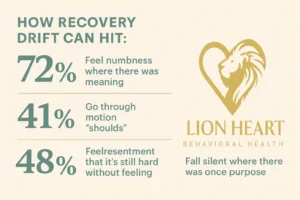
It shows up as:
- Numbness where there used to be meaning
- Going through the motions because that’s what you “should” do
- Resentment that you’re still working this hard to feel… nothing
- Silence where you used to feel purpose
And if you’re thinking, “I shouldn’t feel this way,”—let us stop you right there. You absolutely can.
And we can help.
This Is a Normal Season—But It’s Not One You Have to Stay In
Long-term recovery is full of complex emotional terrain. You’ve outgrown the fear of Day 1. You’ve stabilized your life. But that doesn’t mean you’re done healing.
What we see again and again is this:
The tools that helped you survive early recovery aren’t always the ones that help you thrive later on.
That’s where Day Treatment comes in. Not to fix you. Not to start you over. But to reconnect you with the depth you know you’re capable of—and craving.
Why Long-Term Alumni Are Choosing Day Treatment
You might think programs like ours are only for new clients in acute distress. But more and more alumni are returning—not because they relapsed, but because something in them went quiet.
Here’s what they say when they come back:
- “I’m not in crisis, but I’m not okay either.”
- “I miss feeling things deeply.”
- “I want something that meets me where I am now—not where I used to be.”
Our Day Treatment program (also known as PHP) is structured to do just that. It’s a short-term, high-touch container that gives you:
- Time away from autopilot
- Space to reengage with emotional growth
- Tools that speak to this version of your recovery—not the first chapter
What Happens During Day Treatment for Alumni?
Our program isn’t remedial. It’s relational.
Each day offers a rhythm of support, reflection, and reconnection:
- Process groups that go beyond surface talk
- One-on-one therapy to explore new edges of your story
- Mental health support, especially for burnout, anxiety, or lingering depression
- Creative therapies like art, writing, and mindfulness
- Optional psychiatric care if old symptoms are resurfacing
There’s no need to pretend here. You don’t have to explain your years clean or justify needing help again. You just get to be human—and supported.
You Might Be a Good Fit If…
This program is built for people who:
- Are sober but feel emotionally disconnected
- Want to explore mental health or trauma work beyond 12-step rooms
- Miss structure but don’t need residential care
- Feel resentful, flat, or spiritually “off”
- Keep asking themselves: “Why doesn’t this feel good anymore?”
Sound like you? You’re not alone.
This Is Not Backtracking. It’s Returning to the Work With New Eyes.
We’ve seen alumni who walked in afraid they were “regressing”—only to walk out weeks later saying:
“This helped me go deeper than I ever could in early recovery.”
That’s the gift of long-term sobriety: you’re ready for a different kind of healing. One that’s layered. Grounded. Honest.
You didn’t go backward. You evolved. And now it’s time to let your care evolve with you.
The Pain of “Shouldn’t I Be Grateful?”
This is the quiet shame that keeps so many stuck. The belief that if you’re sober, you should be happy. That if you’ve made it this far, you shouldn’t need help again.
Let’s bust that lie wide open.
Gratitude doesn’t mean ignoring the ache. You can be thankful for your sobriety and still want more from your life. More connection. More depth. More you.
And you’re allowed to seek support without unraveling your progress.
A Local Program That’s Built to Fit Real Life
Whether you’re in Raynham, New Bedford, or Bristol County, MA, our program is easy to access—and structured to work with your existing life.
You don’t have to leave your job. You don’t have to go away for 30 days.
You just have to say: “I’m ready for more support.” And we’ll take it from there.
What Real Alumni Have Said
“I didn’t relapse—I just got really, really tired. This program didn’t just help me feel again. It helped me care again.”
– Alumni Client, 2023
“It wasn’t about sobriety anymore. It was about learning to live with my whole self. Lion Heart gave me space to reconnect.”
– Long-Term Client, 2024
FAQs: For Alumni Feeling Disconnected or Flat
Is this just for people who’ve relapsed?
Not at all. In fact, many of our alumni clients are still sober—but emotionally off, spiritually flat, or mentally burned out. You’re welcome here.
I already did treatment. Why would I go back?
Because this isn’t going back. It’s going deeper. It’s a new chapter for a more experienced version of you—one that deserves support too.
How long does the program last?
Most people attend for 2–4 weeks, depending on need. You’ll work with our clinical team to shape a plan that fits your goals and life.
Can I still work while attending?
Yes—many of our clients work part-time, take a short leave, or schedule around treatment. We’ll help you make it manageable, not overwhelming.
What if I don’t want to talk about step work?
That’s fine. This program isn’t built around 12-step models. If it’s part of your foundation, great. If not, we focus on mental health, emotional clarity, and growth.
Will insurance cover it?
Often, yes. We accept most major insurance providers and can walk you through coverage options before you commit to anything.
You didn’t fail. You just drifted. Let’s reconnect.
Call (774) 238-5533 or visit Day Treatment program in Raynham, Massachusetts to learn more.
Because this version of you deserves as much care as the one who first got clean. Maybe more.