

Stopping cocaine can feel intimidating, especially if you’ve heard conflicting stories about what withdrawal is like. If you’re searching for cocaine withdrawal symptoms, chances are you’re trying to prepare yourself or support someone you care about. The good news is that understanding what to expect can make the process feel less overwhelming and help you recognize when professional support may be beneficial.
If you’re exploring recovery options, learning more about cocaine addiction treatment can provide a better understanding of the care available beyond withdrawal. While cocaine withdrawal is generally not associated with the severe physical complications seen in alcohol or benzodiazepine withdrawal, the emotional and psychological symptoms can be intense. Knowing what’s normal—and when to ask for help—can make a meaningful difference during recovery.
Cocaine Withdrawal Symptoms
Unlike some other substances, cocaine withdrawal is primarily psychological, although physical symptoms can also occur. This sometimes leads people to underestimate how difficult withdrawal can be.
The brain becomes accustomed to cocaine’s powerful effects on dopamine, the neurotransmitter involved in motivation, reward, and pleasure. When cocaine use stops, dopamine activity temporarily drops, leaving many people feeling emotionally and physically drained.
Common cocaine withdrawal symptoms include:
- Extreme fatigue or exhaustion
- Depression or persistent low mood
- Intense cocaine cravings
- Increased appetite
- Sleeping much more than usual (hypersomnia)
- Difficulty sleeping or disrupted sleep
- Anxiety
- Irritability
- Restlessness
- Slowed thinking or difficulty concentrating
- Reduced motivation
- Difficulty experiencing pleasure (anhedonia)
- Vivid or unpleasant dreams
Many people are surprised that the emotional symptoms are often harder than the physical ones. Feeling emotionally “flat” or unable to enjoy anything can be distressing, but these experiences are common as the brain gradually adjusts to functioning without cocaine.
It’s also important to know that some individuals may experience suicidal thoughts during withdrawal, particularly if they have a history of depression or other mental health conditions. Any thoughts of self-harm or suicide should be treated as a medical emergency and require immediate professional help.
Cocaine Withdrawal Timeline
One of the most common questions people ask is, “How long does cocaine withdrawal last?”
The answer varies depending on factors such as:
- Frequency of cocaine use
- Amount used
- Length of use
- Method of use
- Overall physical health
- Presence of co-occurring mental health conditions
- Use of other substances
Most people experience withdrawal in several recognizable stages.
Stage |
Typical Timeframe |
Common Symptoms |
|---|---|---|
| Crash | Hours to 3 days | Extreme fatigue, excessive sleep, increased appetite, low mood, strong cravings |
| Acute Withdrawal | About 1–10 weeks | Cravings, depression, anxiety, irritability, low energy, difficulty concentrating, anhedonia |
| Extinction / PAWS | Weeks to months | Intermittent cravings, emotional ups and downs, stress sensitivity, occasional mood changes |
The Crash Phase
The cocaine crash usually begins within hours after the last use.
During this period, many people experience:
- Sleeping for long periods
- Feeling emotionally “empty”
- Increased hunger
- Little energy
- Strong cravings to use cocaine again
The contrast can feel dramatic because the brain is suddenly shifting from cocaine’s stimulant effects to a period of depleted dopamine activity.
Acute Withdrawal
After the initial crash improves, many people enter the acute withdrawal stage.
Although physical exhaustion often begins to improve, emotional symptoms may become more noticeable.
Common experiences include:
- Depression
- Anxiety
- Irritability
- Trouble focusing
- Low motivation
- Difficulty enjoying everyday activities
- Persistent cravings
This stage can last several weeks, although symptoms usually improve gradually rather than disappearing all at once.
Extinction Phase (PAWS)
Some people continue experiencing occasional symptoms for months.
This stage is commonly referred to as Post-Acute Withdrawal Syndrome (PAWS).
Rather than constant symptoms, people often notice:
- Cravings triggered by reminders of cocaine
- Emotional sensitivity
- Mood fluctuations
- Increased stress response
- Temporary difficulty feeling pleasure
The good news is that these symptoms generally become less frequent and less intense over time, especially with ongoing treatment and recovery support.
Why Cocaine Withdrawal Is Mostly Psychological
Many people ask whether cocaine withdrawal is “easier” than opioid or alcohol withdrawal because it usually doesn’t involve severe physical complications like seizures or life-threatening changes in blood pressure.
The answer is more nuanced.
Compared with alcohol or benzodiazepine withdrawal, cocaine withdrawal is generally less medically dangerous. However, that does not mean it’s easy.
The psychological symptoms can be profound.
Someone experiencing cocaine withdrawal may feel:
- Hopeless
- Unmotivated
- Emotionally numb
- Unable to enjoy anything
- Overwhelmed by cravings
These symptoms are not signs of weakness or a lack of determination. They reflect temporary changes in brain chemistry as the reward system begins to recover.
Because emotional discomfort can become so intense, many people return to cocaine simply to make those feelings stop. This is one of the reasons relapse is common during the early stages of recovery.
Professional support can help people manage cravings, develop coping skills, and navigate this period more safely.
Cocaine Crash vs. Protracted Withdrawal (PAWS)
People sometimes use the terms cocaine crash and PAWS interchangeably, but they describe different parts of recovery.
Cocaine Crash
The crash occurs immediately after stopping cocaine.
It’s characterized by:
- Exhaustion
- Sleeping more than usual
- Increased appetite
- Low mood
- Intense cravings
These symptoms are usually strongest during the first several days.
PAWS (Post-Acute Withdrawal Syndrome)
PAWS develops later.
Instead of constant symptoms, people may notice occasional waves of:
- Cravings
- Anxiety
- Irritability
- Emotional numbness
- Difficulty handling stress
These symptoms often appear unexpectedly, which can catch people off guard.
For example, someone may feel significantly better for several weeks before suddenly experiencing strong cravings after seeing a familiar location, encountering stress at work, or spending time with people associated with previous cocaine use.
Understanding PAWS helps explain why recovery isn’t always a straight line. Temporary setbacks don’t mean treatment has failed—they’re a recognized part of the recovery process for many people.
Does Medication Help With Cocaine Withdrawal?
Currently, there is no FDA-approved medication specifically for cocaine withdrawal.
Researchers continue studying potential treatments, but no medication has consistently demonstrated enough benefit to receive FDA approval for this purpose.
That doesn’t mean medical care has nothing to offer.
Healthcare providers may recommend supportive treatments based on an individual’s symptoms.
For example, treatment may include:
- Careful monitoring during withdrawal
- Treatment for depression or anxiety when clinically appropriate
- Sleep support
- Nutritional support
- Hydration
- Counseling
- Behavioral therapies
- Relapse prevention planning
Medication decisions are individualized and depend on each person’s medical history, symptoms, and overall treatment plan.
The goal isn’t simply getting through withdrawal—it’s creating a foundation for long-term recovery.
Is Medical Detox Needed for Cocaine?
Many people wonder whether they can stop using cocaine on their own.
For some individuals, outpatient support may be appropriate. Others benefit from medical supervision.
Professional support may be especially advisable if:
- Cocaine use has been heavy or prolonged.
- Cocaine is being used along with alcohol, opioids, or other substances.
- There is a history of depression or suicidal thoughts.
- There are underlying heart problems or other significant medical conditions.
- Previous attempts to quit have led to rapid relapse.
- A person lacks a safe, supportive environment at home.
Even though cocaine withdrawal isn’t typically life-threatening by itself, professional care can help manage emotional symptoms, reduce relapse risk, and provide support during one of the most challenging parts of recovery.
If you’re unsure which level of care is appropriate, an assessment with an addiction professional can help clarify your options without requiring an immediate commitment to treatment.
Getting Support for Cocaine Withdrawal
Many people delay asking for help because they worry they’ll be judged or that they haven’t “used enough” to deserve treatment.
The truth is that recovery isn’t reserved for people who fit a particular stereotype.
Whether you’ve been using cocaine for months or years, whether this is your first attempt to stop or your fifth, your concerns are valid.
It’s also normal to wonder:
- “What if treatment doesn’t work?”
- “What if I’m the worst one there?”
- “What if I can’t handle withdrawal?”
These questions are common, and they don’t mean you’re not ready. They simply mean you’re facing an unfamiliar situation.
You don’t have to know every step before reaching out. Sometimes the first conversation is simply about learning what your options are and deciding what feels right for you.
If you’re considering taking that next step, exploring cocaine addiction treatment can help you understand what professional support may look like and how recovery plans are tailored to each individual’s needs. Call us 774.341.4502 anytime.
If you’re near New Bedford, Raynham, or Bristol County, Lion Heart offers programs with that same approach.
Frequently Asked Questions
How long do cocaine withdrawal symptoms last?
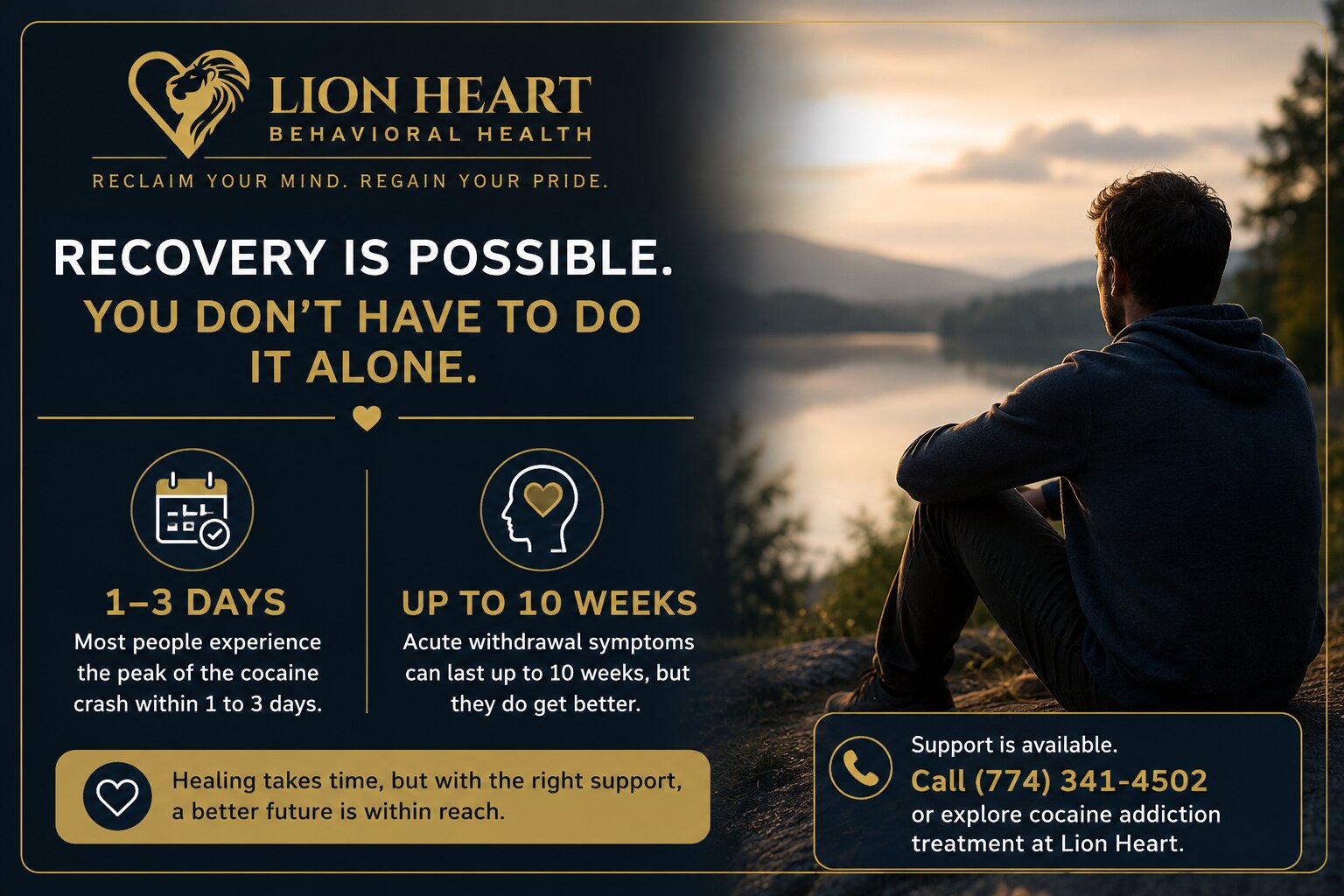
The initial crash often lasts from several hours to about three days. Acute withdrawal symptoms may continue for one to ten weeks, while intermittent cravings and emotional symptoms associated with PAWS can persist for several months before gradually improving.
Is cocaine withdrawal dangerous?
Cocaine withdrawal is generally not considered medically dangerous in the same way as alcohol or benzodiazepine withdrawal. However, severe depression, suicidal thoughts, and intense cravings can make professional support important, especially for people with co-occurring mental health conditions or other substance use.
Can you detox from cocaine at home?
Some people complete withdrawal at home, but professional evaluation is recommended before making that decision. Medical or clinical support may be safer for individuals with heavy cocaine use, co-occurring mental health conditions, polysubstance use, or a history of relapse.
You Don’t Have to Face Withdrawal Alone
Taking the first step toward recovery can feel uncertain, but understanding what to expect often makes that step a little less intimidating. Cocaine withdrawal is temporary, and while the psychological symptoms can be challenging, effective support is available.
Call (774) 341-4502 or explore cocaine addiction treatment at Lion Heart.