
It’s a familiar loop for many sober curious adults.
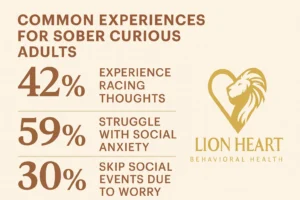
You’re lying in bed at 2 a.m., thinking about that one moment from a conversation hours ago. Your heart’s not racing—but your thoughts are. You’re reliving how your voice sounded. Wondering if they noticed your hands shaking. You canceled your last two social plans but told yourself it was because of “low energy.”
You’re questioning your relationship with alcohol. You’ve made it through events sober—or semi-sober—and you’re proud. But the emotional noise? It hasn’t stopped. It’s just gotten louder.
If this sounds like you, you’re not weak. You’re not failing. And most importantly: you’re not alone.
Racing thoughts and social anxiety are incredibly common—especially for people who are rethinking the role substances have played in making socializing bearable. It’s not that you’ve lost control. It’s that your system is alert, exhausted, and maybe for the first time, unmedicated by coping strategies that used to take the edge off.
This is where a structured Anxiety Therapy Program in Raynham, MA can make a quiet but powerful difference. Not just to treat symptoms—but to restore your peace of mind, one tool and one step at a time.
Why Sober Curiosity Often Brings Up More Anxiety—Not Less
Here’s something no one talks about enough: removing alcohol or other numbing strategies from your life can initially increase anxiety. Not because it’s the wrong choice—but because substances often mask symptoms you didn’t know you had.
Without alcohol, social anxiety becomes obvious. Without weed, racing thoughts seem louder. Without numbing, avoidance becomes a pattern you can finally name.
The upside? You’re finally in a place where anxiety can be addressed directly—not hidden, not bypassed, not medicated unconsciously.
Therapy becomes an intentional step—not a last resort.
What Are Racing Thoughts, Really?
People often think anxiety means sweating, panicking, or freezing in public. But anxiety is just as often internal.
Racing thoughts might look like:
- Constant overanalyzing of conversations or situations
- Fixating on future “what ifs”
- Waking up tired despite sleeping 8 hours
- Inability to focus on one task without interruption
- Emotional exhaustion from mental rehearsal
This is your brain trying to stay “ahead” of danger. The problem? The danger isn’t real—it’s social discomfort, emotional vulnerability, or unfamiliar situations.
An anxiety therapy program helps your brain slow down by giving it what it actually needs: structure, validation, and safer interpretations of the world.
Understanding Social Anxiety (When You’re Usually Fine With People)
Social anxiety is sneaky. It’s not about being an introvert. It’s not even about disliking people. Often, it’s about what you expect people to see in you.
You might experience:
- A pounding heart before a seemingly casual hangout
- Pre-planned excuses in case you need to leave early
- Fear that you’ll say the “wrong thing” and be judged
- Relief when plans get canceled—even if you were looking forward to them
Social anxiety tends to spike when we’re trying to be seen in a new way—like sober, open, or without our usual guardrails. That’s why so many people in early sober exploration feel exposed.
Anxiety therapy doesn’t just teach you how to breathe through panic. It helps you redefine safety—inside your own body and around other people.
Why Therapy Works Better Than Self-Help Books or Apps
You’ve probably tried things already. Meditation apps. Journaling. Maybe even Reddit threads or podcasts on high-functioning anxiety.
They help a little. But they don’t hold you.
An anxiety therapy program creates a live container of support. It offers:
- Regular therapeutic contact to prevent spiraling
- Real-time practice of coping skills in safe group settings
- Feedback from trained professionals (not just your anxious inner critic)
- Gentle accountability for progress and setbacks
This isn’t about managing your emotions perfectly. It’s about building emotional resilience—so you can move through discomfort without feeling like you’re constantly surviving.
The Tools You’ll Actually Use in Real Life
At Lion Heart, our Anxiety Therapy Program in Raynham, MA is structured around practical, proven tools.
We teach:
- CBT techniques for managing negative thinking
- Grounding skills to re-center yourself in social situations
- Somatic strategies for calming the nervous system
- Mindfulness practices to stop the future-tripping spiral
- Assertiveness training to help you say no (or yes) without guilt
You’ll also learn how to interrupt patterns like:
- Canceling last-minute out of fear
- Overpreparing for small interactions
- Avoiding meaningful connection because of anxiety
Over time, these small changes don’t just help you function. They help you enjoy your life.
Therapy Can Support Your Relationship With Sobriety—Even If You’re Still Figuring It Out
You do not have to be fully sober to benefit from an anxiety therapy program. Many of our clients are in a sober curious phase—exploring what life could look like with fewer numbing habits and more clarity.
We don’t lecture. We don’t label. We support.
Whether you’re 30 days in, cutting back, or just wondering if life could feel easier, therapy can be a steady space to sort through all of it—without judgment, and without pressure to commit to a specific path before you’re ready.
What Makes Lion Heart’s Program Different
We’re not a one-size-fits-all clinic. Our program is built for real people living real lives in Raynham and surrounding areas like New Bedford, MA and Bristol County.
What we offer:
- Morning or midday therapy sessions that work around your life
- Individual and group components for depth and flexibility
- A non-judgmental environment that respects every emotional stage
- Clinicians who understand sober curiosity and social anxiety from both clinical and lived experience
Whether your anxiety is new or lifelong, we know how to meet it—and you—with calm, care, and tools that make sense.
FAQs: For the Sober Curious and Anxiously Searching
Do I have to be sober to join?
No. Many of our clients are sober curious or cutting back. We provide support that aligns with your goals—not someone else’s timeline.
Is this different from seeing a therapist once a week?
Yes. Our program offers more structure, more tools, and more support. It’s designed for people who need consistent help with anxiety—not just talk therapy.
Will I have to talk about my drinking or past?
Only if you want to. Therapy meets you where you are. We focus on anxiety and your current goals—not on forcing disclosures or labels.
How long does the program last?
Most clients participate for 3–6 weeks, depending on their needs. You’ll receive a personalized care plan during your intake.
Does this mean I have a serious disorder?
Not necessarily. Many clients don’t meet full criteria for a disorder but still struggle with anxiety that’s affecting their quality of life. That’s more than enough reason to get help.
Is this covered by insurance?
Often, yes. Lion Heart works with most major insurance providers. We’ll walk you through your benefits before you commit to anything.
You don’t have to stay in survival mode.
Call (774) 238-5533 or visit Anxiety Therapy Services in Raynham, Massachusetts to learn more.