

There’s a certain type of client I’ve come to recognize within minutes.
They’re put together. Well-spoken. Their calendar is color-coded, their emails are unread at zero, and they apologize for being “a little disorganized” while handing you a perfectly filled-out intake packet.
They’re not the ones you’d guess are struggling. But once we begin? The exhaustion is palpable.
When high-functioning people finally reach for help through our anxiety therapy program, it’s not because they’ve suddenly found time to prioritize themselves. It’s because something snapped. Their old systems—control, perfectionism, overperformance—stopped holding.
Here’s what I see most often in these clients. Maybe you’ll recognize yourself.
Their Anxiety Is Hidden Behind Competence
On paper, they’re thriving.
They lead teams. They raise kids. They write grant proposals or run classrooms or operate at the top of their field. But they do it all while grinding their teeth at night and overthinking every interaction for days.
They don’t “look” anxious. But their shoulders are tense like armor. They’ve forgotten what a deep breath feels like. The calm they present? It’s curated, not felt.
The myth is that anxiety looks like panic. But with high-functioning people, it looks like relentless performance.
Their Standards Are Brutal—Even When No One’s Watching
Most clients like this don’t need motivation. They need mercy.
They beat themselves up for missing one workout, one deadline, one parenting moment. They’re the kind of people who hear “you’re doing great” and immediately think, if only you knew.
I’ll often ask, “Would you talk to a friend the way you talk to yourself?”
The answer is always no.
What therapy does is help them soften that voice. Not because they’ve failed—but because they’ve never been allowed to rest.
Their Nervous System Is Running a Marathon That Never Ends
High-functioning anxiety isn’t a mindset issue. It’s physiological.
By the time they walk into therapy, their body is already waving a white flag. Insomnia. Clenched jaws. Gastro issues. Heart palpitations that send them to urgent care—but EKGs come back normal.
That’s what chronic stress does. It burns through you quietly until your body starts yelling what your mouth never did.
In our program, one of the first things we work on is regulation. Breathing. Grounding. Basic rest. Because you can’t think your way out of a dysregulated nervous system. You have to learn to feel your way through.
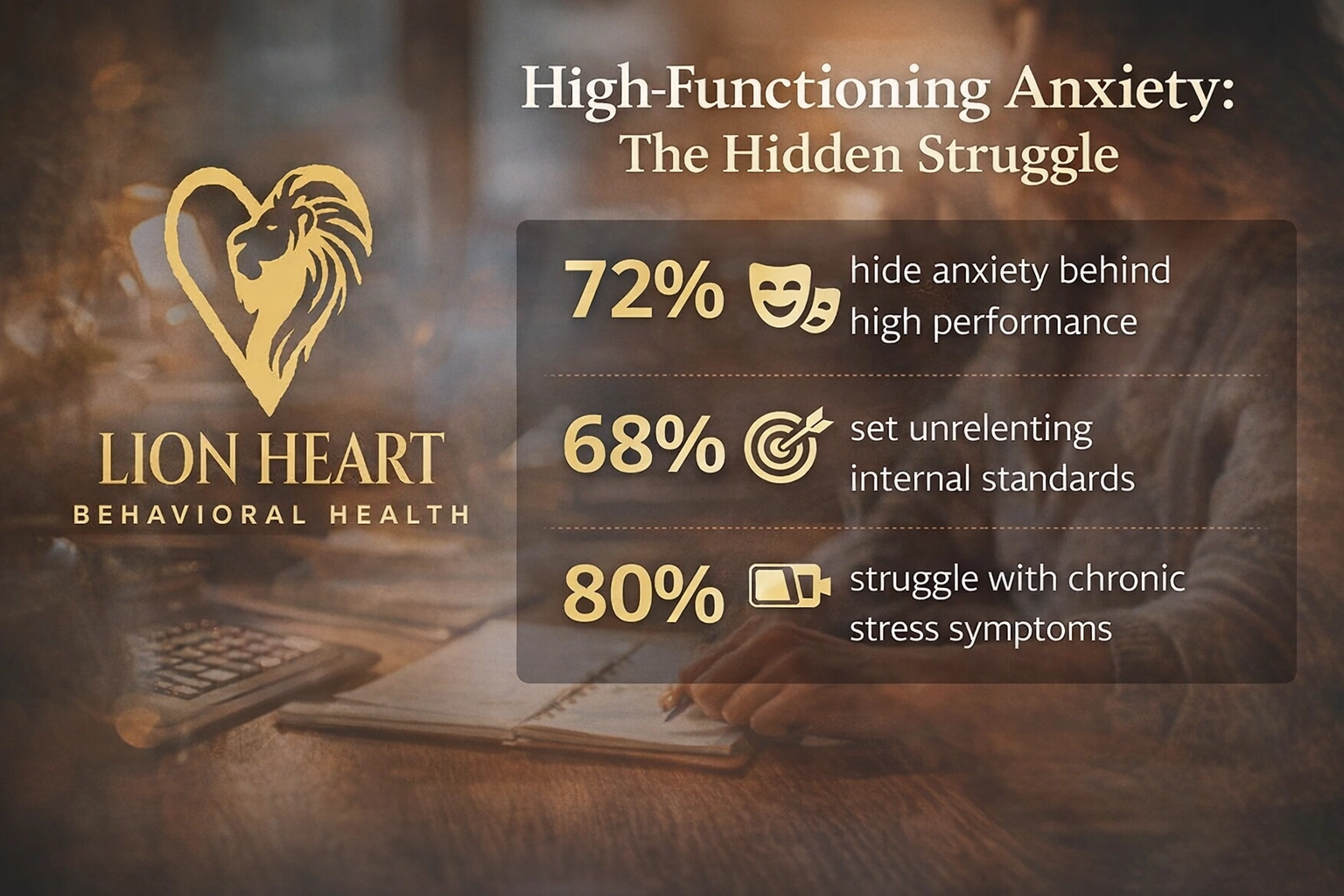
They’re Afraid to Stop Performing—Because It Feels Like Survival
This one runs deep. Many high-functioning clients grew up in homes where achievement was the only way to feel safe, seen, or needed. They didn’t get to be messy. Or sad. Or ordinary.
They learned early: keep going, stay sharp, don’t need too much.
By the time they’re adults, they’re still operating like the world will end if they slow down. They don’t just fear failure. They fear being unmasked.
So therapy isn’t just about reducing symptoms. It’s about unraveling old survival strategies. Re-teaching the nervous system that it’s okay to stop performing. To exist without earning it every minute.
They Minimize Their Pain—Until It’s Unbearable
Here’s how it usually starts:
“It’s probably nothing, but…”
“I know other people have it worse…”
“I’ve always been like this…”
Then we unpack it. The decades of tension. The emotional neglect. The panic attacks that feel like heart attacks. The inability to turn off their brain even on vacation.
They didn’t come to therapy for a dramatic breakdown. They came because the cracks finally started leaking.
In therapy, they get to say what they’ve never said aloud: I’m not okay. And nothing collapses. In fact, it’s the moment everything starts healing.
They Don’t Want Clichés—They Want Clarity
You can’t throw mindfulness quotes at these clients and call it a day.
They’re smart. Sharp. They’ve read the books and tried the apps. What they want is something real. Specific. Honest.
They want someone who can sit across from them and say:
- “You’ve been surviving in overdrive.”
- “Your standards are hurting you.”
- “You don’t have to earn rest.”
Our anxiety therapy program is structured to meet them at that level. Not with fluff. Not with hand-holding. But with precision and respect.
They Still Need Permission to Feel
This one is subtle, but it’s everywhere.
These clients know how to do—but not how to feel. They’ll explain emotions instead of experiencing them. They’ll apologize when they cry. They’ll laugh off pain with dry humor.
They’ve never been taught that their feelings are valid—especially the messy ones.
In therapy, they get to stop editing. They learn how to sit with sadness without solving it. To notice joy without immediately bracing for loss. To feel anxiety without letting it steer the wheel.
That’s the real work—and the real freedom.
Therapy Isn’t Weakness. It’s Strategy.
When high-functioning people finally start therapy, they sometimes feel like they’ve failed. Like everything they’ve built is cracking.
But here’s what I tell them: Asking for help isn’t collapse. It’s strategy. It’s the moment you start leading your life instead of being dragged by it.
Whether you’re juggling executive responsibilities or parenting five kids on fumes, if anxiety is running the show—you deserve better tools.
That’s what our anxiety therapy program offers: tools that respect your intelligence and your humanity.
It’s not about lowering your bar. It’s about lifting the weight.
If you live or work in New Bedford, MA, you know what it means to keep up a fast pace. But the toll it takes on your internal world doesn’t have to be permanent. You’re allowed to slow down. To listen inward. To get support—even if you’ve spent your whole life being the strong one.
And if you’re someone managing both professional and personal roles in Bristol County, MA, therapy doesn’t mean you’ve broken. It means you’re smart enough to stop before the crash.
FAQs
Do I need a formal diagnosis to join your anxiety therapy program?
No. If anxiety is impacting your daily life—even if you’re still “functioning”—you’re eligible for support. Many of our clients start without a diagnosis.
Will therapy conflict with my work schedule?
We offer flexible scheduling to accommodate busy lives. You’re not expected to pause your career to take care of your mental health.
What if I’ve been managing for years—shouldn’t I be able to handle this?
You’ve done the best you could with the tools you had. That’s not failure. Therapy simply gives you better tools.
I’m afraid I’ll lose my edge if I slow down. Is that normal?
Yes—and it’s a common fear. But slowing down isn’t the same as losing momentum. It often makes your energy more sustainable and your creativity more clear.
What if I’ve already tried therapy and it didn’t help?
Not all therapy is the same. High-functioning clients need a tailored approach that acknowledges both their strengths and their stress. We meet you there.
You Don’t Have to Hold It All Alone Anymore
If you’ve been white-knuckling your way through success, therapy won’t take your power—it’ll give you back your peace. Call (774) 341-4502 to learn more about our anxiety therapy program in Bristol County, MA.