
If you or a loved one are struggling with addiction or mental health, we can help. Request a call.

Topbar Forms

This field is for validation purposes and should be left unchanged.
Name(Required)

How People Find Their Way Back When Anxiety Starts Running Their Life

How People Find Their Way Back When Anxiety Starts Running Their Life

There is a specific kind of fear that many parents carry.

It isn’t always loud.

It doesn’t always show up during emergencies.

Sometimes it appears quietly while watching your child struggle through what should be an ordinary day.

Maybe your son calls out of work again.

Maybe your daughter sits in her car for thirty minutes before a shift and eventually turns around and drives home.

Maybe they come back exhausted, frustrated, and embarrassed because they know they need to work, but something inside them seems to shut down every time they try.

As a clinician, I’ve spoken with many parents who describe similar situations.

Their child isn’t refusing responsibility.

They’re not choosing to fail.

In many cases, they’re fighting a battle nobody else can see.

And when anxiety reaches a certain level, even simple responsibilities can start feeling impossible.

If you’re watching someone you love go through this, it can be difficult to know what kind of support actually exists.

Many families assume there are only two options.

Weekly therapy.

Or hospitalization.

What they often don’t realize is that there are levels of support in between. For individuals whose anxiety is significantly interfering with daily life but who don’t require inpatient care, structured daytime mental health support can provide a level of care that offers both stability and intensive guidance.

When Anxiety Stops Being “Just Stress”

Most people experience stress.

A difficult deadline.

A challenging conversation.

Financial pressure.

Those experiences are part of life.

Anxiety becomes different when it starts controlling how someone functions.

I’ve worked with young adults who desperately wanted to keep their jobs but felt physically ill before every shift.

Some experienced racing thoughts before their alarm clock even went off.

Others felt trapped in cycles of overthinking that made simple decisions feel overwhelming.

Many worried constantly about making mistakes, disappointing others, or being judged.

Over time, the fear itself became exhausting.

What families often see is someone who seems withdrawn, tired, or unmotivated.

What they don’t always see is the relentless mental effort happening underneath.

Imagine trying to complete an eight-hour workday while your brain continuously sounds an alarm.

Eventually, even small tasks become difficult.

That’s why severe anxiety often affects much more than emotions.

It affects energy.

Focus.

Confidence.

Motivation.

And the ability to trust yourself.

Why Work Often Becomes One of the First Casualties

Work requires things anxiety struggles with.

Predictability is limited.

Mistakes are possible.

Interactions happen constantly.

Pressure exists.

For someone already overwhelmed by anxious thoughts, a workplace can feel like a minefield.

One young adult once explained it this way:

“Every morning felt like preparing for something terrible even though nothing terrible was actually happening.”

That statement captures anxiety perfectly.

The threat feels real even when there is no immediate danger.

Over time, people begin avoiding situations that trigger those feelings.

At first it may look small.

Calling out occasionally.

Leaving early.

Avoiding meetings.

Declining opportunities.

Eventually, those patterns can begin affecting careers, finances, and self-esteem.

The most painful part is that many people know exactly what’s happening.

They simply don’t know how to stop it.

Parents Often Blame Themselves

I want to address something important.

Many parents automatically assume they caused the problem.

They replay old decisions.

Question past parenting choices.

Wonder what they missed.

The truth is that anxiety is complex.

And blaming yourself rarely helps your child move forward.

What helps is understanding what they’re experiencing.

When parents shift from frustration to curiosity, conversations often change dramatically.

Instead of asking:

“Why can’t you just go to work?”

They begin asking:

“What happens inside you when you try?”

That question creates space for honesty.

And honesty often becomes the first step toward getting support.

Why More Support Sometimes Becomes Necessary

One of the biggest misconceptions about treatment is that needing additional support means someone is getting worse.

That’s not always true.

Sometimes it simply means the current level of care isn’t enough.

Think about a broken leg.

You wouldn’t expect one appointment to restore full strength.

You’d expect consistent treatment, repetition, and support.

Mental health recovery often works similarly.

When anxiety becomes severe, weekly appointments may not provide enough structure.

At the same time, many individuals don’t need round-the-clock care.

This creates a middle ground where more comprehensive daytime support can help people build momentum without stepping completely away from their lives.

The goal isn’t isolation.

The goal is stabilization.

The goal is helping someone rebuild confidence while remaining connected to family, responsibilities, and the real world.

What Structure Gives Back

Anxiety creates chaos.

Not always externally.

Internally.

Thoughts become unpredictable.

Emotions become exhausting.

Every decision feels heavier than it should.

Structure helps reduce that burden.

I’ve watched individuals arrive feeling overwhelmed by every aspect of their day.

What should I do first?

Can I handle this?

What if I fail?

What if something goes wrong?

A consistent schedule creates something anxiety often steals.

Predictability.

And predictability creates room for healing.

Over time, people begin replacing reactive patterns with healthier habits.

Instead of spending every day trying to survive anxiety, they begin learning how to manage it.

That distinction is enormous.
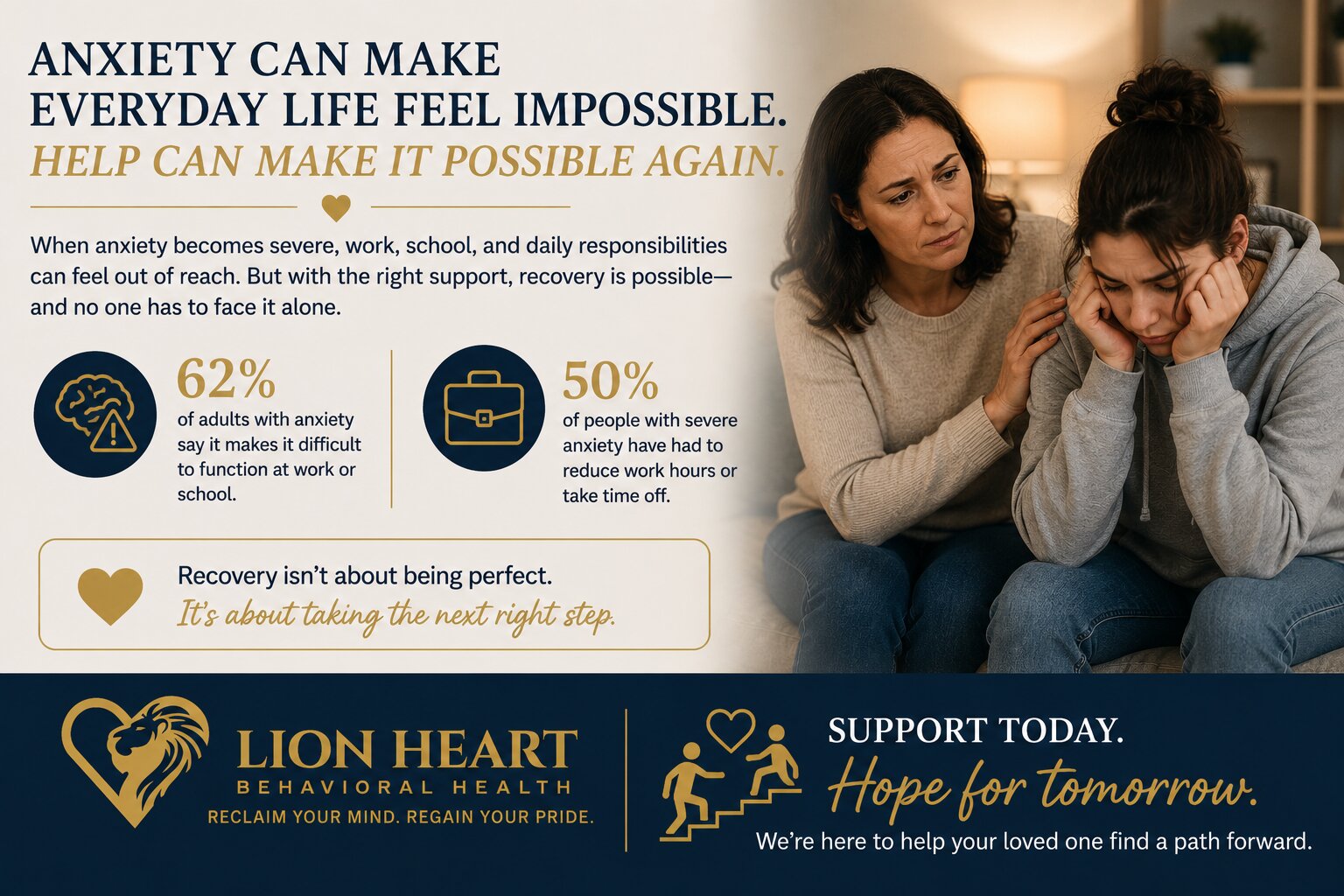
How Anxiety Can Turn Everyday Life Into a Struggle

Recovery Usually Starts Smaller Than People Expect

Many families wait for dramatic change.

Most of the time, recovery doesn’t work that way.

It begins quietly.

Someone sleeps through the night.

Someone drives to work without turning around.

Someone attends a social event.

Someone notices an anxious thought without immediately believing it.

These moments may seem insignificant.

They’re not.

Every meaningful recovery story I’ve witnessed has been built on small victories.

The challenge is that small victories rarely feel impressive while they’re happening.

They’re like individual drops of water filling a bucket.

One drop doesn’t seem important.

Eventually, the bucket fills.

A Story I Think About Often

Several years ago, I worked with a young adult whose anxiety had become so overwhelming that maintaining employment felt impossible.

Every workday started with panic.

Every shift felt unbearable.

Eventually they stopped believing they would ever function normally again.

What changed wasn’t their personality.

What changed wasn’t their intelligence.

What changed was the level of support they received.

Gradually, they learned how to recognize anxiety without immediately surrendering to it.

They developed healthier coping strategies.

They gained confidence through repetition.

Most importantly, they stopped viewing every anxious feeling as proof they were incapable.

Months later they returned to work.

Not perfectly.

Not fearlessly.

But successfully.

Today, what they remember most isn’t the anxiety.

It’s realizing they were stronger than they thought.

I’ve heard versions of that story many times.

And that’s why I remain hopeful.

The Question People Search At 2 A.M.

There is a phrase many people type into search engines when they’re feeling desperate.

anxiety can’t work help

Not because they’re looking for excuses.

Because they’re looking for answers.

They want to know whether other people experience this.

They want to know whether recovery is possible.

They want reassurance that they’re not broken.

If that’s the question bringing someone here, I want them to know this:

You’re not alone.

And you’re not failing.

Many intelligent, hardworking people experience periods when anxiety becomes overwhelming.

The presence of anxiety does not determine your future.

What I Want Parents To Remember

If your child is struggling to maintain work because of anxiety, try not to view the situation through the lens of failure.

Look at it through the lens of suffering.

That shift matters.

Because people who are suffering need support, not judgment.

Many young adults who eventually recover begin exactly where your child may be now.

Overwhelmed.

Confused.

Embarrassed.

Unsure what kind of help exists.

With the right support, things can change.

For families looking for support in Bristol County MA or seeking help in Raynham MA, understanding available treatment options can provide clarity and hope.

Because anxiety may be influencing today’s decisions.

But it does not have to determine tomorrow’s possibilities.

Frequently Asked Questions

Can anxiety really make someone unable to work?

Yes. Severe anxiety can affect concentration, attendance, decision-making, confidence, and overall functioning. Many people struggle to maintain employment when symptoms become overwhelming.

Is my child being lazy or unmotivated?

In many cases, no. What appears to be avoidance may actually be significant emotional distress. Understanding the underlying experience is important before making assumptions.

When should someone seek additional support for anxiety?

If anxiety is consistently affecting work, school, relationships, sleep, or daily responsibilities, it may be time to explore a higher level of care.

What if weekly therapy doesn’t seem to be enough?

Some individuals benefit from more structured support when symptoms become difficult to manage. Additional treatment options exist between weekly therapy and inpatient hospitalization.

Can people recover and return to work after severe anxiety?

Yes. Many people successfully return to work, school, and other responsibilities after receiving appropriate support and developing effective coping strategies.

How can parents help without making things worse?

Listen without judgment, encourage professional support, avoid minimizing symptoms, and focus on understanding rather than fixing.

Does needing more support mean my child is getting worse?

Not necessarily. Sometimes it simply means they need a different level of care to continue making progress.

What if my child says they feel stuck?

Feeling stuck is common when anxiety becomes overwhelming. The good news is that being stuck is not permanent. With support and guidance, many people find a path forward.

Call (774) 341-4502 or visit our structured daytime mental health programs to learn more about our programs, PHP services Raynham, MA.

*The stories shared in this blog are meant to illustrate personal experiences and offer hope. Unless otherwise stated, any first-person narratives are fictional or blended accounts of others’ personal experiences. Everyone’s journey is unique, and this post does not replace medical advice or guarantee outcomes. Please speak with a licensed provider for help.

Tom believes that meaningful change begins with feeling heard, respected, and genuinely understood. His therapeutic approach is grounded in compassion, authenticity, and trauma-informed care, creating a safe, supportive, and judgment-free environment where clients feel empowered to explore challenges, build resilience, and move toward lasting healing.

As a Licensed Alcohol and Drug Counselor II (LADC II), Tom has experience working with individuals facing a wide range of mental health and substance use concerns across multiple levels of care. He is passionate about helping clients recognize their strengths while developing practical tools to navigate life’s challenges with greater confidence, emotional awareness, and self-compassion. Tom views therapy as a collaborative partnership, tailoring his approach to meet each person’s unique experiences, goals, and values.

Currently pursuing a Master of Science in Clinical Mental Health Counseling at Bay Path University with a concentration in Trauma-Informed Care, Tom is committed to continually expanding his clinical knowledge and providing evidence-based, culturally responsive care. He has a particular passion for working with LGBTQ+ individuals, supporting men’s mental health, and helping adolescents and young adults navigate anxiety, depression, trauma, life transitions, and identity development.

Known for his calm presence, genuine empathy, and approachable style, Tom strives to foster meaningful therapeutic relationships built on trust, respect, and collaboration. He believes that healing occurs when individuals feel accepted for who they are while being encouraged to discover who they can become.

Outside of the therapy room, Tom enjoys spending time with family and friends, camping, weightlifting, and staying active. He believes that maintaining balance, practicing self-care, and prioritizing overall wellness enhances his ability to support others as they pursue healthier, more fulfilling lives.

Arielle is a compassionate mental health clinician who believes that meaningful change begins with feeling safe, heard, and genuinely understood. As a Licensed Certified Social Worker (LCSW), she is dedicated to creating a welcoming, collaborative therapeutic environment where clients feel empowered to explore their experiences, build on their strengths, and move toward lasting emotional wellness.

Arielle’s approach is rooted in authenticity, empathy, and trust. She believes the therapeutic relationship serves as the foundation for growth and strives to balance compassion with thoughtful accountability. By helping clients recognize patterns, deepen self-awareness, and develop practical coping strategies, she supports individuals in creating meaningful, sustainable change both inside and outside of the therapy room.

Working collaboratively with each client, Arielle tailors treatment to meet their unique needs, values, and goals. She has experience supporting individuals navigating anxiety, depression, stress, and major life transitions, meeting clients where they are while encouraging growth at a pace that feels both supportive and achievable. Her person-centered approach emphasizes resilience, self-compassion, and empowering clients to develop the confidence and skills needed to navigate life’s challenges.

Arielle earned her Master’s degree from Salem State University and completed her undergraduate education at The Pennsylvania State University. She is passionate about helping individuals discover their strengths, cultivate resilience, and create fulfilling lives built on hope, healing, and personal growth.

Jill is a dedicated behavioral health clinician who believes that healing begins when individuals feel truly seen, heard, and accepted for who they are. Since beginning her career in behavioral health in 2015, she has been honored to support children, adolescents, adults, and families through some of life’s most challenging moments. Her diverse clinical experience has reinforced her belief that meaningful and lasting change begins with genuine connection, compassion, and a therapeutic relationship built on trust.

Throughout her career, Jill has served in a variety of clinical roles, including high school intervention specialist, family specialist and outreach worker, program clinician in a children’s emergency residence, and Partial Hospitalization Program (PHP) clinician before joining Lion Heart Behavioral Health in 2026. These experiences have provided her with a broad understanding of the unique challenges individuals and families face across the lifespan while strengthening her commitment to providing personalized, client-centered care.

Jill earned her Master of Science in Psychology with dual specializations in Educational and Counseling Psychology from Capella University and her Bachelor of Science in Criminal Justice with a concentration in Forensic Psychology from Kaplan University. Her therapeutic approach is grounded in Cognitive Behavioral Therapy (CBT), integrating evidence-based interventions with warmth, authenticity, and genuine curiosity about each client’s unique experiences.

Known for her compassionate and approachable style, Jill creates a welcoming, nonjudgmental environment where clients feel safe exploring challenges, identifying strengths, and developing practical skills to navigate life’s obstacles. She recognizes the courage it takes to seek support and considers it a privilege to walk alongside individuals as they build resilience, foster self-understanding, and work toward meaningful, lasting recovery.

Jill is passionate about helping every client leave therapy feeling empowered, supported, and hopeful. She believes that with the right support, meaningful change is always possible and is committed to helping individuals discover the confidence and resilience needed to create fulfilling, purpose-driven lives.

Kevin brings a unique combination of professional expertise, lived experience, and genuine compassion to his work as a therapist. Since beginning his own recovery journey in 2016, he has remained committed to helping others discover that lasting recovery is not only possible, but transformative. His personal experiences have shaped his deep understanding of addiction, resilience, and the courage it takes to create meaningful change.

Over the past seven years, Kevin has dedicated his career to working with individuals navigating substance use disorders and recovery. He earned his Licensed Alcohol and Drug Counselor II (LADC II) credential in 2024, further strengthening his clinical knowledge and commitment to evidence-based care. Clients appreciate Kevin’s authenticity, empathy, and ability to build trust through genuine connection. His approach is grounded in the belief that every individual possesses the strength and capacity for growth, regardless of where they are in their recovery journey.

Kevin’s work is driven by a passion for empowering others to rediscover hope, develop confidence, and build fulfilling lives in recovery. He recognizes that healing extends beyond sobriety and focuses on helping clients develop the tools, insight, and resilience needed for long-term success.

Outside of the therapy room, Kevin is a devoted husband, father, brother, son, and friend. He has also been deeply involved in music throughout his life, performing as a lead vocalist with local bands for more than 30 years. His love of music, combined with his personal and professional experiences, allows him to connect with people from all walks of life in an authentic and meaningful way.

Kevin believes that some of life’s greatest challenges can become the foundation for purpose, healing, and personal transformation. His warmth, humility, and unwavering commitment to those he serves make him a trusted guide for individuals seeking lasting recovery and a renewed sense of hope.

Nicole brings nearly a decade of experience in substance use disorder treatment, having worked across multiple levels of care since 2015. With a background in psychology and extensive experience supporting individuals throughout their recovery journeys, she has developed a compassionate, person-centered approach that recognizes there is no single path to healing. Nicole believes that every individual’s lived experience is unique and deserving of respect, understanding, and individualized care.

Throughout her career, Nicole has been dedicated to helping clients move beyond symptom management by exploring the underlying patterns that contribute to substance use. She works collaboratively with individuals to strengthen emotional regulation, develop effective coping strategies, and build the insight and resilience necessary to support long-term recovery. Her therapeutic approach considers the whole person, recognizing the powerful connection between thoughts, emotions, behaviors, relationships, and life experiences.

Known for her calm presence, genuine empathy, and ability to foster meaningful therapeutic relationships, Nicole creates a safe and supportive environment where clients feel empowered to explore challenges, celebrate progress, and embrace lasting change. She is passionate about helping individuals discover their strengths, restore hope, and build lives that reflect their values and recovery goals.

Nicole believes recovery is about more than achieving sobriety—it is about creating a fulfilling, balanced life built on self-awareness, resilience, and purpose. She is committed to walking alongside each client as they navigate the challenges of recovery while helping them develop the confidence and skills needed to sustain meaningful, lifelong change.

Emily is a Licensed Certified Social Worker (LCSW) dedicated to helping individuals navigate mental health challenges, substance use disorders, and the path toward lasting recovery. She earned her Master of Social Work, with a Certificate in Trauma Practice, from Simmons University in 2024 and has continued to expand her clinical expertise through advanced training in co-occurring disorders and evidence-based treatment. Emily completed a Substance Use Disorders Certificate in Assessment and Treatment Strategies with Teens and Adults through Bridgewater State University and is currently pursuing a Certificate in Substance Abuse Counseling at Bristol Community College to further strengthen her clinical knowledge and specialized skills.

Emily’s therapeutic approach is grounded in Cognitive Behavioral Therapy (CBT) and Dialectical Behavior Therapy (DBT), integrating practical, evidence-based interventions with genuine compassion and collaboration. She works alongside clients to better understand the relationship between their thoughts, emotions, and behaviors while helping them develop healthier coping strategies, strengthen emotional regulation, and create meaningful, sustainable change. Emily believes that healing begins with feeling understood, and she is committed to creating a safe, supportive environment where every individual feels empowered to grow at their own pace.

Known for her warmth, authenticity, and positive energy, Emily quickly builds strong therapeutic relationships founded on trust, respect, and encouragement. She is passionate about helping clients recognize their strengths, overcome life’s challenges, and move toward lives that are aligned with their values and goals.

Outside of the therapy room, Emily is an accomplished lacrosse coach at both the club and collegiate levels. Having played competitively throughout high school and college, she enjoys mentoring athletes and helping them develop confidence, resilience, and leadership skills that extend far beyond the field. In her free time, Emily enjoys reading and creating diamond art, finding creativity and balance through these hobbies.

Emily believes that growth is possible for everyone and is honored to walk alongside clients as they build resilience, discover hope, and create lasting change.

Amanda Campbell, MSN, PMHNP-BC, is a board-certified Psychiatric Mental Health Nurse Practitioner dedicated to providing compassionate, evidence-based psychiatric care to adults experiencing a wide range of mental health and co-occurring conditions. 

Amanda provides comprehensive psychiatric evaluations, medication management, and ongoing treatment planning as part of a multidisciplinary team. She believes in partnering with patients through shared decision-making, recognizing that each individual’s experiences, goals, and recovery journey are unique.

Amanda is committed to fostering a safe, supportive, and nonjudgmental therapeutic environment where patients feel heard and respected. She emphasizes evidence-based treatment, patient education, and practical strategies that empower individuals to build resilience, improve daily functioning, and achieve lasting mental wellness.

Nicole Hunter serves as Program Director with a leadership style rooted in authenticity, compassion, and lived experience. She has been in recovery from substance use for several years, and while recovery is the foundation of the life she has built, it is far more than something in her past—it continues to shape who she is, how she leads, and why she is so deeply passionate about helping others find their own path forward.

Nicole remembers what it felt like to walk into treatment, unsure of what life could look like on the other side. She also understands that recovery isn’t something we simply “graduate” from. Even years later, there are seasons when we need to reconnect with the tools, principles, and support that keep us grounded. Having experienced her own mental health challenges alongside recovery, she understands that healing is rarely one-dimensional. This perspective allows her to genuinely relate to individuals navigating both substance use and mental health, meeting them with empathy instead of judgment and hope instead of shame.

For Nicole, this work has never been just a career—it is deeply personal. Her passion comes from walking alongside people who are making one of the hardest and bravest decisions of their lives: choosing to rebuild. She believes there is something incredibly powerful about witnessing someone begin to believe in themselves again, often before they are able to see their own potential. Being trusted to share in that journey is something she never takes for granted.

Nicole believes every person deserves to feel seen, heard, and valued—not for who they might become someday, but for who they are the moment they walk through the door. No two clients are the same, and she is committed to ensuring treatment reflects the unique strengths, challenges, goals, and experiences of each individual. She believes healing happens through individualized care, genuine connection, and creating an environment where people feel safe enough to be honest and supported enough to grow.

Nicole’s clinical philosophy combines evidence-based practices with the belief that the therapeutic relationship itself is one of the most powerful tools for change. Throughout her years working in behavioral health across a variety of clinical and leadership roles, she has developed a flexible, person-centered approach that meets individuals where they are while empowering them to discover where they are capable of going. She celebrates every step forward, knowing that meaningful progress is often made through small, consistent victories rather than dramatic breakthroughs.

Whether she is supporting clients or leading the multidisciplinary team at the program, Nicole lives by the principle of unconditional positive regard. She believes people grow when they feel respected, challenged, supported, and genuinely believed in. She strives to create a culture where clients and staff alike feel empowered to learn, take healthy risks, and recognize their own strengths.

Above all, Nicole believes that recovery is possible, healing is possible, and that every person deserves individualized care, unwavering respect, and the opportunity to build a life they are proud of. Her goal is simple: to help create a space where people feel safe enough to be honest, supported enough to grow, and empowered enough to realize that lasting change is within reach.

Bill Abbate brings more than 16 years of experience in the substance use disorder field, along with over 17 years of sustained recovery, providing him with a unique combination of professional expertise and lived experience. Throughout his career, Bill has remained deeply committed to helping individuals and families discover hope, healing, and lasting recovery through compassionate, person-centered care.

Beginning his career as a Recovery Aide, Bill gained invaluable hands-on experience across the continuum of addiction treatment, developing a comprehensive understanding of the challenges individuals face at every stage of recovery. His dedication, leadership, and passion for serving others have guided his progression into his current role as Director of Patient & Family Services.

At Lion Heart Behavioral Health, Bill leads the Patient and Family Services Department, overseeing the Family Support and Recovery Coaching Program. He is responsible for developing and coordinating recovery coaching services, supporting and training family coaches, and ensuring patients and their loved ones receive consistent, evidence-informed care throughout the recovery process. Bill believes that lasting recovery extends beyond the individual and that empowering families is an essential component of long-term healing.

Bill holds credentials as a Licensed Alcohol and Drug Counselor II (LADC II), Certified Addiction Recovery Coach (CARC), and National Certified Peer Recovery Support Specialist (NCPRSS). His leadership style blends clinical best practices with the power of lived experience, allowing him to build authentic relationships while fostering resilience, accountability, and hope among both patients and staff.

Known for his warmth, authenticity, and unwavering commitment to the recovery community, Bill is passionate about helping individuals recognize that recovery is not only possible—it can become a foundation for a fulfilling and purpose-driven life.

Outside of his professional role, Bill remains actively involved in recovery communities and enjoys attending recovery-focused events across the country. When he’s not supporting others, he enjoys traveling, motorcycling, surfing, and snowboarding. He is also a proud father who values family, connection, and living a life rooted in gratitude and service.

From the beginning of her career, Liz Forgue-McRae has believed that the best leaders are coaches first.

Her passion for helping others began long before entering the counseling profession as a competitive swim coach and manager at the YMCA, where she coached and mentored nearly 200 swimmers. Known for her unwavering encouragement and enthusiasm, Liz spent years helping young athletes push beyond perceived limitations, celebrate accomplishments, and develop confidence both in and out of the water. That same philosophy continues to shape her leadership and clinical approach today.

Liz earned her Bachelor of Arts in Philosophy from the University of Massachusetts Dartmouth before completing her Master of Arts in Mental Health Counseling at Bridgewater State University. She is a Licensed Mental Health Counselor in both Massachusetts and Rhode Island and is a Certified Clinical Supervisor through the Massachusetts Mental Health Counselors Association (MAMHCA).

With more than a decade of experience across the behavioral healthcare continuum, Liz has provided leadership and clinical services within inpatient, outpatient, partial hospitalization (PHP), intensive outpatient (IOP), and community-based treatment settings. Her professional experience includes program development, clinical supervision, staff training, compliance and quality improvement, and multidisciplinary leadership.

Liz has extensive experience working with first responders, active-duty service members, veterans, healthcare professionals, and individuals navigating co-occurring mental health and substance use disorders. She is passionate about creating environments where individuals feel supported, empowered, and equipped to achieve lasting recovery and personal growth.

As Clinical Director, Liz is dedicated to fostering a culture of clinical excellence through compassionate leadership, evidence-based treatment, and meaningful collaboration. She believes exceptional care begins with exceptional teams and is committed to mentoring clinicians while ensuring every client receives high-quality, individualized treatment.

Whether leading a clinical team, developing innovative programming, or supporting individuals through life’s most difficult challenges, Liz remains guided by the same principle that first inspired her career: helping people recognize their strengths, overcome obstacles, and realize their full potential.