
As a clinician, I’ve noticed something that surprises many people.
The hardest chapter of recovery is not always the beginning.
Sometimes it’s what comes after.
Not the crisis.
Not the hospitalization.
Not the sleepless nights or overwhelming emotions that first brought someone into treatment.
It’s the season that follows.
The season when things are technically better.
The season when life is no longer falling apart.
The season when everyone around you assumes you’ve arrived.
And yet, inside, you still feel disconnected.
I’ve sat across from countless alumni who have told me some version of the same story.
“I should be happier than I am.”
“I thought things would feel different by now.”
“I don’t understand why I still feel stuck.”
These aren’t people in immediate danger.
These aren’t people who have given up.
These are people who worked hard to improve their mental health and expected that progress would automatically create fulfillment.
When it didn’t, many started wondering whether something was wrong with them.
The truth is much simpler.
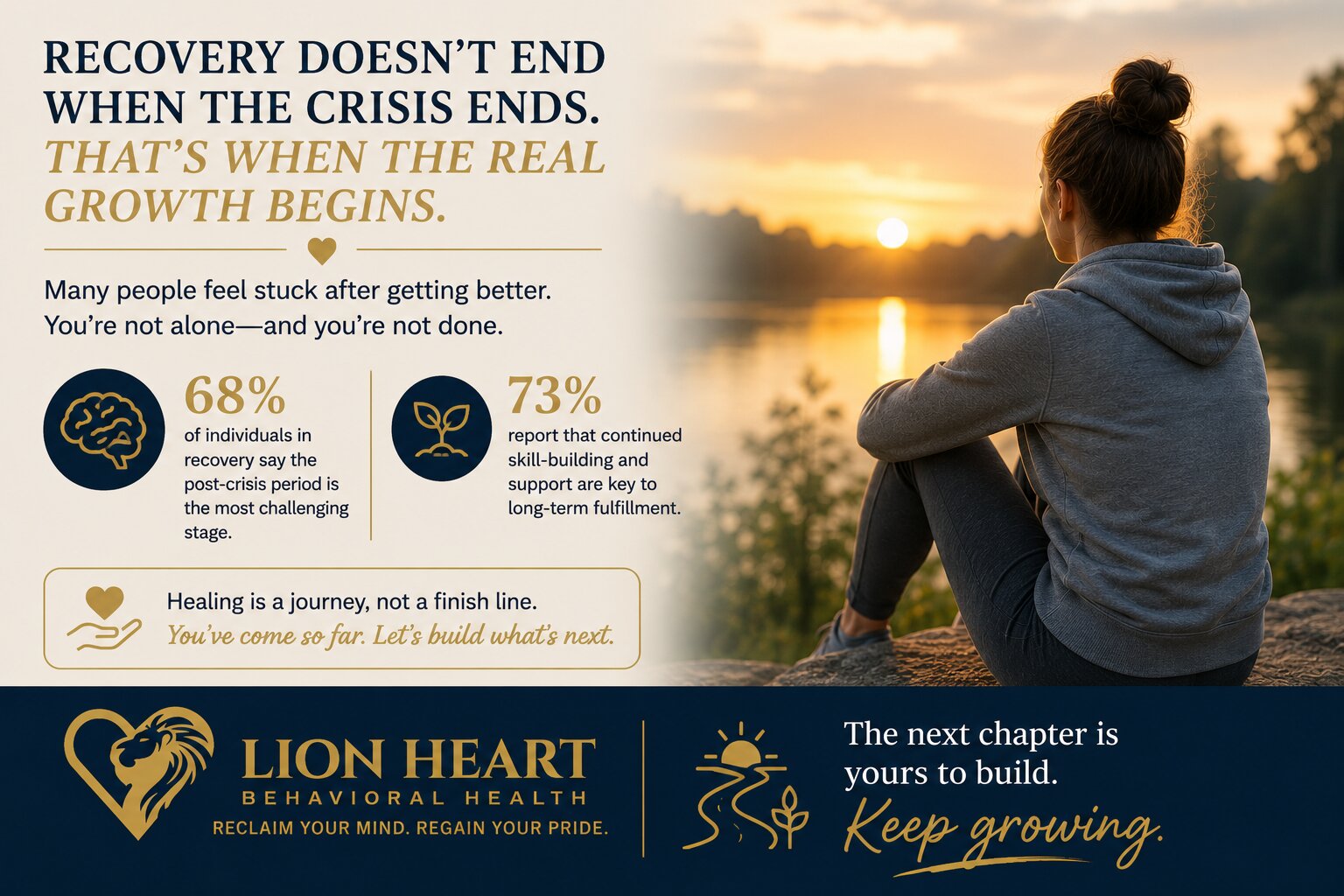
Recovery changes over time.
And the skills that help you survive often aren’t the same skills that help you thrive.
For many people who continue building on the foundation established through DBT-focused mental health support, that realization becomes the beginning of an entirely new chapter.
The Hidden Challenge Nobody Talks About
Early recovery is incredibly clear.
You know what you’re fighting.
You’re trying to stabilize.
You’re trying to stay safe.
You’re trying to manage symptoms that feel overwhelming.
Every small victory matters because the alternative feels frightening.
Then something interesting happens.
Life becomes more stable.
The crisis eases.
The emotional intensity decreases.
The days become more predictable.
From the outside, it looks like success.
And it is.
But many people discover an uncomfortable truth:
Stability and fulfillment are not the same thing.
Being emotionally safer doesn’t automatically create purpose.
Reduced symptoms don’t instantly rebuild confidence.
Surviving difficult years doesn’t magically teach you how to enjoy life again.
That’s why some alumni feel confused.
They’re doing better.
But they aren’t necessarily living better.
Not yet.
When Survival Becomes A Habit
One thing I’ve observed over the years is that many people become incredibly skilled at survival.
They learn how to monitor warning signs.
They learn coping strategies.
They learn how to avoid situations that create unnecessary risk.
These skills are valuable.
They save lives.
But survival mode can become so familiar that people struggle to leave it behind.
Imagine living through a long winter.
For years, you’ve worn heavy coats, boots, and layers simply to stay warm.
Then spring arrives.
The weather changes.
But you keep wearing the same winter gear because it’s what you’re used to.
Many people approach recovery the same way.
The strategies that protected them during crisis continue long after the crisis has ended.
Hypervigilance remains.
Emotional avoidance remains.
Fear remains.
The danger may be gone, but the protective habits stay.
At some point, healing requires more than protection.
It requires participation.
Why Emotional Skills Matter Years Later
Some people assume emotional skills are only important during difficult periods.
In reality, they become even more important as life expands.
Think about what thriving actually requires.
Relationships.
Career growth.
Parenting.
Friendships.
Boundaries.
Conflict resolution.
Self-respect.
Trust.
Every one of those areas depends on emotional skills.
I’ve worked with people who were no longer overwhelmed by anxiety or depression but still struggled to communicate needs, tolerate disappointment, manage conflict, or recover from rejection.
These challenges didn’t mean treatment had failed.
They meant recovery was evolving.
A new set of skills was needed.
The focus was no longer on surviving emotions.
The focus became learning how to navigate life with them.
The Alumni Who Thrive Usually Share One Trait
They stop waiting for life to feel perfect.
This sounds simple.
It’s not.
Many people unknowingly postpone happiness.
They tell themselves:
“I’ll relax when everything is under control.”
“I’ll feel confident when I stop making mistakes.”
“I’ll trust myself when I’m completely healed.”
The problem is that those moments never arrive.
Life remains unpredictable.
Mistakes continue happening.
Difficult emotions still show up.
The people who experience the most meaningful growth learn to build a life alongside uncertainty instead of waiting for uncertainty to disappear.
That’s a powerful shift.
Instead of asking, “How do I eliminate discomfort?”
They begin asking, “How do I keep moving forward even when discomfort is present?”
That question changes everything.
Recovery Is Built In Ordinary Moments
When people imagine personal transformation, they often picture dramatic breakthroughs.
The reality is usually much quieter.
Recovery grows in ordinary moments.
The phone call you almost didn’t make.
The boundary you finally set.
The difficult conversation you stayed present for.
The mistake you forgave yourself for.
The day you asked for help instead of pretending everything was fine.
These moments rarely make headlines.
Yet they often matter more than the dramatic milestones.
I sometimes describe recovery as building a bridge.
Each choice is a single board.
One board doesn’t seem impressive.
But eventually those boards connect two completely different versions of your life.
The version that was merely surviving.
And the version that is finally moving forward.
The Relationship That Changes Everything
When people think about recovery, they often focus on relationships with family, friends, or partners.
Those relationships matter.
But there’s another relationship that often determines long-term success.
The relationship with yourself.
Many people enter treatment carrying years of self-criticism.
Every mistake becomes evidence.
Every setback becomes a verdict.
Every difficult emotion becomes something to judge.
I’ve watched people accomplish remarkable things while continuing to treat themselves with incredible harshness.
Eventually that approach becomes exhausting.
One of the most meaningful changes I see in long-term recovery is self-compassion.
Not self-pity.
Not avoiding responsibility.
Simply learning how to speak to yourself like someone worth helping.
For many people, that shift feels uncomfortable at first.
Then it becomes transformative.
Because it’s difficult to build a fulfilling life while constantly attacking the person living it.
Learning To Stay Instead Of Escape
One of the most powerful changes that occurs in long-term recovery is the ability to remain present during difficult experiences.
In the past, emotions may have triggered immediate reactions.
Withdrawal.
Anger.
Isolation.
Impulsive decisions.
Avoidance.
Over time, many people learn a different response.
They stay.
They stay in conversations.
They stay connected during conflict.
They stay present when anxiety appears.
They stay committed when situations become uncomfortable.
This ability creates enormous freedom.
Because life is not difficult due to emotions.
Life becomes difficult when every emotion forces an escape.
The people who thrive aren’t necessarily the people with fewer emotional challenges.
They’re often the people who have learned how to remain grounded when those challenges appear.
The Life Beyond Symptom Management
Eventually recovery becomes less about symptoms and more about identity.
Who are you now?
What matters to you?
What kind of relationships do you want?
What brings meaning to your life?
These questions often emerge years after treatment begins.
And they’re important.
Because recovery is not simply the absence of suffering.
It’s the presence of engagement.
Purpose.
Connection.
Growth.
Joy.
The ability to participate fully in your own life.
For many individuals seeking emotion regulation therapy MA residents often explore, these deeper goals become just as important as symptom reduction itself.
Not because symptoms don’t matter.
But because life becomes larger than managing them.
What I Hope Every Alumni Understands
If you’ve been feeling stuck lately, I want to tell you something I often tell alumni.
The fact that you’re no longer in crisis does not mean your growth is finished.
And feeling disconnected doesn’t erase the progress you’ve already made.
Sometimes the next stage of healing looks less dramatic than the first.
It’s not about survival anymore.
It’s about building.
Building trust.
Building relationships.
Building purpose.
Building a life that feels meaningful even when challenges arise.
That process takes time.
It takes patience.
And it often takes continued support.
For individuals exploring care in Raynham MA or looking at treatment options in Bristol County MA, ongoing mental health care can help transform recovery from something you maintain into something you truly live.
Because surviving is remarkable.
But thriving is where many people finally discover who they are beyond the struggle.
Frequently Asked Questions
Why do I feel stuck even though my mental health has improved?
Many people reach a point where symptoms are more manageable but still feel disconnected, unfulfilled, or uncertain about what’s next. This often reflects a new stage of recovery rather than a lack of progress.
Is it normal to continue working on emotional skills years after treatment?
Yes. Emotional growth is a lifelong process. Many people continue strengthening communication, resilience, self-awareness, and relationship skills long after initial treatment.
What is the difference between surviving and thriving?
Surviving focuses on safety, stability, and symptom management. Thriving involves building meaningful relationships, pursuing goals, developing confidence, and actively engaging in life.
Why do some people feel disconnected after recovery?
During crisis periods, most energy goes toward managing immediate challenges. Once stability returns, deeper questions about identity, purpose, and fulfillment often emerge.
Can DBT skills still help if I’m no longer in crisis?
Absolutely. Many DBT-based skills remain valuable throughout long-term recovery because they support emotional awareness, relationship health, stress management, and personal growth.
How do I know if I could benefit from additional support?
If you feel stuck, disconnected, emotionally overwhelmed, or unsure how to move forward despite previous progress, speaking with a mental health professional may help you identify the next steps.
Is it common for recovery to happen in stages?
Yes. Recovery rarely follows a straight line. Many people experience different phases focused on stabilization, healing, growth, and long-term fulfillment.
Call (774) 341-4502 or visit our DBT mental health services to learn more about our mental health, DBT services Raynham, MA.