
If you or a loved one are struggling with addiction or mental health, we can help. Request a call.

Topbar Forms

This field is for validation purposes and should be left unchanged.
Name(Required)

Paying for More Numbing vs Paying Attention to My Life Again

Paying for More Numbing vs Paying Attention to My Life Again

I spent almost a month avoiding one phone call because I was afraid to ask about the copay.

Not because I didn’t need help. Deep down, I knew I did.

My drinking had crept back into that “only at night” territory that somehow still controlled my entire day. My anxiety had become so constant I barely noticed it anymore. I wasn’t in full relapse, but I also wasn’t living in a way that felt connected, honest, or peaceful.

Mostly, I felt flat.

That kind of long-term emotional exhaustion where nothing is technically falling apart—but nothing feels good either.

And still, I kept delaying the conversation.

“What if insurance barely covers anything?”
“What if it costs too much?”
“What if I ask questions and still don’t go?”
“What if this means things are actually worse than I’ve admitted?”

So instead, I kept doing what a lot of high-functioning people do:
surviving loudly while suffering quietly.

If you’ve been researching structured daytime treatment options while avoiding the actual insurance conversation because you’re scared of what you’ll hear, I understand that more than I wish I did.

I Wasn’t Afraid of the Cost as Much as I Was Afraid of Needing Help Again

That took me a while to admit.

At first, I told myself this was purely financial. I framed it logically:
“I need to understand the numbers.”
“I’m being responsible.”
“I can’t commit without knowing coverage.”

But underneath all of that was something much more uncomfortable.

I was terrified that asking about treatment would force me to stop pretending I was okay.

Long-term alumni know this feeling well.

We know the language of recovery. We know how to identify warning signs. We know how to talk ourselves into “managing.”

And honestly, sometimes that knowledge becomes its own defense mechanism.

You tell yourself:

  • “I’ve already done treatment before.”
  • “I should know better by now.”
  • “Other people need this more than I do.”
  • “I’m still functioning.”
  • “I’m not back where I used to be.”

Meanwhile, your life slowly loses color.

Not always through dramatic relapse. Sometimes through emotional disappearance.

You stop calling people back.
You stop feeling excited about anything.
You stay busy enough not to think.
You drink or numb or isolate just enough to avoid fully feeling how disconnected you’ve become.

That was where I lived for a long time.

Not drowning exactly.

Just emotionally treading water so long I forgot people were allowed to rest.

Burnout and Emotional Disconnection Can Look Surprisingly “Normal”

That’s part of why people wait so long.

I was still paying bills.
Still going to work.
Still showing up socially enough to look functional.

But internally, everything felt muted.

I woke up tired.
I went to bed anxious.
I moved through conversations half-present.
I kept telling myself I just needed a vacation, more sleep, less stress, better routines.

And sure, those things help.

But eventually you realize you can’t self-care your way out of deep emotional exhaustion while continuing to ignore the underlying problem.

One of the strangest things about long-term recovery is how easy it can become to confuse numbness with stability.

Especially for high-functioning people.

No crisis means you assume things are fine.
No catastrophe means you delay support.
No public collapse means you keep pushing yourself harder.

Until your nervous system starts waving every possible warning flag.

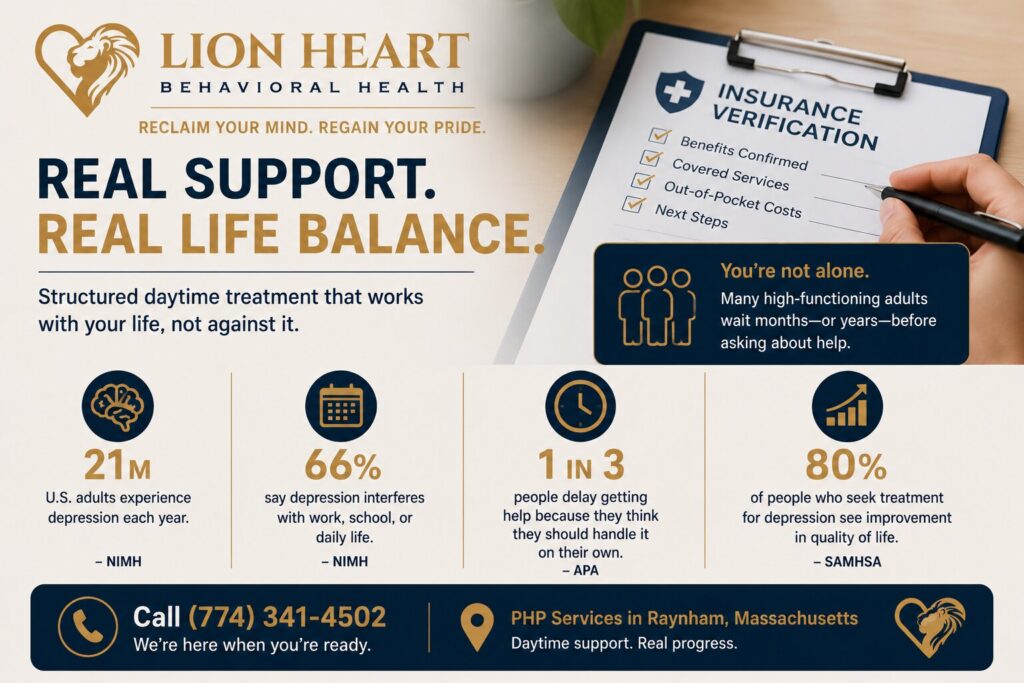
Calling About BCBS Massachusetts Felt More Vulnerable Than Therapy

I expected the insurance call to feel transactional.

Instead, it felt deeply personal.

Not because anyone was invasive or judgmental. The conversation itself was straightforward. They explained what could be verified, discussed next steps, and answered questions about how partial hospitalization insurance coverage may work differently depending on someone’s specific BCBS Massachusetts plan.

But hearing actual options instead of vague fears cracked something open emotionally.

Because fear grows best in uncertainty.

As long as I avoided the conversation, I could keep everything hypothetical.

The moment I started asking real questions, treatment stopped being an abstract idea and became something I might actually allow myself to do.

That terrified me.

A lot of people researching treatment costs are not just asking:
“What will this cost financially?”

They’re asking:
“What happens if I stop avoiding my life?”
“What if I’m more burned out than I realized?”
“What if I finally slow down enough to feel everything?”

That’s the hidden fear many high-functioning people carry.

Not collapse.

Honesty.

I Had Already Been Paying for My Pain in Other Ways

This realization hit me harder than any insurance conversation.

I kept obsessing over the possibility of treatment costs while completely ignoring the emotional and financial cost of staying stuck.

The alcohol.
The impulsive spending.
The food delivery every night because I was too emotionally drained to cook.
The weekends spent numbing out instead of actually recovering.
The strained relationships.
The missed moments.
The exhaustion.
The anxiety.
The emotional distance from myself.

Burnout drains people financially too.

Not always dramatically. Quietly.

A drink here.
Another subscription there.
Retail therapy.
Takeout.
Avoidance spending.
Last-minute escapes.
Overworking until your body crashes.

A lot of high-functioning adults are quietly financing their own emotional shutdown without realizing it.

Not because they’re reckless.

Because pain finds somewhere to go.

And when people don’t have enough support, that pain often gets redirected into habits that temporarily soften the edges of exhaustion.
BCBS Massachusetts and Structured Daytime Treatment

The First Week of Structured Care Felt Less Overwhelming Than My Actual Life

That surprised me.

I expected treatment to feel restrictive.

Instead, my untreated life had become far more chaotic than the schedule ever was.

At least treatment had rhythm.

There were clear expectations.
Breaks.
Conversations that weren’t performative.
People speaking honestly instead of pretending everything was fine all the time.

I didn’t realize how exhausted I was from constantly managing appearances until I stopped doing it every hour of the day.

That’s something many high-functioning alumni don’t fully recognize:
performing wellness is exhausting.

Pretending you’re okay while emotionally disconnected drains enormous amounts of energy.

One person in group described it perfectly:

“I spent years becoming successful at abandoning myself.”

That sentence stayed with me.

Because a lot of us did exactly that.

We became productive.
Reliable.
Helpful.
Accomplished.

And quietly disconnected from our own internal lives.

The Schedule Wasn’t the Hardest Part — Slowing Down Was

People researching an adult day hospital schedule often focus on logistics:

  • How many hours?
  • What time does it start?
  • Will I still be able to work?
  • What happens during the day?

Those are valid questions.

But emotionally, the harder adjustment for many high-functioning adults is learning how to stop living entirely in survival mode.

When you’ve spent years running on adrenaline, overwork, anxiety, or emotional avoidance, slowing down can initially feel deeply uncomfortable.

Silence feels loud.
Rest feels undeserved.
Structure feels unfamiliar.

You realize how much of your identity has become tied to staying busy enough not to feel things fully.

That’s why structured daytime care can feel surprisingly emotional.

Not because people are constantly breaking down.

Because many are finally hearing themselves clearly for the first time in years.

Long-Term Recovery Doesn’t Mean You’ll Never Need More Support

This matters more than people talk about.

A lot of alumni carry shame about returning to treatment because they think needing help again somehow erases previous growth.

It doesn’t.

Life changes people.
Stress accumulates.
Burnout deepens.
Grief happens.
Mental health shifts.
Isolation creeps in slowly.

And sometimes, even years into recovery, people realize they’ve drifted away from themselves again.

Not always through substances.

Sometimes through emotional withdrawal.
Disconnection.
Exhaustion.
Workaholism.
Chronic anxiety.
Numbness.

Some people relapse loudly.

Others slowly disappear from their own lives while still technically functioning.

Neither deserves shame.

One of the hardest truths in long-term recovery is this:
healing is not something you permanently complete.

Sometimes you need support again.
Sometimes you need structure again.
Sometimes you need people around you who can help interrupt the cycle before things worsen.

That’s not weakness.

That’s being human long enough to need care more than once.

Asking Questions Was the First Honest Thing I’d Done in a Long Time

Not because insurance verification is life-changing.

Because reaching out required me to stop minimizing how disconnected I’d become.

And honestly? That was harder than treatment itself.

A lot of people delay these conversations because they think asking about insurance somehow commits them to treatment immediately.

It doesn’t.

Sometimes asking questions is simply the first step back toward honesty.

Toward recognizing:
“I’m more exhausted than I’ve admitted.”
“I’m not functioning as well as I pretend.”
“I don’t actually want to keep living like this.”

That realization can feel painful.

It can also become the beginning of something better.

Treatment Didn’t Magically Fix My Life — But It Made Me Present Again

That mattered more than I expected.

I laughed differently afterward.
I slept more deeply.
I stopped feeling emotionally absent in conversations.
Food tasted better.
Music sounded different again.

Not because treatment turned me into a different person.

Because it helped me reconnect with parts of myself burnout had buried.

That’s what many people misunderstand about structured care.

The goal is not perfection.
Not constant happiness.
Not becoming some flawless recovery success story.

The goal is sustainability.

A life where you no longer need to numb yourself constantly just to survive your own nervous system.

FAQ About BCBS Massachusetts and Structured Daytime Treatment

Does BCBS Massachusetts cover structured daytime treatment?

Many BCBS Massachusetts plans may provide coverage for structured daytime mental health and substance use treatment services. Coverage varies depending on the individual plan, deductible, authorization requirements, and provider network.

How can I check what my copay or out-of-pocket cost will be?

Many treatment centers can help verify insurance benefits directly. You can also contact BCBS Massachusetts to ask about coverage details related to your specific plan.

What if I’m embarrassed to ask about treatment costs?

You are not alone.

A lot of people feel vulnerable discussing both mental health and finances at the same time. Asking questions does not commit you to treatment. It simply gives you more information to make decisions from a place of clarity instead of fear.

Can high-functioning people still benefit from structured care?

Absolutely.

Many adults seeking treatment are still working, parenting, maintaining relationships, or appearing functional externally while privately struggling with burnout, anxiety, depression, substance use, or emotional disconnection.

Will I have to enter live-in treatment?

Not necessarily. Structured daytime care allows many adults to receive consistent therapeutic support while still returning home afterward rather than entering round-the-clock support.

What if I’ve already been in recovery for years?

Long-term recovery experience does not make someone immune to stress, emotional exhaustion, depression, anxiety, or relapse risk. Many alumni seek additional support during difficult periods of life.

Is it normal to delay treatment because of fear about insurance?

Very normal.

For many people, financial fears become emotionally tangled with shame, vulnerability, and fear of acknowledging how overwhelmed they truly feel.

You Don’t Have to Keep Pretending You’re Fine Because You’re Functional

There’s a difference between surviving and actually feeling connected to your life.

A lot of long-term alumni quietly lose that connection without realizing how far they’ve drifted.

If you’ve been exploring structured daytime treatment options while worrying about insurance, copays, or whether your struggle is “serious enough,” you are allowed to ask questions before things completely fall apart.

You are allowed to need support again.
You are allowed to stop white-knuckling your way through burnout.
And you are allowed to want more from life than just functioning.

Call (774) 341-4502 or explore our php services to learn more about our programs.

*The stories shared in this blog are meant to illustrate personal experiences and offer hope. Unless otherwise stated, any first-person narratives are fictional or blended accounts of others’ personal experiences. Everyone’s journey is unique, and this post does not replace medical advice or guarantee outcomes. Please speak with a licensed provider for help.

Tom believes that meaningful change begins with feeling heard, respected, and genuinely understood. His therapeutic approach is grounded in compassion, authenticity, and trauma-informed care, creating a safe, supportive, and judgment-free environment where clients feel empowered to explore challenges, build resilience, and move toward lasting healing.

As a Licensed Alcohol and Drug Counselor II (LADC II), Tom has experience working with individuals facing a wide range of mental health and substance use concerns across multiple levels of care. He is passionate about helping clients recognize their strengths while developing practical tools to navigate life’s challenges with greater confidence, emotional awareness, and self-compassion. Tom views therapy as a collaborative partnership, tailoring his approach to meet each person’s unique experiences, goals, and values.

Currently pursuing a Master of Science in Clinical Mental Health Counseling at Bay Path University with a concentration in Trauma-Informed Care, Tom is committed to continually expanding his clinical knowledge and providing evidence-based, culturally responsive care. He has a particular passion for working with LGBTQ+ individuals, supporting men’s mental health, and helping adolescents and young adults navigate anxiety, depression, trauma, life transitions, and identity development.

Known for his calm presence, genuine empathy, and approachable style, Tom strives to foster meaningful therapeutic relationships built on trust, respect, and collaboration. He believes that healing occurs when individuals feel accepted for who they are while being encouraged to discover who they can become.

Outside of the therapy room, Tom enjoys spending time with family and friends, camping, weightlifting, and staying active. He believes that maintaining balance, practicing self-care, and prioritizing overall wellness enhances his ability to support others as they pursue healthier, more fulfilling lives.

Arielle is a compassionate mental health clinician who believes that meaningful change begins with feeling safe, heard, and genuinely understood. As a Licensed Certified Social Worker (LCSW), she is dedicated to creating a welcoming, collaborative therapeutic environment where clients feel empowered to explore their experiences, build on their strengths, and move toward lasting emotional wellness.

Arielle’s approach is rooted in authenticity, empathy, and trust. She believes the therapeutic relationship serves as the foundation for growth and strives to balance compassion with thoughtful accountability. By helping clients recognize patterns, deepen self-awareness, and develop practical coping strategies, she supports individuals in creating meaningful, sustainable change both inside and outside of the therapy room.

Working collaboratively with each client, Arielle tailors treatment to meet their unique needs, values, and goals. She has experience supporting individuals navigating anxiety, depression, stress, and major life transitions, meeting clients where they are while encouraging growth at a pace that feels both supportive and achievable. Her person-centered approach emphasizes resilience, self-compassion, and empowering clients to develop the confidence and skills needed to navigate life’s challenges.

Arielle earned her Master’s degree from Salem State University and completed her undergraduate education at The Pennsylvania State University. She is passionate about helping individuals discover their strengths, cultivate resilience, and create fulfilling lives built on hope, healing, and personal growth.

Jill is a dedicated behavioral health clinician who believes that healing begins when individuals feel truly seen, heard, and accepted for who they are. Since beginning her career in behavioral health in 2015, she has been honored to support children, adolescents, adults, and families through some of life’s most challenging moments. Her diverse clinical experience has reinforced her belief that meaningful and lasting change begins with genuine connection, compassion, and a therapeutic relationship built on trust.

Throughout her career, Jill has served in a variety of clinical roles, including high school intervention specialist, family specialist and outreach worker, program clinician in a children’s emergency residence, and Partial Hospitalization Program (PHP) clinician before joining Lion Heart Behavioral Health in 2026. These experiences have provided her with a broad understanding of the unique challenges individuals and families face across the lifespan while strengthening her commitment to providing personalized, client-centered care.

Jill earned her Master of Science in Psychology with dual specializations in Educational and Counseling Psychology from Capella University and her Bachelor of Science in Criminal Justice with a concentration in Forensic Psychology from Kaplan University. Her therapeutic approach is grounded in Cognitive Behavioral Therapy (CBT), integrating evidence-based interventions with warmth, authenticity, and genuine curiosity about each client’s unique experiences.

Known for her compassionate and approachable style, Jill creates a welcoming, nonjudgmental environment where clients feel safe exploring challenges, identifying strengths, and developing practical skills to navigate life’s obstacles. She recognizes the courage it takes to seek support and considers it a privilege to walk alongside individuals as they build resilience, foster self-understanding, and work toward meaningful, lasting recovery.

Jill is passionate about helping every client leave therapy feeling empowered, supported, and hopeful. She believes that with the right support, meaningful change is always possible and is committed to helping individuals discover the confidence and resilience needed to create fulfilling, purpose-driven lives.

Kevin brings a unique combination of professional expertise, lived experience, and genuine compassion to his work as a therapist. Since beginning his own recovery journey in 2016, he has remained committed to helping others discover that lasting recovery is not only possible, but transformative. His personal experiences have shaped his deep understanding of addiction, resilience, and the courage it takes to create meaningful change.

Over the past seven years, Kevin has dedicated his career to working with individuals navigating substance use disorders and recovery. He earned his Licensed Alcohol and Drug Counselor II (LADC II) credential in 2024, further strengthening his clinical knowledge and commitment to evidence-based care. Clients appreciate Kevin’s authenticity, empathy, and ability to build trust through genuine connection. His approach is grounded in the belief that every individual possesses the strength and capacity for growth, regardless of where they are in their recovery journey.

Kevin’s work is driven by a passion for empowering others to rediscover hope, develop confidence, and build fulfilling lives in recovery. He recognizes that healing extends beyond sobriety and focuses on helping clients develop the tools, insight, and resilience needed for long-term success.

Outside of the therapy room, Kevin is a devoted husband, father, brother, son, and friend. He has also been deeply involved in music throughout his life, performing as a lead vocalist with local bands for more than 30 years. His love of music, combined with his personal and professional experiences, allows him to connect with people from all walks of life in an authentic and meaningful way.

Kevin believes that some of life’s greatest challenges can become the foundation for purpose, healing, and personal transformation. His warmth, humility, and unwavering commitment to those he serves make him a trusted guide for individuals seeking lasting recovery and a renewed sense of hope.

Nicole brings nearly a decade of experience in substance use disorder treatment, having worked across multiple levels of care since 2015. With a background in psychology and extensive experience supporting individuals throughout their recovery journeys, she has developed a compassionate, person-centered approach that recognizes there is no single path to healing. Nicole believes that every individual’s lived experience is unique and deserving of respect, understanding, and individualized care.

Throughout her career, Nicole has been dedicated to helping clients move beyond symptom management by exploring the underlying patterns that contribute to substance use. She works collaboratively with individuals to strengthen emotional regulation, develop effective coping strategies, and build the insight and resilience necessary to support long-term recovery. Her therapeutic approach considers the whole person, recognizing the powerful connection between thoughts, emotions, behaviors, relationships, and life experiences.

Known for her calm presence, genuine empathy, and ability to foster meaningful therapeutic relationships, Nicole creates a safe and supportive environment where clients feel empowered to explore challenges, celebrate progress, and embrace lasting change. She is passionate about helping individuals discover their strengths, restore hope, and build lives that reflect their values and recovery goals.

Nicole believes recovery is about more than achieving sobriety—it is about creating a fulfilling, balanced life built on self-awareness, resilience, and purpose. She is committed to walking alongside each client as they navigate the challenges of recovery while helping them develop the confidence and skills needed to sustain meaningful, lifelong change.

Emily is a Licensed Certified Social Worker (LCSW) dedicated to helping individuals navigate mental health challenges, substance use disorders, and the path toward lasting recovery. She earned her Master of Social Work, with a Certificate in Trauma Practice, from Simmons University in 2024 and has continued to expand her clinical expertise through advanced training in co-occurring disorders and evidence-based treatment. Emily completed a Substance Use Disorders Certificate in Assessment and Treatment Strategies with Teens and Adults through Bridgewater State University and is currently pursuing a Certificate in Substance Abuse Counseling at Bristol Community College to further strengthen her clinical knowledge and specialized skills.

Emily’s therapeutic approach is grounded in Cognitive Behavioral Therapy (CBT) and Dialectical Behavior Therapy (DBT), integrating practical, evidence-based interventions with genuine compassion and collaboration. She works alongside clients to better understand the relationship between their thoughts, emotions, and behaviors while helping them develop healthier coping strategies, strengthen emotional regulation, and create meaningful, sustainable change. Emily believes that healing begins with feeling understood, and she is committed to creating a safe, supportive environment where every individual feels empowered to grow at their own pace.

Known for her warmth, authenticity, and positive energy, Emily quickly builds strong therapeutic relationships founded on trust, respect, and encouragement. She is passionate about helping clients recognize their strengths, overcome life’s challenges, and move toward lives that are aligned with their values and goals.

Outside of the therapy room, Emily is an accomplished lacrosse coach at both the club and collegiate levels. Having played competitively throughout high school and college, she enjoys mentoring athletes and helping them develop confidence, resilience, and leadership skills that extend far beyond the field. In her free time, Emily enjoys reading and creating diamond art, finding creativity and balance through these hobbies.

Emily believes that growth is possible for everyone and is honored to walk alongside clients as they build resilience, discover hope, and create lasting change.

Amanda Campbell, MSN, PMHNP-BC, is a board-certified Psychiatric Mental Health Nurse Practitioner dedicated to providing compassionate, evidence-based psychiatric care to adults experiencing a wide range of mental health and co-occurring conditions. 

Amanda provides comprehensive psychiatric evaluations, medication management, and ongoing treatment planning as part of a multidisciplinary team. She believes in partnering with patients through shared decision-making, recognizing that each individual’s experiences, goals, and recovery journey are unique.

Amanda is committed to fostering a safe, supportive, and nonjudgmental therapeutic environment where patients feel heard and respected. She emphasizes evidence-based treatment, patient education, and practical strategies that empower individuals to build resilience, improve daily functioning, and achieve lasting mental wellness.

Nicole Hunter serves as Program Director with a leadership style rooted in authenticity, compassion, and lived experience. She has been in recovery from substance use for several years, and while recovery is the foundation of the life she has built, it is far more than something in her past—it continues to shape who she is, how she leads, and why she is so deeply passionate about helping others find their own path forward.

Nicole remembers what it felt like to walk into treatment, unsure of what life could look like on the other side. She also understands that recovery isn’t something we simply “graduate” from. Even years later, there are seasons when we need to reconnect with the tools, principles, and support that keep us grounded. Having experienced her own mental health challenges alongside recovery, she understands that healing is rarely one-dimensional. This perspective allows her to genuinely relate to individuals navigating both substance use and mental health, meeting them with empathy instead of judgment and hope instead of shame.

For Nicole, this work has never been just a career—it is deeply personal. Her passion comes from walking alongside people who are making one of the hardest and bravest decisions of their lives: choosing to rebuild. She believes there is something incredibly powerful about witnessing someone begin to believe in themselves again, often before they are able to see their own potential. Being trusted to share in that journey is something she never takes for granted.

Nicole believes every person deserves to feel seen, heard, and valued—not for who they might become someday, but for who they are the moment they walk through the door. No two clients are the same, and she is committed to ensuring treatment reflects the unique strengths, challenges, goals, and experiences of each individual. She believes healing happens through individualized care, genuine connection, and creating an environment where people feel safe enough to be honest and supported enough to grow.

Nicole’s clinical philosophy combines evidence-based practices with the belief that the therapeutic relationship itself is one of the most powerful tools for change. Throughout her years working in behavioral health across a variety of clinical and leadership roles, she has developed a flexible, person-centered approach that meets individuals where they are while empowering them to discover where they are capable of going. She celebrates every step forward, knowing that meaningful progress is often made through small, consistent victories rather than dramatic breakthroughs.

Whether she is supporting clients or leading the multidisciplinary team at the program, Nicole lives by the principle of unconditional positive regard. She believes people grow when they feel respected, challenged, supported, and genuinely believed in. She strives to create a culture where clients and staff alike feel empowered to learn, take healthy risks, and recognize their own strengths.

Above all, Nicole believes that recovery is possible, healing is possible, and that every person deserves individualized care, unwavering respect, and the opportunity to build a life they are proud of. Her goal is simple: to help create a space where people feel safe enough to be honest, supported enough to grow, and empowered enough to realize that lasting change is within reach.

Bill Abbate brings more than 16 years of experience in the substance use disorder field, along with over 17 years of sustained recovery, providing him with a unique combination of professional expertise and lived experience. Throughout his career, Bill has remained deeply committed to helping individuals and families discover hope, healing, and lasting recovery through compassionate, person-centered care.

Beginning his career as a Recovery Aide, Bill gained invaluable hands-on experience across the continuum of addiction treatment, developing a comprehensive understanding of the challenges individuals face at every stage of recovery. His dedication, leadership, and passion for serving others have guided his progression into his current role as Director of Patient & Family Services.

At Lion Heart Behavioral Health, Bill leads the Patient and Family Services Department, overseeing the Family Support and Recovery Coaching Program. He is responsible for developing and coordinating recovery coaching services, supporting and training family coaches, and ensuring patients and their loved ones receive consistent, evidence-informed care throughout the recovery process. Bill believes that lasting recovery extends beyond the individual and that empowering families is an essential component of long-term healing.

Bill holds credentials as a Licensed Alcohol and Drug Counselor II (LADC II), Certified Addiction Recovery Coach (CARC), and National Certified Peer Recovery Support Specialist (NCPRSS). His leadership style blends clinical best practices with the power of lived experience, allowing him to build authentic relationships while fostering resilience, accountability, and hope among both patients and staff.

Known for his warmth, authenticity, and unwavering commitment to the recovery community, Bill is passionate about helping individuals recognize that recovery is not only possible—it can become a foundation for a fulfilling and purpose-driven life.

Outside of his professional role, Bill remains actively involved in recovery communities and enjoys attending recovery-focused events across the country. When he’s not supporting others, he enjoys traveling, motorcycling, surfing, and snowboarding. He is also a proud father who values family, connection, and living a life rooted in gratitude and service.

From the beginning of her career, Liz Forgue-McRae has believed that the best leaders are coaches first.

Her passion for helping others began long before entering the counseling profession as a competitive swim coach and manager at the YMCA, where she coached and mentored nearly 200 swimmers. Known for her unwavering encouragement and enthusiasm, Liz spent years helping young athletes push beyond perceived limitations, celebrate accomplishments, and develop confidence both in and out of the water. That same philosophy continues to shape her leadership and clinical approach today.

Liz earned her Bachelor of Arts in Philosophy from the University of Massachusetts Dartmouth before completing her Master of Arts in Mental Health Counseling at Bridgewater State University. She is a Licensed Mental Health Counselor in both Massachusetts and Rhode Island and is a Certified Clinical Supervisor through the Massachusetts Mental Health Counselors Association (MAMHCA).

With more than a decade of experience across the behavioral healthcare continuum, Liz has provided leadership and clinical services within inpatient, outpatient, partial hospitalization (PHP), intensive outpatient (IOP), and community-based treatment settings. Her professional experience includes program development, clinical supervision, staff training, compliance and quality improvement, and multidisciplinary leadership.

Liz has extensive experience working with first responders, active-duty service members, veterans, healthcare professionals, and individuals navigating co-occurring mental health and substance use disorders. She is passionate about creating environments where individuals feel supported, empowered, and equipped to achieve lasting recovery and personal growth.

As Clinical Director, Liz is dedicated to fostering a culture of clinical excellence through compassionate leadership, evidence-based treatment, and meaningful collaboration. She believes exceptional care begins with exceptional teams and is committed to mentoring clinicians while ensuring every client receives high-quality, individualized treatment.

Whether leading a clinical team, developing innovative programming, or supporting individuals through life’s most difficult challenges, Liz remains guided by the same principle that first inspired her career: helping people recognize their strengths, overcome obstacles, and realize their full potential.