

I was the one people trusted with everything.
Deadlines, projects, last-minute problems—give it to me, I’ll handle it.
And at the same time, I was quietly searching for evening support options between emails, hoping no one would ever find out.
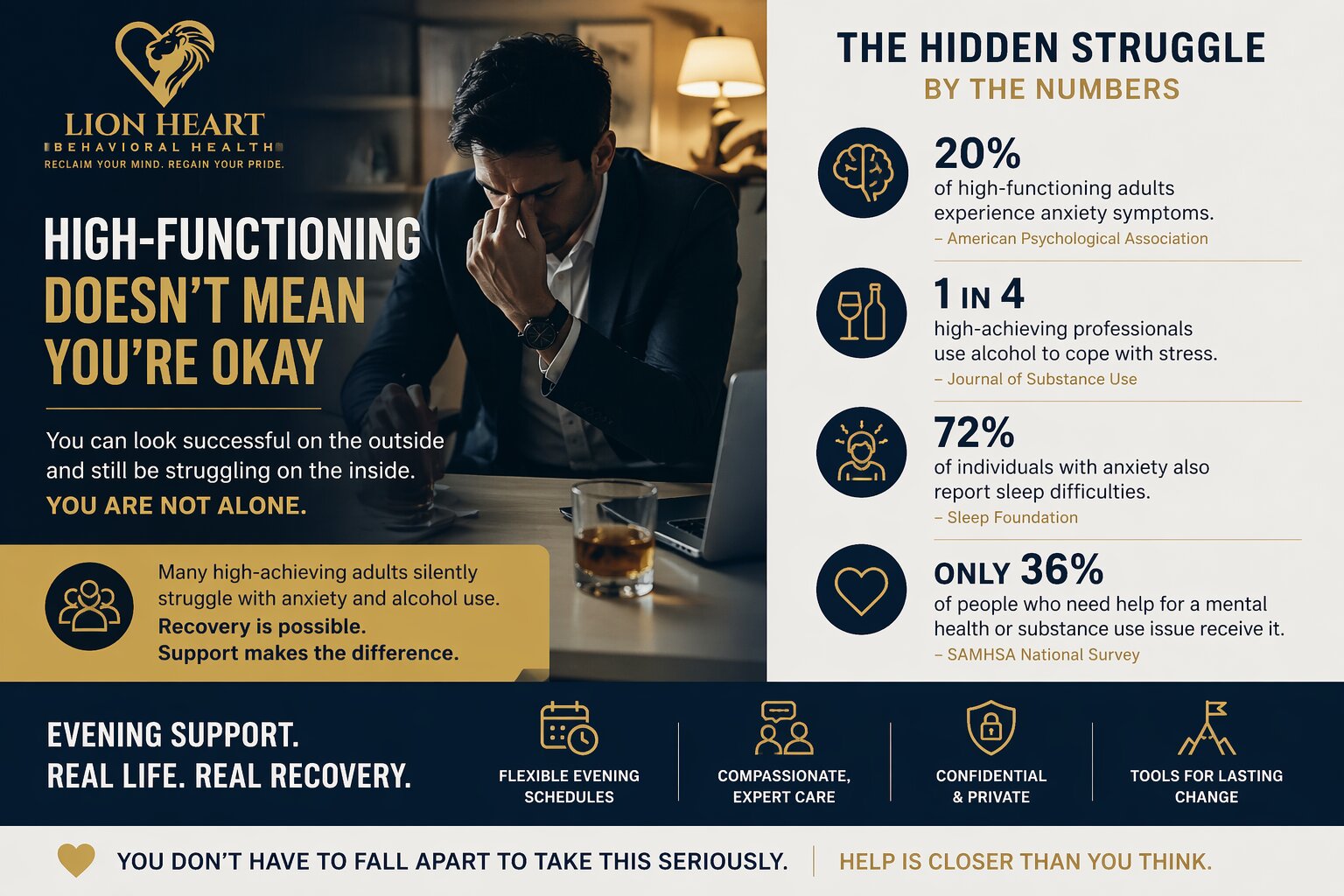
That’s the part no one talks about. You can be “high-functioning” and still feel like you’re falling apart in private.
I Was Performing Stability, Not Living It
From the outside, nothing looked wrong.
I showed up. I delivered. I kept my word.
But behind the scenes, everything had an edge to it. Every task took more effort than it should have. Every day felt like something I had to get through, not something I got to live.
I wasn’t enjoying anything. I was managing everything.
And that difference matters more than people realize.
Because when you’re just managing, you start needing something to take the pressure off.
For me, that something was alcohol.
Alcohol Was My Off Switch—Until It Wasn’t
At first, it felt like a solution.
A drink at night helped me slow down. It softened the anxiety. It gave me a break from my own thoughts.
It felt earned.
“I worked hard today.”
“I deserve to relax.”
“I’m not hurting anyone.”
But slowly, it stopped being optional.
I needed it to sleep.
I needed it to quiet my mind.
I needed it just to feel normal again.
And the worst part? I still looked fine.
That’s what makes this kind of struggle so isolating. No one sees it, so you start questioning if it’s even real.
The Anxiety Kept Getting Louder
If alcohol was the escape, anxiety was the thing I was running from.
It wasn’t always obvious. It didn’t look like panic attacks or breakdowns.
It looked like:
- Overthinking every conversation
- Feeling on edge for no clear reason
- Constant mental noise that never shut off
- A sense that something bad was coming—even when nothing was
I couldn’t relax, even when I had time to.
And eventually, the alcohol that once helped started making it worse.
I’d wake up more anxious than before. More foggy. Less in control.
That’s a hard cycle to admit you’re stuck in.
I Kept Raising My Own Red Flags—Then Ignoring Them
There were signs. Plenty of them.
I just got really good at explaining them away.
- Drinking more than I planned—but calling it a long week
- Canceling plans—but blaming exhaustion
- Feeling disconnected—but telling myself I just needed a break
You can justify almost anything when you’re still functioning.
That’s the trap.
Because you don’t feel “bad enough” to ask for help.
But you also don’t feel okay.
You just exist in that uncomfortable middle—where everything looks fine, but nothing feels right.
I Thought Getting Help Would Cost Me Everything
This was the biggest barrier.
I assumed treatment meant stepping away from my life completely.
Time off work. Hard conversations. Losing control of how people saw me.
And honestly? That scared me more than continuing the way I was.
So I delayed.
I told myself I’d figure it out on my own. That I just needed more discipline. Better routines. Less stress.
But deep down, I knew I wasn’t solving anything.
I was just buying time.
Finding Something That Fit My Life Changed Everything
The turning point wasn’t dramatic.
It was quiet. Honest. A moment where I stopped pretending I had control.
I realized I didn’t need to disappear from my life to get help.
I needed support that fit into it.
That’s when I started seriously looking into an evening IOP near me.
Not as a last resort—but as a realistic option.
Something that allowed me to keep my responsibilities while finally addressing what I’d been avoiding.
That shift in perspective made it possible.
Walking In Felt Like Dropping the Act
I expected judgment. I expected to feel out of place.
Instead, I felt understood.
No one questioned whether I was “bad enough.”
No one minimized what I was dealing with.
They got it.
The pressure of holding everything together.
The exhaustion of pretending you’re fine.
The fear of slowing down long enough to face what’s really going on.
For the first time, I didn’t have to explain or defend myself.
I could just be honest.
Recovery Didn’t Make Me Someone Else—It Gave Me Myself Back
This was one of my biggest fears.
That getting help would change who I was.
That I’d lose my edge, my drive, my identity.
But the opposite happened.
I became more present.
More clear.
More consistent in a way that didn’t rely on stress or pressure.
I stopped living in reaction mode.
And the anxiety? It didn’t disappear overnight, but it became manageable.
Not something I had to outrun anymore.
You Don’t Have to Fall Apart to Take This Seriously
This is the part I wish someone had told me sooner.
You don’t need a crisis to justify getting help.
You don’t need to lose everything.
You don’t need to hit some invisible threshold.
If you’re tired of holding it all together… that’s enough.
If things feel off, even if they look fine… that’s enough.
If you’re reading this and recognizing yourself in pieces of it… that’s definitely enough.
Frequently Asked Questions
How do I know if I actually need more structured support?
If you’ve tried to manage things on your own and keep ending up in the same patterns, that’s a sign. You don’t have to be at your worst to benefit from consistent, structured support during the week.
Can I keep working while getting help?
Yes. That’s one of the reasons evening programs exist. They’re designed for people who need support but still have jobs, families, and responsibilities during the day.
What if I don’t feel “bad enough” compared to others?
That’s more common than you think. A lot of people delay getting help because they don’t think they qualify. The reality is, if it’s affecting your mental health, your sleep, your relationships, or your sense of control—it matters.
Will people find out?
Your privacy is protected. Many people in similar situations are navigating the same concern, and programs are built to respect that.
What actually happens in a program like this?
You’ll have structured sessions during the week that focus on understanding patterns, building coping skills, and addressing both mental health and substance use in a real, practical way. It’s not about lectures—it’s about learning how to live differently.
What if I start and feel unsure?
That’s okay. You’re allowed to be unsure. Starting doesn’t mean committing forever—it means giving yourself a chance to see if something better is possible.
If any part of this felt familiar, you don’t have to keep managing it alone.
Call 774-341-4502 or visit our treatment options in Raynham to learn more about our Intensive Outpatient Program services in Raynham, Massachusetts.