
You finally got a name for what you’ve been feeling.
And instead of relief… everything got louder.
Medication. Programs. Structure. Next steps.
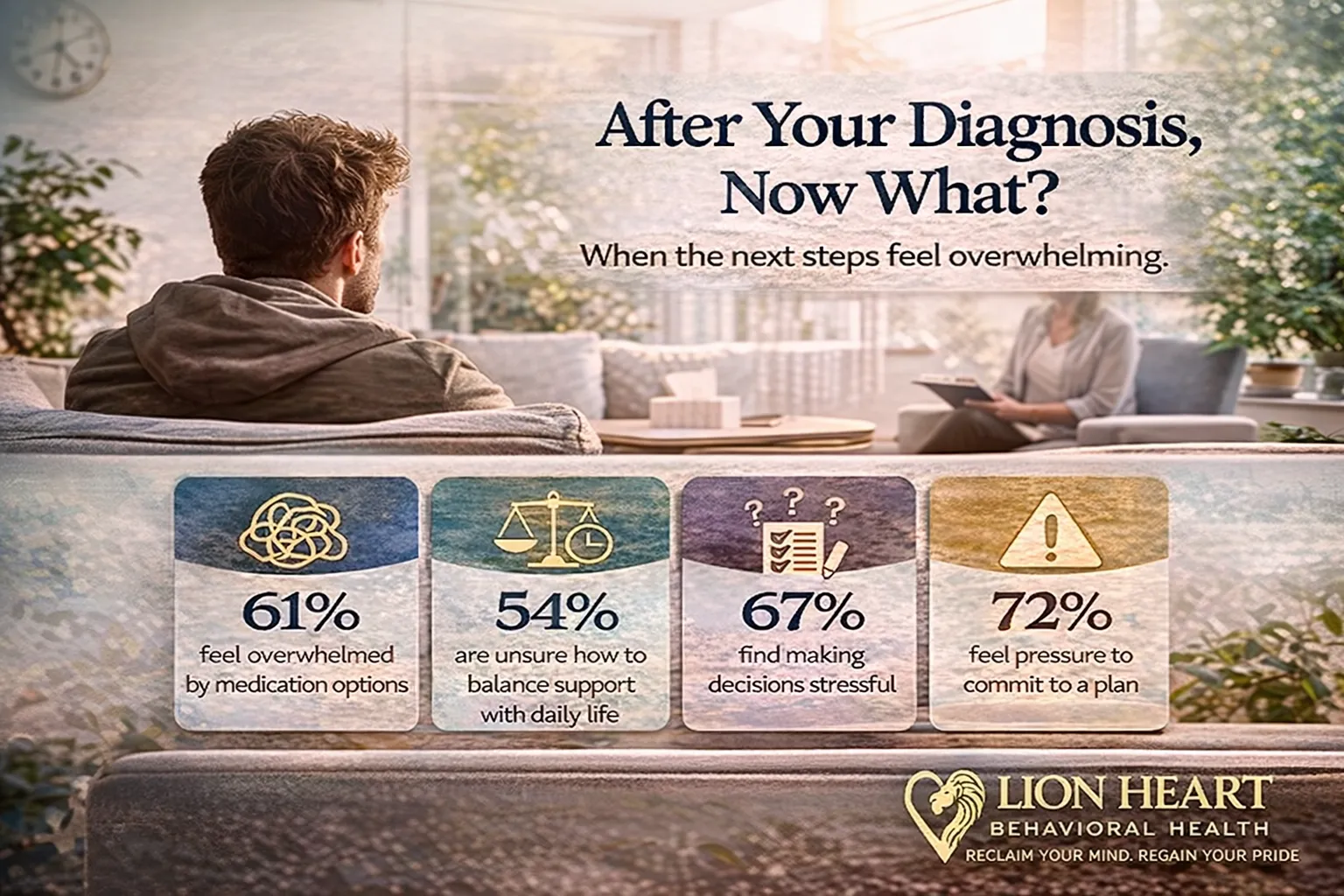
It’s a lot to take in all at once. If you’re feeling unsure, hesitant, or even a little scared of what comes next, that doesn’t mean you’re doing this wrong. It means you’re actually paying attention. You can begin by exploring structured daytime care that gives you space to adjust without forcing decisions you’re not ready for.
The Moment You Thought Would Bring Clarity Feels Like Chaos Instead
Most people imagine diagnosis as a turning point.
A moment where things finally make sense.
But what often happens instead is this quiet overwhelm.
You hear the explanation. You understand parts of it. But then suddenly, everything shifts into action mode—and it feels like you’re expected to keep up.
It can feel like:
- Everyone else understands what’s happening faster than you do
- Decisions are being discussed before you’ve had time to process
- You’re supposed to “move forward” before you even feel grounded
That disconnect can make you feel like you’re already behind.
You’re not.
You’re just still in the moment.
Why Medication Feels Bigger Than People Make It Sound
For some people, medication is presented like a simple next step.
But for you, it might feel like a turning point.
Not just physically—but emotionally.
You might be thinking:
- “What if this changes who I am?”
- “What if I don’t feel like myself anymore?”
- “What if I need it forever?”
These aren’t small questions.
They’re identity questions.
And they deserve time, conversation, and clarity—not pressure.
Being cautious doesn’t mean you’re resistant.
It means you care about what happens to you next.
When Everything Feels Urgent, It’s Easy to Lose Your Voice
After a diagnosis, urgency shows up quickly.
People want to help. Systems want to act. Plans start forming.
But urgency can drown out your own pace.
You might feel like you have to agree to things before you fully understand them.
Or like slowing down means you’re risking something.
Here’s what we want you to hear clearly:
You’re allowed to move at a pace that lets you stay connected to yourself.
Rushing might look productive.
But it doesn’t always feel safe.
Support Isn’t About Taking Control Away From You
One of the most common fears in this moment is quiet—but powerful:
“If I say yes to this, do I lose control?”
Especially when people start mentioning more structured support.
It can sound like you’re stepping into something that takes over your life.
But support isn’t about control.
It’s about stability.
It’s about having a place where things are held steady while you figure things out—without everything falling apart in the meantime.
For many people, that means choosing something in the middle.
Not doing nothing. Not stepping away from life entirely.
Just adding enough structure to feel supported again.
That’s where conversations like partial hospitalization Bristol County begin to matter—not as a label, but as a way to understand how much support actually fits your life right now.
You Don’t Need Certainty to Take a Step
There’s pressure—sometimes unspoken—to feel sure before you move forward.
To say, “Yes, this is exactly what I need.”
But most people don’t feel that way at this stage.
They feel:
- Unsure, but curious
- Hesitant, but open
- Overwhelmed, but tired of staying stuck
That’s enough.
You don’t need confidence to begin.
You just need a small willingness to explore.
What It Actually Feels Like to Step Into Support
It’s not what most people imagine.
It’s not cold. It’s not overwhelming in the way you might expect.
More often, it feels like:
- Sitting in a space where you don’t have to pretend you’re okay
- Hearing someone explain things in a way that finally makes sense
- Realizing that other people feel the same confusion you do
It’s slower.
More human.
Less about fixing you—and more about helping you understand yourself without judgment.
You Are Still You—Even in This Unfamiliar Moment
A diagnosis can feel like it redefines you.
Like everything is suddenly being filtered through a new lens.
But it doesn’t replace who you are.
It doesn’t erase your personality, your creativity, your identity.
And choosing support doesn’t take your independence away.
You’re still you.
Just someone who now has more information—and more options.
What We See in People Right Where You Are
We meet people at this exact point every day.
Right after the diagnosis. Right in the uncertainty.
Some are scared of medication. Some are overwhelmed by options. Some don’t even know what they’re feeling yet.
In Raynham, Massachusetts, we’ve seen people walk in unsure, guarded, and hesitant—and slowly begin to feel like themselves again, not because they rushed decisions, but because they were given space to understand them.
And in New Bedford, Massachusetts, we’ve seen people realize that they don’t have to choose between “doing nothing” and “losing control.” There’s a middle path where support fits into their life instead of replacing it.
This Isn’t a One-Time Decision—It’s a Process
One of the biggest misconceptions is that you have to decide everything right now.
Medication. Level of care. Long-term plans.
That’s too much.
This isn’t one decision.
It’s a series of small ones.
- Asking a question
- Showing up to a conversation
- Letting yourself learn instead of rushing to commit
You’re allowed to take this one step at a time.
FAQs: Right After a Diagnosis, When Everything Feels Unclear
Do I have to start medication right away?
Not always.
Medication can be part of the conversation, but it should feel informed—not rushed. You deserve time to understand your options and ask questions.
What if I’m scared medication will change who I am?
That fear is more common than people admit.
It’s okay to talk about it openly. The goal of treatment isn’t to erase you—it’s to help you feel more like yourself, not less.
Do I need a high level of care just because I was diagnosed?
Not necessarily.
Support should match your needs—not overwhelm them. Some people benefit from structured daytime care while still maintaining their daily life.
What if I don’t feel “bad enough” for this level of support?
You don’t have to reach a breaking point to deserve help.
If something feels off, that’s enough reason to explore support.
What if I’m not ready to commit to anything yet?
That’s okay.
You can start with a conversation. You don’t need to have everything figured out before taking the first step.
How do I know what kind of support is right for me?
You don’t have to figure that out alone.
The right support usually becomes clearer through conversation, not pressure.
Is it normal to feel overwhelmed after getting diagnosed?
Yes.
It’s one of the most common reactions—and one of the least talked about.
You Don’t Have to Solve This All at Once
You don’t need a perfect plan.
You don’t need to feel fully ready.
You don’t need to silence your doubts before taking action.
You just need one small step.
A question. A conversation. A moment where you let someone meet you where you are.
Call (774) 341-4502 or visit our Partial Hospitalization Program in Bristol County, Massachusetts to learn more about available support.