

You did what many people never do—you stayed, you worked through it, you built something better.
And yet… something feels off.
Not dramatic. Not destructive. Just this quiet sense that you’re drifting away from the version of yourself you fought so hard to become.
If you’ve been sitting with that feeling lately, you’re not alone—and you’re not going backward.
The Quiet Drift No One Prepares You For
Early recovery gets a lot of attention. There’s structure, urgency, support everywhere.
But long-term? That’s where things get quieter.
You start managing life again—work, relationships, responsibilities. On the outside, it looks like success. On the inside, though, it can feel like something is slowly slipping out of your hands.
Not your sobriety, necessarily.
Your connection to it.
That sense of purpose you once felt might now feel distant. The routines that kept you grounded may have loosened. And without even realizing it, you’ve moved from intentional living back into autopilot.
You Didn’t Lose Progress—You Lost Proximity
Let’s call this what it actually is.
You didn’t “mess up.” You didn’t undo your growth.
You just got farther away from the things that helped you stay connected.
Recovery isn’t just about stopping harmful patterns—it’s about staying close to the habits, people, and structure that keep you steady.
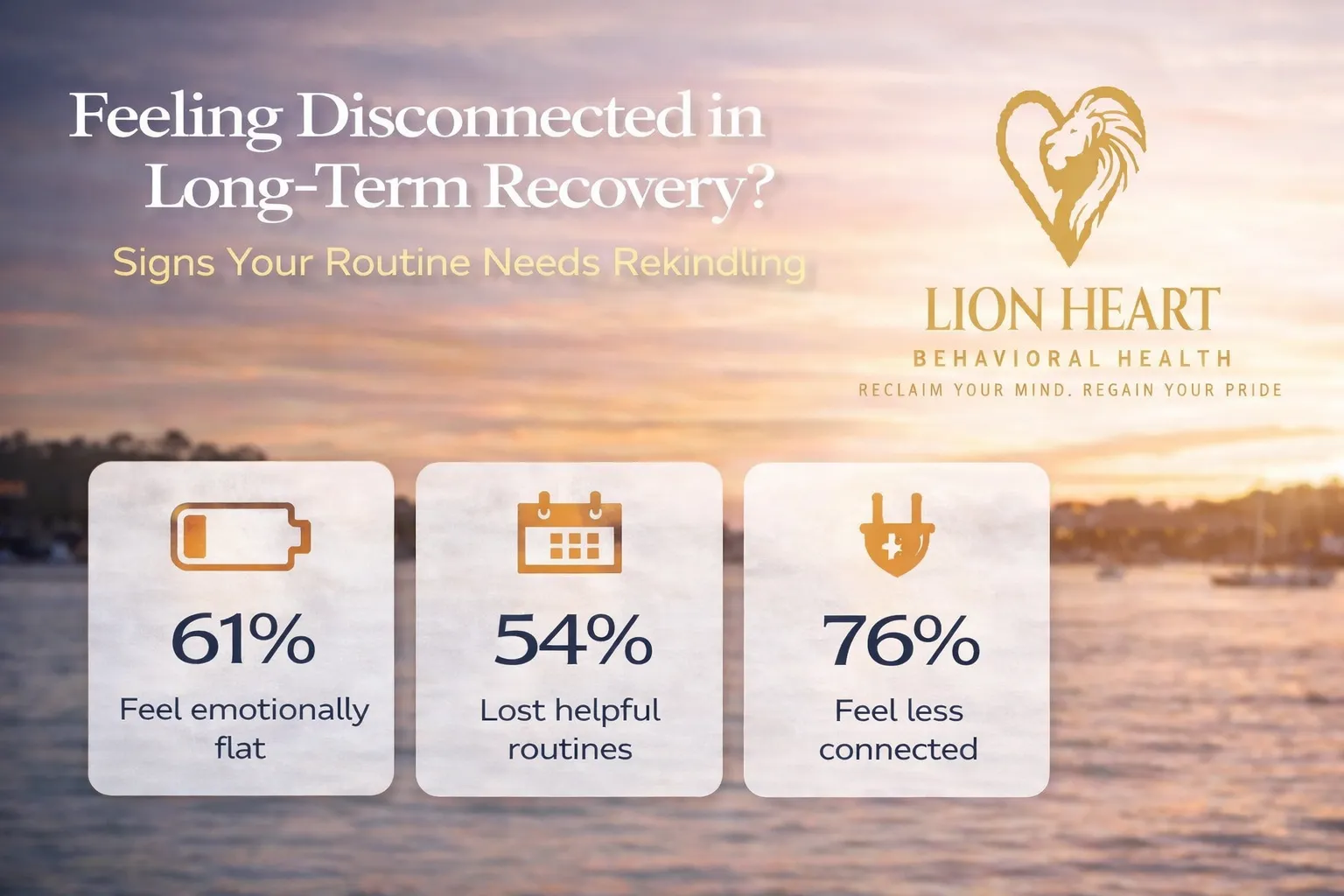
When that proximity fades, things can start to feel… flat.
You might still be doing everything “right,” but it doesn’t feel the same anymore.
That doesn’t mean you’re broken.
It means something important is missing.
The Middle Space Most People Don’t Understand
A lot of people think recovery is binary:
- You’re either struggling or you’re fine
- You either need help or you don’t
But real life doesn’t work like that.
There’s a middle space where you’re functioning—but not fulfilled. Stable—but not grounded. Present—but not fully engaged.
That’s where many long-term alumni find themselves.
And this is exactly where the question of support starts to shift.
Not “Do I need help?”
But “What kind of support actually fits where I am right now?”
That’s where conversations like partial hospitalization vs IOP come into play—not as clinical labels, but as real-life decisions about structure, time, and support.
Why It Feels So Hard to Admit You Might Need More
This part matters.
Because for many alumni, the hardest step isn’t coming back—it’s admitting that something feels off at all.
You might be telling yourself:
- “I should have this handled by now.”
- “It’s not serious enough to go back.”
- “I don’t want to start over.”
Or maybe there’s a quieter fear underneath all of it:
- “What if I go back and realize I’ve been struggling longer than I thought?”
That hesitation is real. And it deserves respect.
But here’s the truth we see all the time:
People don’t come back because they failed. They come back because they’re paying attention.
What “Coming Back” Actually Means Now
Let’s clear something up.
Re-engaging with care doesn’t mean repeating the same chapter.
You’re not the same person you were the first time you walked through treatment.
You have more awareness now. More language. More insight into what works—and what doesn’t.
Coming back at this stage often looks different:
- Less crisis, more clarity
- Less fear, more intention
- Less survival, more refinement
It’s not about fixing everything.
It’s about reconnecting to what matters before things unravel further.
The Role of Structure (Even Now)
Structure isn’t just for early recovery.
It’s for any phase where life starts to feel unsteady.
And for many alumni, that’s exactly what’s missing—not discipline, not motivation, but consistent, meaningful structure.
The kind that gives your week shape.
The kind that creates space to actually check in with yourself—not just push through.
The kind that helps you notice small shifts before they become big ones.
For some people, that means stepping into a level of care that sits between independence and full-time support.
Something that allows you to stay connected to your life while rebuilding your footing at the same time.
If you’re near Raynham, Massachusetts, we often see alumni rediscover stability by reintroducing structured daytime care into their routine—without stepping away from everything they’ve built.
You’re Allowed to Outgrow “Just Getting By”
This might be the part that hits the hardest.
Because many people settle here.
They tell themselves:
- “At least I’m not where I used to be.”
- “This is good enough.”
- “I should be grateful.”
And yes—progress matters.
But so does how your life actually feels.
You’re allowed to want more than just “not struggling.”
You’re allowed to want:
- Energy again
- Clarity again
- A sense of direction again
Recovery isn’t meant to feel like maintenance forever.
At some point, it’s supposed to feel like living.
What We See in Alumni Who Come Back
We’ve worked with many people who return—not because things fell apart, but because something felt off.
And almost all of them say some version of the same thing:
“I wish I came back sooner.”
Not because it got worse.
But because they didn’t realize how much better it could feel again.
In places like New Bedford, Massachusetts, we see individuals balancing work, family, and recovery—yet still quietly carrying that sense of disconnection. When they step back into support, even briefly, something shifts.
They reconnect.
Not just to recovery—but to themselves.
A Different Kind of Strength
There’s a specific kind of strength in long-term recovery.
It’s not loud. It’s not dramatic.
It’s the willingness to check in with yourself honestly—even when nothing looks wrong on the outside.
Especially then.
Because drifting doesn’t announce itself.
It happens slowly. Quietly.
Until one day you realize you don’t feel like you anymore.
And choosing to address that?
That’s not weakness.
That’s awareness.
FAQs: For Alumni Who Feel “Off” But Aren’t Sure Why
Is it normal to feel disconnected after being stable for a while?
Yes. More than people talk about.
Long-term recovery can sometimes shift from active growth into maintenance mode. Without intentional connection and structure, it’s common to feel emotionally flat or distant.
How do I know if this is serious enough to seek support again?
If you’re asking the question, it’s worth paying attention.
You don’t need to hit a breaking point. Subtle signs—like feeling disengaged, numb, or off-track—are often early indicators that something needs support.
Does going back to treatment mean I failed?
No.
It usually means the opposite—you’re aware enough to notice changes before things escalate. That’s a sign of growth, not failure.
What’s the difference between needing structure and needing full-time care?
Not everyone needs round-the-clock support again.
Some people benefit from structured daytime care that allows them to stay connected to daily life while rebuilding consistency, accountability, and emotional clarity.
That’s often where decisions around partial hospitalization vs IOP become relevant—based on how much structure you actually need right now.
What if I don’t feel “bad enough” to go back?
This is one of the most common reasons people wait too long.
You don’t need to justify support by how bad things are. If something feels off, that’s enough.
Can I come back even if it’s been a long time?
Yes.
Time away doesn’t disqualify you. In fact, long-term alumni often benefit deeply from reconnecting with support in a new, more intentional way.
What’s one sign I shouldn’t ignore?
That quiet thought:
“Something’s not right.”
It’s easy to dismiss. Easy to push aside.
But it’s often the most honest signal you have.
You’re Not Starting Over—You’re Reconnecting
There’s a big difference.
Starting over feels like failure.
Reconnecting feels like returning to something that already belongs to you.
And that’s what this is.
You’re not going back to the beginning.
You’re stepping back into alignment with the version of yourself you worked so hard to build.
If You’ve Been Feeling This, It’s Worth Paying Attention To
At Lion Heart Behavioral Health, we work with alumni who aren’t in crisis—but aren’t feeling like themselves either.
If that’s where you are, you don’t have to figure it out alone.
Call (774) 341-4502 or visit our Partial Hospitalization Program in Bristol County, Massachusetts to learn more about available support.