

You’ve been carrying this longer than you planned to.
Not in a dramatic, can’t-get-out-of-bed way.
In a quiet, constant way that follows you through your day.
You’ve thought about getting help. Maybe more than once.
But the moment you get close to deciding, something pulls you back.
Not because you don’t want relief.
Because you’re not sure what happens next.
If you’ve been circling that decision, this is for you.
If you want to gently explore what support could look like without pressure, you can start by looking into anxiety support options.
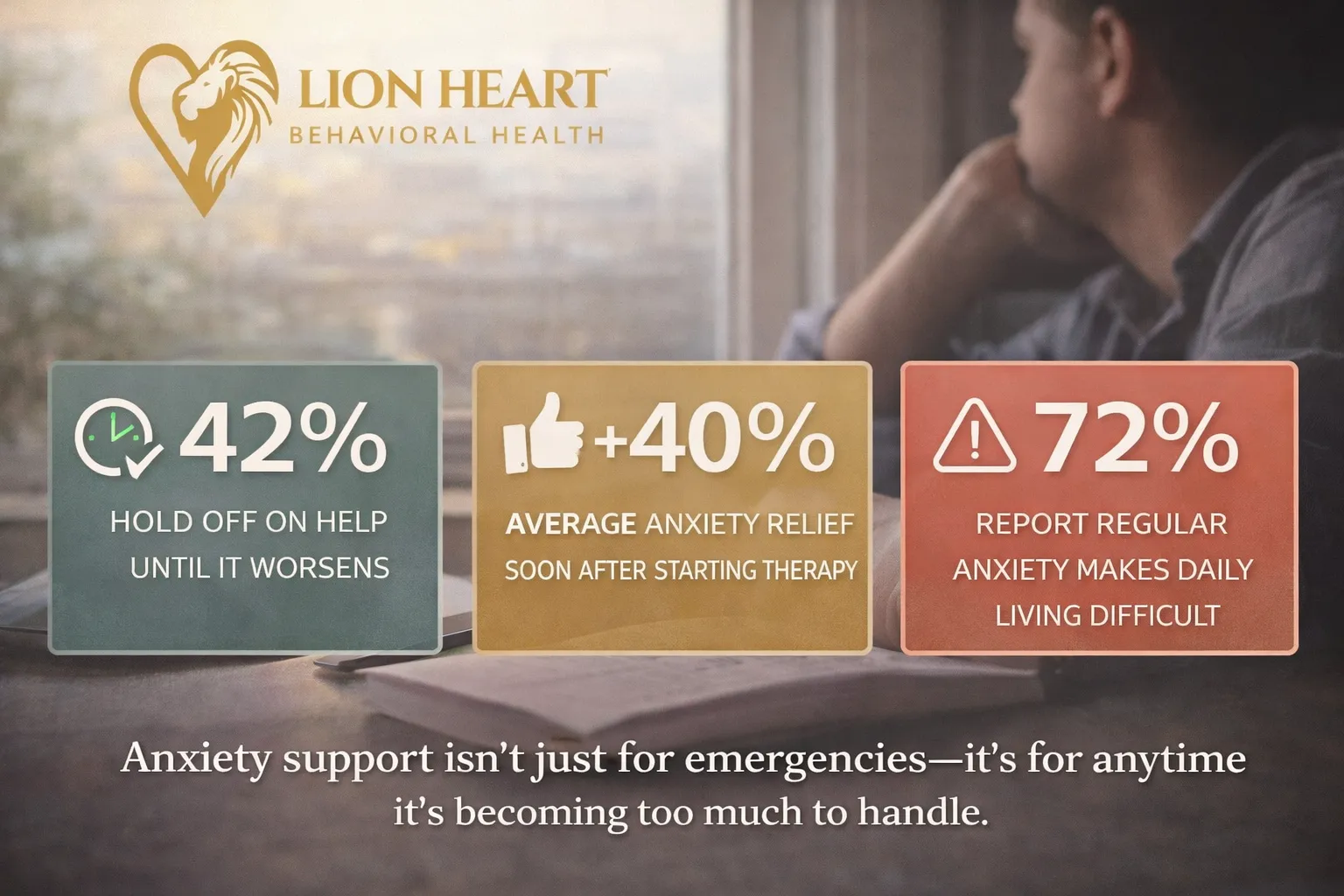
You Don’t Have to Hit a Breaking Point First
There’s this unspoken rule people believe:
“Wait until it gets worse.”
But anxiety rarely announces a clear breaking point.
It just keeps tightening its grip.
You might still be working. Still showing up. Still functioning.
But underneath that:
- Your mind doesn’t shut off
- You replay conversations long after they end
- You feel on edge even when nothing is wrong
That’s not something you have to “push through.”
It’s something worth paying attention to now—not later.
The Version of You That’s Coping Is Also Tired
A lot of people who seek help aren’t falling apart.
They’re holding it together so tightly that it’s exhausting.
You’ve built systems:
- Staying busy so you don’t think too much
- Avoiding certain situations
- Managing how you appear to others
And it works. Until it doesn’t.
Because coping isn’t the same as feeling okay.
It’s just surviving in a more organized way.
The Fear Before Starting Is Very Real
Let’s name it clearly.
You might be thinking:
- “What if I open something I can’t close?”
- “What if it changes how I see myself?”
- “What if I try… and it doesn’t work?”
That fear is not a sign you shouldn’t start.
It’s a sign you care about what happens next.
And here’s what most people learn:
The anticipation is heavier than the reality.
Anxiety fills in the blanks with worst-case scenarios.
But actual support tends to feel more human, more paced, and more manageable than expected.
You’re Allowed to Take This Slowly
You don’t have to walk in ready to unpack everything.
You don’t have to explain your entire story on day one.
You don’t even need the “right words.”
You can:
- Take pauses
- Change topics
- Say “I don’t know how to explain this yet”
Good care doesn’t rush you.
It meets you where you are—and stays there long enough for you to feel safe moving forward.
This Isn’t About Fixing You
A lot of people come in quietly believing something is wrong with them.
That they’re wired incorrectly.
Too sensitive. Too anxious. Too much.
That’s not what’s happening.
Anxiety is a pattern. A learned response.
Your mind trying—very hard—to protect you.
It just doesn’t know when to turn off.
Support helps you:
- Understand those patterns
- Respond differently to them
- Create space between you and the constant noise
You’re not broken.
You’ve just been running on high alert for too long.
What Progress Actually Feels Like
It’s not a sudden transformation.
It’s subtle at first.
You might notice:
- A little more space between thoughts
- Slightly better sleep
- Moments where you don’t feel as overwhelmed
Progress often feels underwhelming in the beginning.
But those small shifts add up.
They create breathing room where there used to be pressure.
You Might Feel Relief Earlier Than You Expect
This surprises people.
Relief doesn’t always come after months of effort.
Sometimes it starts earlier.
Sometimes it’s just:
- Saying things out loud you’ve kept in your head
- Realizing you’re not the only one who feels this way
- Feeling understood without needing to explain everything perfectly
That moment of being seen clearly?
It matters more than people expect.
You’re Not Locked Into Anything
Starting support can feel like a huge commitment.
Like once you begin, you can’t step back.
That’s not how this works.
You’re allowed to:
- Ask questions
- Adjust your approach
- Decide what feels right for you
This is a process you participate in—not something that happens to you.
Why Waiting Feels Safer (But Usually Isn’t)
Waiting gives you a sense of control.
“I’ll deal with it later.”
“Things will calm down.”
“I just need to get through this week.”
But anxiety doesn’t usually resolve itself.
It adapts. It expands. It finds new ways to show up.
I’ve seen individuals in New Bedford, Massachusetts wait years—not because they didn’t want help, but because they thought they could manage just a little longer.
What they were really doing was carrying something alone that didn’t need to be carried alone.
The Quiet Cost of Doing Nothing
This isn’t about fear. It’s about honesty.
When anxiety goes unaddressed, it tends to:
- Narrow your comfort zone
- Limit your choices
- Drain your energy
Over time, your world can get smaller.
Not all at once.
But gradually.
Until things you used to handle feel harder than they should.
What Taking the First Step Actually Looks Like
It’s not dramatic.
It’s not a complete life overhaul.
It’s smaller than that.
It might look like:
- Having one honest conversation
- Asking one question you’ve been avoiding
- Letting yourself consider that support might actually help
I’ve worked with people across Bristol County, Massachusetts who didn’t feel “ready.”
They just felt tired of staying stuck.
That was enough.
You Don’t Need Certainty to Begin
A lot of people wait until they feel 100% sure.
Clear. Confident. Ready.
That moment rarely comes.
What usually happens instead?
People start uncertain.
And clarity builds after.
You don’t need to have everything figured out.
You just need to be willing to not keep doing things the same way.
FAQs
How do I know if my anxiety is “serious enough” to get help?
If it’s affecting your thoughts, sleep, focus, or ability to feel present, it’s worth addressing. You don’t need a certain level of severity to deserve support.
What if I don’t know how to explain what I’m feeling?
That’s more common than you think. You don’t need perfect language. Part of the process is helping you understand and express what’s going on.
Will I be pushed to talk about things I’m not ready for?
No. You set the pace. You can share as much or as little as you’re comfortable with. Trust builds over time.
What if I’ve been dealing with this for years?
That doesn’t make it too late. It just means you’ve been carrying it alone for a long time. Change is still possible.
How quickly will I start to feel better?
Some people feel relief early just from being heard. Others notice gradual improvement over time. Both experiences are normal.
What if I start and then change my mind?
That’s okay. Starting gives you insight into what you need. You’re allowed to adjust your path.
Is it normal to feel scared before starting?
Yes. Almost everyone does. Fear doesn’t mean you’re making the wrong decision—it usually means you’re stepping into something new.
You don’t have to figure this out alone.
Call (774) 341-4502 to learn more about our Anxiety Therapy Program in Massachusetts.