
You don’t need a perfect comeback. You just need a place to begin again.
If you’ve stepped away from treatment—even quietly, even without telling anyone—you’re not alone. People leave for all kinds of reasons. Life gets busy. Emotions get heavy. Progress feels confusing. Or sometimes, things start to feel “better enough,” and continuing doesn’t seem urgent anymore.
And then, somewhere down the line, you feel it—that quiet pull back toward support.
Not because you failed. But because something in you still wants steady ground.
If you’re considering coming back, exploring multi-day weekly treatment options can be a gentle way to rebuild momentum without overwhelming yourself.
Let Go of the Story That You Messed It Up
There’s often a moment after stepping away where your mind fills in the blanks:
“I should’ve stayed.”
“I wasted that opportunity.”
“They probably think I’m not serious.”
That story can get loud. And convincing.
But from where I sit—as someone who’s worked with many people in this exact place—that story isn’t the truth. It’s just the emotion talking.
Stepping away from care doesn’t erase the work you’ve done. It doesn’t cancel out your insight, your effort, or the progress you made, even if it felt incomplete.
Sometimes people pause because things got too intense. Sometimes because they weren’t ready to face certain things yet. Sometimes because life outside treatment demanded attention.
None of those reasons disqualify you from coming back.
They make you human.
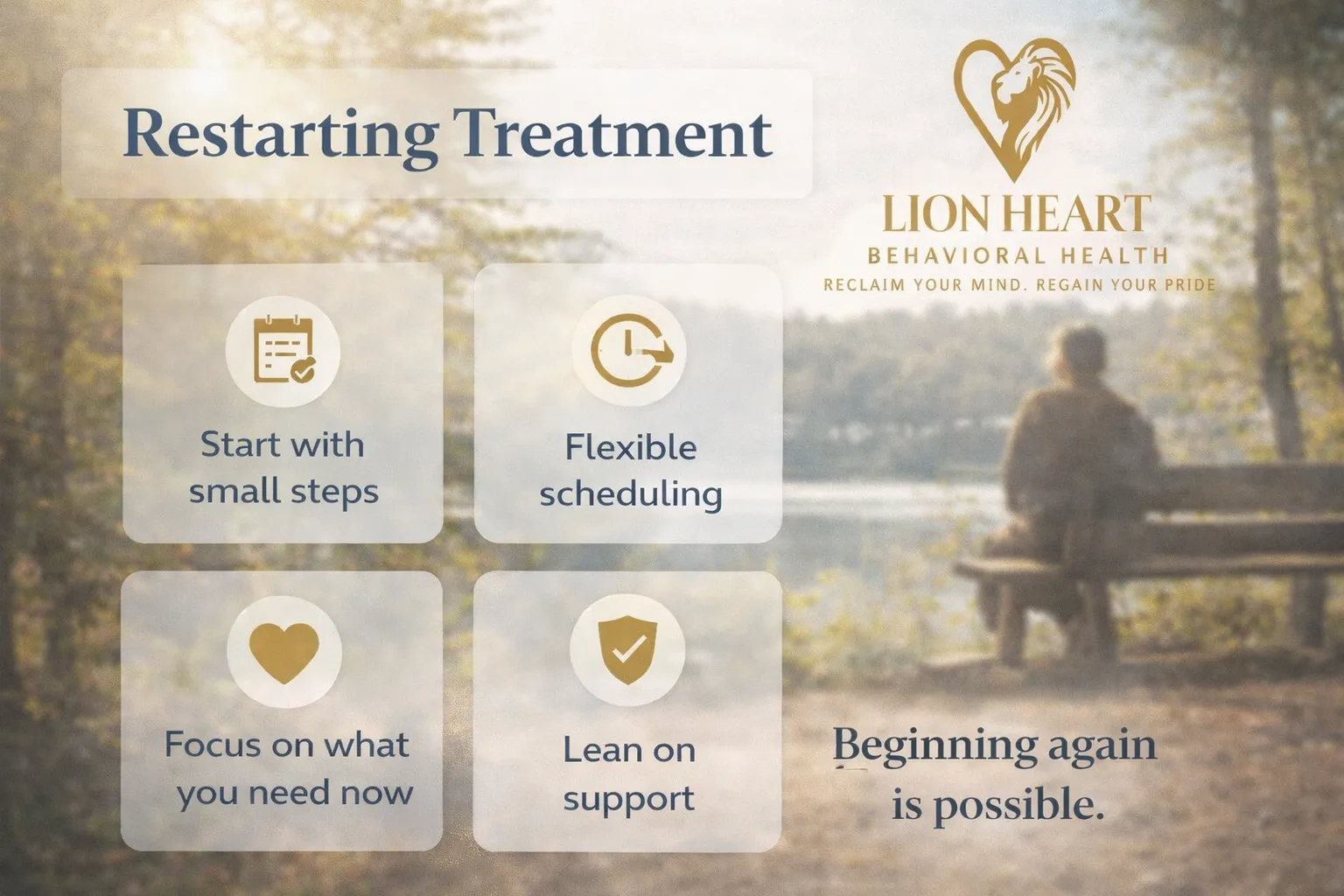
Start Smaller Than You Think You Need To
One of the biggest misconceptions about returning is that you have to come back “fully ready.”
You don’t.
You don’t need to feel motivated every day. You don’t need a perfectly clear plan. You don’t even need to be sure it will work this time.
You just need a small willingness to try again.
Momentum doesn’t come from big, dramatic decisions. It comes from small, repeated actions. Showing up. Sitting in a group. Listening, even if you don’t feel like talking.
That’s how things start to move again.
For many people in places like New Bedford, Massachusetts, the idea of returning can feel especially heavy if they worry about running into familiar faces or being recognized. But in reality, most people in treatment are focused on their own healing—not judging someone else’s path.
You don’t have to carry that fear alone.
Expect the Awkwardness—It Doesn’t Mean You Don’t Belong
Let’s be honest about something most people don’t say out loud:
Coming back can feel awkward.
You might walk in and think:
- “Do I have to explain where I’ve been?”
- “Are they going to ask questions I don’t want to answer?”
- “What if I disappear again?”
That discomfort is real. And it’s okay.
But here’s what matters more: awkwardness is not a sign that you don’t belong—it’s a sign that you’re doing something hard.
Most clinical teams understand that people step away and come back. It’s not unusual. It’s part of the process for many.
You don’t need a perfect explanation. You don’t need to justify yourself.
Sometimes all it takes is saying, “I’m ready to try again.”
That’s enough to reopen the door.
Rebuild Structure Before You Try to Rebuild Confidence
A lot of people think they need to “feel ready” before returning.
But in practice, it usually works the other way around.
Structure comes first. Confidence follows.
Having a place to go during the week—consistent sessions, familiar faces, a predictable rhythm—can help stabilize things even if your motivation feels low.
You don’t have to carry yourself through every moment. The structure does some of that work for you.
Think of it like this:
You don’t wait to feel strong before going to physical therapy after an injury. You go because the structure helps rebuild strength over time.
Mental health and recovery work the same way.
Focus on What You Need Now—Not What Didn’t Work Before
It’s easy to look backward and try to figure out what went wrong.
But a more helpful question is:
“What would support me better this time?”
Maybe you need:
- A different schedule that fits your life
- More honesty in sessions, even if it feels uncomfortable
- Better boundaries outside of treatment
- Less pressure to “do it perfectly”
Growth doesn’t always mean doing more.
Sometimes it means doing things differently.
In communities like Raynham, Massachusetts, where routines and responsibilities can feel tightly packed, flexibility can make all the difference. Finding a structure that fits your life—not fights against it—can help you stay engaged longer.
You’re allowed to adjust. You’re allowed to learn from your last experience without judging it.
Let Support Carry You on the Days You Feel Numb
Not every day is going to feel meaningful.
Some days you might sit through a session and feel disconnected. Other days you might question why you came back at all.
That doesn’t mean it’s not working.
There’s a quiet kind of progress that happens beneath the surface—when you keep showing up even when it feels flat.
Those are the days that build resilience.
Those are the days that count more than they seem to.
You don’t need every session to feel powerful. You just need enough consistency for change to slowly take root again.
You’re Not Starting Over—You’re Starting From Experience
This might be the most important shift:
You’re not going back to the beginning.
You’re coming back with insight.
You already know what it feels like to engage in care. You’ve already learned things—about yourself, your patterns, your needs.
Even if it didn’t “stick” the way you hoped, that knowledge didn’t disappear.
It’s still there. And it can actually make this next phase more grounded.
A lot of people find that their second attempt feels different—not because it’s easier, but because they’re more honest, more aware, and more willing to engage in a real way.
That’s not failure.
That’s growth.
Keep the Door Open, Even If You’re Unsure
You don’t have to make a big declaration.
You don’t have to promise yourself you’ll never struggle again.
All you need is a small opening.
A thought like:
“Maybe I could try again.”
“Maybe I don’t have to do this alone.”
That’s enough.
Recovery—and mental health healing—rarely moves in a straight line. There are pauses. Detours. Moments of stepping away.
But the door doesn’t close just because you walked out once.
It’s still there.
And you’re still allowed to walk back through it.
FAQs: Returning After a Break in Treatment
Do I have to explain why I left?
No. You can share as much or as little as you feel comfortable with.
Clinicians may gently ask what’s changed or what you need now, but this isn’t about interrogating you. It’s about understanding how to support you moving forward.
A simple, honest statement is enough.
What if I’m worried about being judged?
That fear is very common—but in reality, most people in treatment understand what it’s like to struggle with consistency.
You’re not the only one who has stepped away and come back. Not even close.
Treatment spaces are built around support, not judgment.
What if I leave again?
That’s a valid concern.
Instead of focusing on “What if I fail again?”, try asking:
“What might help me stay a little longer this time?”
Even a small increase in consistency is progress.
And if you do step away again, it doesn’t erase your effort. You can still return.
Is it worth coming back if I feel unsure?
Yes.
You don’t need certainty to benefit from support. In fact, many people return feeling unsure.
Clarity often comes after re-engaging—not before.
What if I don’t feel motivated?
Motivation is not a requirement.
Structure, consistency, and support can help rebuild motivation over time. You don’t have to wait until you feel ready.
You can start exactly where you are.
A Final Thought Before You Decide
There’s a quiet kind of courage in coming back.
Not loud. Not dramatic. Just steady.
It’s the kind that says, “I’m not done yet,” even if part of you feels tired.
If you’ve been away, you’re not disqualified. You’re not too far gone. You’re not “behind.”
You’re just in a moment that a lot of people pass through—and find their way out of.
Ready to Take a Small Step Back Toward Yourself?
You don’t need to have the right words. You don’t need to explain everything.
You just need to reach out.
Call (774) 341-4502 to learn more about our programs, Intensive Outpatient Program in Bristol County, Massachusetts.