

Sometimes the realization happens slowly.
You notice your child pulling away from conversations. Their mood shifts quickly. Sleep becomes irregular. Small frustrations turn into emotional storms.
Other times the moment arrives suddenly — a frightening phone call, a crisis conversation, or the realization that your child is struggling far more deeply than you understood.
Parents often describe this period as feeling like the ground has disappeared beneath their feet.
You want help immediately, but the path forward isn’t always clear. Many families begin searching for structured support options like structured daytime behavioral health care because weekly therapy alone no longer feels like enough.
If you are reading this during a difficult moment, please know something important: many families have stood exactly where you are now — frightened, overwhelmed, and unsure what step comes next.
And support does exist.
The Emotional Whirlwind Parents Experience During a Crisis
A behavioral health emergency can create intense emotional shock for parents.
One day things seem stressful but manageable. The next day you realize your child may be experiencing severe anxiety, depression, substance struggles, or emotional instability that feels frightening.
The shift can feel abrupt.
Parents often report cycling through multiple emotions within hours:
Fear about their child’s safety
Guilt about whether they missed earlier signs
Urgency to find help quickly
Confusion about what kind of support is actually appropriate
During this time, many parents feel like they are navigating unfamiliar territory without a map.
But the truth is that behavioral health crises are more common than many families realize.
They simply happen quietly, often behind closed doors.
Why Weekly Therapy Sometimes Isn’t Enough
Many families begin mental health care with traditional weekly counseling.
For mild to moderate stress, this level of support can be very helpful.
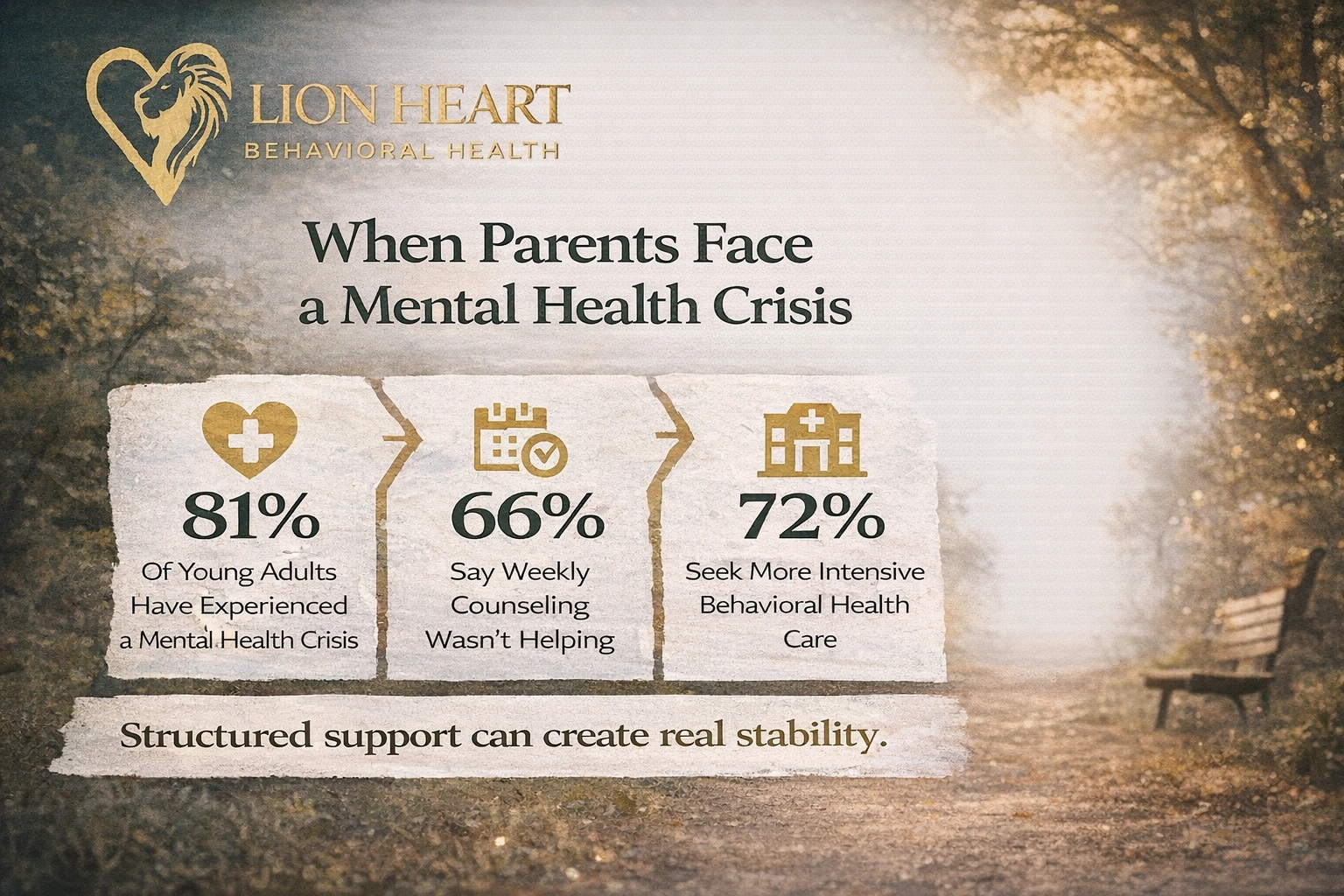
But during more serious mental health struggles, the emotional intensity young adults experience can outpace that once-a-week structure.
Imagine trying to steady a rocking chair by touching it once every seven days.
It simply isn’t enough contact to stabilize the movement.
Young adults in crisis often need more consistent guidance and therapeutic support to help calm the emotional storm they are experiencing.
This is where structured daytime care becomes an important option for families to consider.
The Power of Daily Structure During Emotional Chaos
When someone is navigating severe emotional distress, their daily life often becomes disorganized.
Sleep patterns may collapse. Motivation disappears. Decision-making becomes exhausting.
Structure acts like scaffolding around a building that is being repaired.
It doesn’t fix everything overnight, but it creates stability while deeper healing begins.
Consistent daily therapeutic support can help regulate sleep cycles, emotional responses, and thought patterns that may have become overwhelming.
Young adults begin learning new ways to handle anxiety, depression, or emotional dysregulation.
And slowly, the nervous system begins to settle.
The Role Parents Play During This Difficult Time
Parents often feel powerless during a behavioral health crisis.
You want to fix the situation immediately. You want to protect your child from pain.
But emotional struggles cannot always be solved through parental intervention alone.
And that realization can feel incredibly painful.
Some parents blame themselves.
They replay earlier moments in their minds and wonder if they missed warning signs.
But mental health challenges rarely come from one moment or one mistake.
They are influenced by many factors: life stress, biological vulnerability, trauma, social pressure, and emotional development.
The fact that you are actively searching for help right now demonstrates something very important — your child has someone who cares deeply about their wellbeing.
When Structured Daytime Support Becomes the Next Step
Families navigating behavioral health emergencies often reach a point where they realize additional support is necessary.
That realization doesn’t mean something has gone wrong.
It means you are responding to the reality of the situation.
For many families, Bristol County, Massachusetts has become a place where parents begin exploring structured mental health options that provide daily support while still allowing young adults to return home in the evening.
This type of environment helps stabilize emotional patterns while keeping individuals connected to family support systems.
That balance often plays a powerful role in recovery.
What Parents Often Notice Once Support Begins
Many parents hope treatment will create immediate transformation.
But recovery usually begins in quieter ways.
Your child may start sleeping more consistently.
Emotional outbursts may become less intense.
Communication may slowly reopen.
Sometimes the first sign of progress is simply that your child seems less overwhelmed.
These shifts may feel small, but they are important.
They signal that the nervous system is beginning to regulate again.
Families in New Bedford, Massachusetts sometimes describe this stage as the moment when the constant emotional tension in the household finally begins to soften.
Hope returns gradually.
Why Connection With Other Families Can Be Powerful
Another unexpected source of strength during treatment often comes from meeting other families navigating similar experiences.
Before that moment, many parents feel deeply isolated.
You may wonder if your family is the only one facing such a difficult situation.
But behavioral health challenges affect many households.
Meeting other parents who understand your fears and uncertainties can bring an enormous sense of relief.
It reminds you that your family is not alone in this process.
And that others have walked this path and found stability again.
Recovery Begins With Stabilization, Not Perfection
Parents sometimes feel pressure to find the perfect solution immediately.
But healing rarely happens through one dramatic decision.
It happens through stabilization.
Stabilization allows young adults to calm their nervous systems, rebuild emotional awareness, and develop healthier coping skills.
From there, long-term recovery becomes possible.
Think of it like rebuilding after a storm.
The first step is creating safety and stability.
Only then can rebuilding truly begin.
The Courage It Takes to Seek Help
Parents navigating a mental health crisis often underestimate the courage it takes to seek support.
Admitting your child needs help can feel frightening.
But reaching out is one of the most protective actions you can take.
It means you are refusing to ignore what your family is experiencing.
It means you are choosing hope, even when the situation feels uncertain.
And that decision can be the first step toward meaningful recovery.
FAQs
How do parents know when their child may need structured support?
Signs may include severe emotional distress, isolation, dramatic behavior changes, substance use concerns, or safety risks. When daily life becomes unstable, additional care may be beneficial.
Is it normal for parents to feel overwhelmed during a behavioral health crisis?
Yes. Parents often experience fear, guilt, confusion, and urgency during this time. These reactions are natural when a child’s wellbeing feels uncertain.
Can young adults recover from a serious mental health crisis?
Yes. With appropriate care, therapeutic support, and consistent structure, many individuals regain emotional stability and develop healthier coping skills.
What role do parents play during treatment?
Parents remain a vital source of support. Encouragement, patience, and communication help reinforce the progress young adults make during care.
How long does stabilization usually take?
Recovery timelines vary. Some individuals stabilize within weeks, while others require longer support depending on their needs and circumstances.
Is family healing possible after a mental health crisis?
Yes. Many families report stronger communication, deeper understanding, and healthier relationships once treatment begins.
Call (774) 341-4502 or explore our structured daytime behavioral health services to learn more about.