

Maybe nothing catastrophic has happened.
You still show up to work.
Your relationships look intact from the outside.
You haven’t had a dramatic rock-bottom moment.
And yet… something feels off.
You’re tired of explaining it away. Tired of the mental gymnastics. Tired of wondering whether alcohol is taking up more space in your life than you want to admit.
If you’ve been sober curious — quietly Googling, quietly reflecting — exploring something like an alcohol treatment program isn’t about labeling yourself.
It’s about getting honest.
And honesty can be freeing.
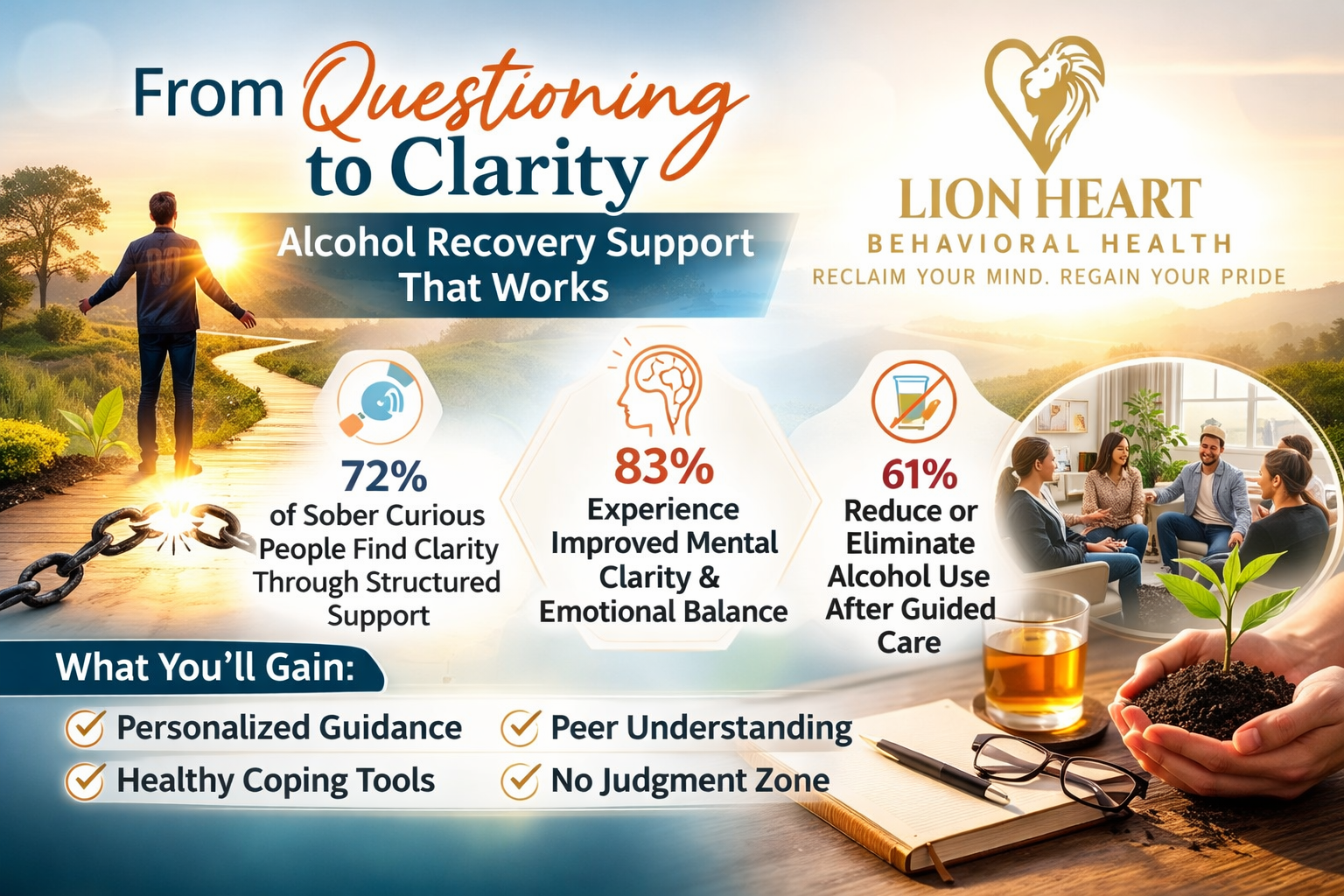
Below is a clear, step-by-step look at how structured support can help you move from quiet questioning to confident clarity.
Step 1: Admit You’re Questioning — Without Judging Yourself
Most people don’t wake up one morning and declare, “I need help.”
It starts subtler than that.
You notice:
- You’re thinking about drinking earlier in the day.
- You’re negotiating limits you set for yourself.
- You’re feeling slightly disappointed after nights that were “fine.”
- You’re Googling things like “Do I drink too much?”
The first step isn’t quitting forever.
It’s allowing yourself to question.
Questioning is not weakness. It’s awareness.
And awareness is often the first honest moment in real change.
Step 2: Stop Doing the Math Alone
Sober curious people are often high-functioning thinkers.
You compare yourself constantly:
- “I don’t drink every day.”
- “My friends drink more.”
- “It’s just social.”
- “I deserve it.”
That internal debate gets exhausting.
Structured support interrupts that spiral.
Instead of arguing with yourself in your head, you speak out loud in a space where no one is trying to shame or diagnose you.
You’re not being labeled.
You’re being listened to.
And when your thoughts are spoken out loud, they tend to lose their distortion.
Step 3: See the Pattern, Not Just the Episodes
You might think your drinking is random.
But when you slow it down, patterns appear.
Is it stress?
Loneliness?
Celebration?
Boredom?
Social anxiety?
Many sober curious individuals discover that alcohol has become their most reliable emotional regulator.
That’s not a character flaw.
It’s a coping strategy.
Structured care helps you zoom out and examine the pattern without panic.
Once you see the pattern clearly, it’s no longer mysterious. And what’s no longer mysterious becomes manageable.
Step 4: Try Sobriety With Support — Not Isolation
One of the biggest fears sober curious people carry is this:
“What if I try stopping and hate who I am without it?”
That fear makes sense.
Alcohol may have become your shortcut to relaxation, connection, or confidence.
Structured daytime care or multi-day weekly treatment creates a safe testing ground. You’re not white-knuckling it alone. You’re supported while learning tools for real-life situations.
It’s like taking the training wheels off — but someone is still jogging beside you.
You’re not proving anything. You’re experimenting with honesty.
Step 5: Address What Alcohol Has Been Protecting You From
This is where things get real.
Alcohol often isn’t the core issue.
It’s the shield.
It shields:
- Social anxiety
- Performance pressure
- Emotional vulnerability
- Grief
- Burnout
- Restlessness
When you explore support, you’re not just reducing drinking. You’re uncovering what’s underneath.
Sometimes that’s uncomfortable.
But discomfort handled with guidance leads to growth — not collapse.
If you’re living in or around Raynham, Massachusetts, where social drinking can be woven into community life, this step can feel especially layered. It’s not just about your habits — it’s about your environment.
That’s why structure matters. It gives you space to sort through what’s yours and what’s cultural noise.
Step 6: Redefine What “Serious Enough” Means
A common barrier for sober curious individuals is this belief:
“I’m not bad enough for treatment.”
But here’s a reframing:
You don’t need to qualify for support through destruction.
You can qualify through desire.
Desire for clarity.
Desire for alignment.
Desire for a life that doesn’t revolve around negotiating with alcohol.
You’re allowed to act before the crash.
In fact, that’s often the most courageous timing.
Step 7: Replace Shame With Data
Shame whispers:
“You should have more control.”
Data asks:
“When does this happen? What precedes it? What follows it?”
Structured care shifts you from shame to data.
Instead of moralizing your behavior, you observe it.
Observation creates options.
And options create freedom.
Freedom is what sober curiosity is really about — not restriction.
Step 8: Build Skills You Can Actually Use
Honesty without tools can feel destabilizing.
That’s why structured care doesn’t stop at reflection.
You build:
- Emotional regulation skills
- Boundary-setting strategies
- Communication tools
- Relapse prevention plans
- Stress-management systems
This isn’t abstract work. It’s practical.
You learn how to navigate Friday nights. Weddings. Stressful weeks. Bored afternoons.
You stop wondering, “Can I handle this without drinking?”
You start knowing how.
Step 9: Experience the Mental Quiet
Many people who step into structured support say the same thing after a few weeks:
“I didn’t realize how loud my brain was.”
The constant negotiation.
The internal debates.
The guilt after drinking.
The planning around drinking.
When that noise fades, even slightly, something powerful happens.
You feel clearer.
And clarity changes your decisions.
For some people in Bristol County, Massachusetts, that clarity becomes the turning point — the moment they realize they don’t want alcohol steering their identity anymore.
Not because they were forced. Because they experienced something better.
Step 10: Decide From Confidence, Not Fear
The goal of structured support isn’t to pressure you into a label.
It’s to help you see yourself clearly.
From that place, you decide:
- Do I want full sobriety?
- Do I want continued therapy?
- Do I want extended care?
- Do I want to shift my social patterns?
The decision becomes grounded — not reactive.
And that kind of decision sticks.
FAQs for the Sober Curious
Do I have to identify as an alcoholic to seek support?
No. You don’t need a label to explore clarity. Curiosity alone is enough reason to talk to someone.
What if I’m functioning fine?
Functioning doesn’t equal thriving. Many high-functioning individuals still feel mentally burdened by alcohol. Support can help you determine what’s truly aligned.
Is it extreme to consider structured care if I haven’t hit rock bottom?
Not at all. Seeking support early often leads to smoother, more sustainable change.
What if I try and decide it’s not for me?
Exploring care doesn’t trap you. It informs you. You gain insight either way.
Will people judge me?
The people who matter will respect your honesty. And in structured support, you’re surrounded by others who are questioning too.
How do I know if it’s time?
If you’re repeatedly thinking about whether alcohol is taking up too much space in your life, that’s usually enough of a signal to explore.
You Don’t Have to Wait for It to Get Worse
You’re not dramatic for questioning.
You’re not weak for exploring.
You’re not broken for wanting clarity.
Sober curiosity is often the quiet beginning of a powerful shift.
And structured support isn’t about punishment — it’s about alignment.
Alignment with who you are when you’re not numbing.
Alignment with your values.
Alignment with the version of you that doesn’t need to negotiate every weekend.
If you’re ready to move from wondering to knowing, call 774-341-4502 to learn more about our alcohol treatment program in Massachusetts.