
If you’re here, it probably means you already know something needs to change—even if you’re not sure what that change looks like yet.
You might still be going to work, keeping plans, laughing at the right jokes. Maybe you’ve convinced yourself it’s not “that bad.” And yet, there’s a part of you that’s tired. Quietly worn out from managing something that doesn’t feel manageable anymore.
At Lion Heart Behavioral Health, our alcohol treatment program is built for this exact moment. When you know you can’t keep doing things the same way—but you’re not sure what comes next.
You don’t need to have it all figured out. You just need a safe place to start being honest.
Treatment Is About Support, Not Shame
Let’s clear one thing up: if you’re drinking more than you want to and you can’t seem to stop, that doesn’t make you weak. It makes you human.
Many people walk into treatment thinking they’ve failed—like they should’ve been able to fix it on their own. But alcohol use isn’t just a habit. It’s often wrapped up in grief, trauma, isolation, anxiety, or the relentless pressure to hold it together for everyone else.
An alcohol treatment program isn’t about judgment. It’s about understanding what alcohol was doing for you—and finding better ways to meet those same needs.
You Don’t Have to Be “Ready” to Begin
One of the biggest myths we see is the idea that you need to be 100% ready to quit drinking before you start treatment. That you need to want it “enough.”
That’s not how change works.
Most people come in unsure. Scared. Half in, half out. Some are grieving the idea of life without alcohol, even if they know it’s hurting them.
You can show up unsure. You can show up with doubts. What matters is that you’re showing up—because that’s where change begins.
What You’ll Actually Do in an Alcohol Treatment Program
People often imagine rehab as a cold, clinical place where you’re stripped of freedom and forced to confess your worst secrets.
That’s not what we do here.
In a structured alcohol treatment program, you can expect:
- Individual therapy to explore your relationship with alcohol, trauma, triggers, and personal patterns
- Group therapy to connect with others who get it—who won’t judge your story or your fears
- Education about how alcohol affects your body and brain, and why it’s so hard to stop
- Skills training to help you deal with cravings, conflict, and big emotions without needing to numb
- Daily structure that offers routine, stability, and a break from the chaos of self-managing everything alone
It’s not about “fixing” you. It’s about giving you the tools and space to feel like yourself again—without needing a drink to get there.
Why People Wait—and What Happens When They Don’t
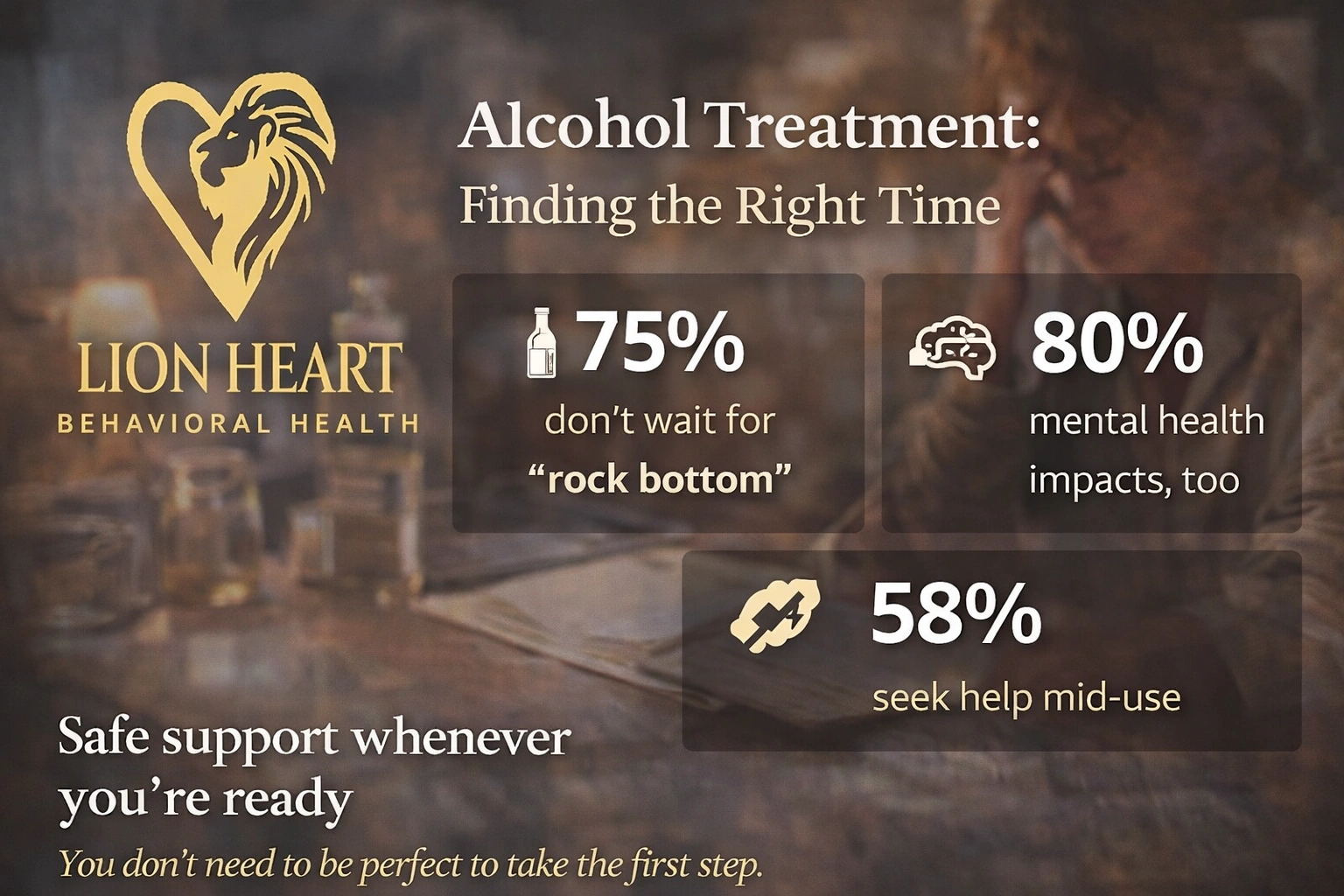
Many people wait until things get really bad before seeking help. Not because they want to—but because they think they have to.
They wait for a rock bottom that keeps shifting. They wait until the job is threatened, the relationships crack, or their health starts speaking louder than they can ignore.
But here’s the truth: you don’t have to wait until your life burns down to deserve help. You can be doing okay on paper and still be struggling. You can be high-functioning and still in pain.
We’ve worked with people in every stage of readiness—from those in deep crisis to those who simply don’t want to live like this anymore. The earlier you ask for help, the more space you give yourself to recover before things unravel further.
Letting Go Without Losing Yourself
One of the deepest fears people have is that sobriety will erase who they are.
They worry they’ll lose their social circle. Their spark. Their edge. That life will get smaller, not better.
But what we’ve seen, time and again, is the opposite.
Sobriety doesn’t erase you—it reveals you.
You rediscover joy that doesn’t come with a hangover. Confidence that isn’t followed by shame. Connection that’s real, not just buzzed.
And in the right treatment program, we help protect that. We help you remember that the real you—the one who wants more, who’s reading this right now—is still in there. And they’re worth fighting for.
Real Change Takes Safety and Structure
There’s a reason treatment works for so many people. It’s not about magic or quick fixes. It’s about giving your nervous system a break from survival mode.
Treatment creates a container—a place where you don’t have to perform, manage, or explain. Where you can focus on your healing instead of keeping up appearances.
And once you have that space? Change starts to feel possible. Not easy. But possible.
Life After Treatment Isn’t Perfect—It’s More Honest
We won’t lie to you. Life after treatment isn’t suddenly blissful or conflict-free. But it’s clearer.
You’ll still have hard days. But you won’t face them alone or unarmed. You’ll have tools. Language. Boundaries. Awareness. Maybe even hope.
And for many, that’s more than they’ve had in years.
If you live in Raynham, MA, you already know what it feels like to live in a small community where everyone seems to be watching. That pressure to appear “fine” can be exhausting. But change doesn’t require public declarations or dramatic exits. It just asks for one honest step forward.
And for those quietly struggling in New Bedford, MA, you’re not the only one. You’re not broken. And you’re not out of options. Reaching out isn’t weakness—it’s one of the most human things you can do.
FAQs
Do I have to stop drinking before entering the program?
No. You don’t have to be sober to start treatment. In fact, many people begin while still actively drinking. We meet you where you are and help you get stable safely.
How long does the alcohol treatment program last?
It varies based on your needs. Some start with intensive programs (like PHP or IOP), then step down to less frequent support. We work with you to build the right path.
What if I’ve tried to quit before and failed?
You’re not alone. Many of our clients have attempted sobriety before. That doesn’t mean you can’t recover—it just means you need a new approach and stronger support.
Will I lose my job if I go to treatment?
Many employers protect time off for treatment under FMLA or medical leave policies. We can help you navigate those conversations discreetly if needed.
What if I’m not ready to quit forever?
That’s okay. You don’t have to commit to forever. You just have to be open to trying something different now.
You Don’t Have to Know Everything to Begin
Change doesn’t start with a grand decision. It starts with a quiet yes. Call (774) 341-4502 to learn more about our alcohol treatment program in Bristol County, MA.