
You graduated the program. Maybe you were all-in. Maybe you just wanted the panic attacks to stop. Either way, you did the thing. And for a while? It worked. Life got quieter. Your nervous system stopped screaming. You could finally breathe.
But now—months or even years later—you’re left with something else. Not the chaos of anxiety, but a strange stillness. You feel flat. Disconnected. Not in crisis, but not…alive either. And worst of all, you’re asking yourself a question no one warned you about:
“Is this all there is?”
If this is you, you’re not alone. Many long-term alumni of an anxiety therapy program hit this exact wall. And it doesn’t mean you failed. It means your healing is evolving—and that’s where things get real.
1. When the Symptoms Stop, the Silence Starts Talking
Early recovery from anxiety is noisy. You’re learning skills, facing fears, managing symptoms. It’s a full-time job. But when the immediate crisis passes, the silence can feel louder than the panic ever did.
You might find yourself missing the urgency. At least anxiety had direction—it gave you something to fight. Now? You’re left with questions that therapy didn’t quite answer:
- Who am I without anxiety?
- What do I actually want out of life?
- Why do I still feel disconnected?
This phase isn’t a regression. It’s a shift. When you’re no longer surviving, your brain finally has the capacity to look around and say, “Okay… now what?”
2. You’re Not Weak for Needing Support Again
You already “did” therapy. You went through the worksheets, learned the CBT tools, made it through exposure exercises. So why are you still struggling?
Here’s the truth no one talks about: needing help again doesn’t mean you failed. It means you’re ready for different work.
Early anxiety treatment focuses on stabilization—getting your body and brain out of constant alarm. But once that happens, many alumni realize they need more:
- Processing the grief of years lost to fear
- Exploring unresolved trauma that therapy initially skipped
- Rebuilding trust with your own intuition, after years of doubt
This is deep work. And most of us can’t do it alone. That’s not regression. That’s maturity.
3. Emotional Numbness Isn’t Failure—It’s a Nervous System Reset
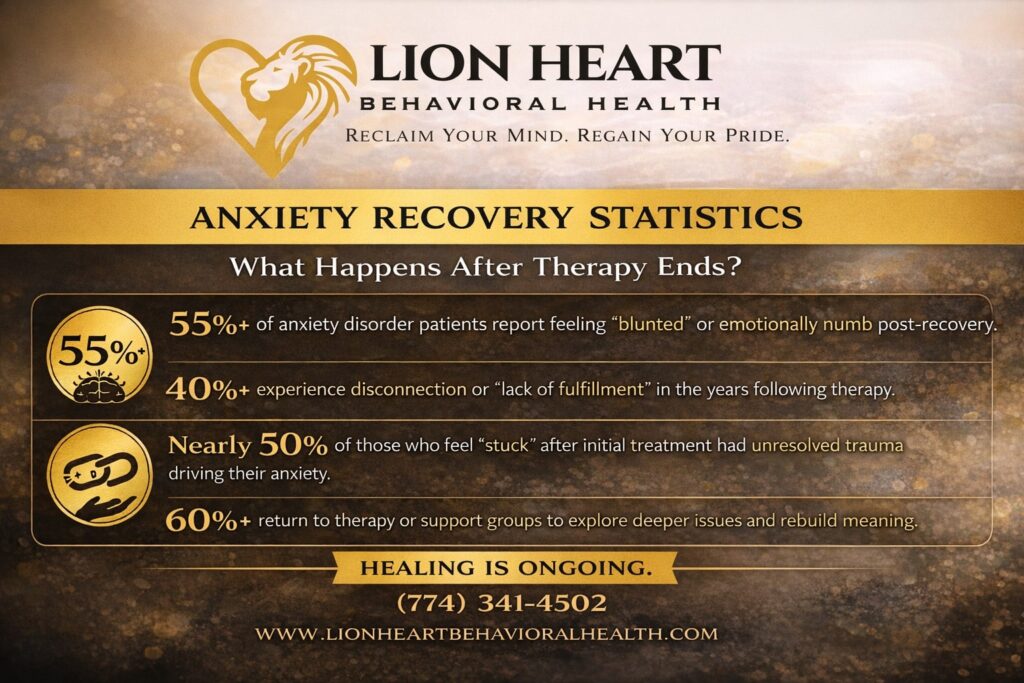
Feeling emotionally “blah” after treatment is surprisingly common. You’re not panicking anymore, but you’re not excited either. Everything just feels… muted.
This numbness doesn’t mean you’re broken. It often means your nervous system is still adjusting.
When you’ve lived in a high-alert state for years, calm can feel like a void. The absence of fear doesn’t immediately equal the presence of joy. That takes time. And it usually requires emotional reconnection—through relationships, creativity, and yes, sometimes returning to therapy for deeper exploration.
“I thought therapy would make me feel more alive. But after it ended, I just felt blank. Turns out that was my body finally feeling safe—and I had no idea what to do with that.”
— Alumni Client, 2022
4. You Might Be Missing Structure, Not Progress
One of the quiet benefits of an anxiety therapy program is structure. Weekly check-ins. Skills practice. A defined sense of purpose.
When that ends, life can feel shapeless. You’re on your own again, expected to “just live” without the scaffolding that helped you grow.
This isn’t weakness. It’s human. Especially for those of us whose anxiety gave our lives structure—constantly preparing, scanning, overthinking.
You may need to rebuild new forms of structure:
- A therapist or group for long-term support
- Purposeful routines that include creative or social connection
- Anchors like journaling, meditation, or movement
Don’t confuse missing the program with needing to go back to the beginning. Sometimes you just need new scaffolding for the next stage.
5. Growth After Healing Looks Subtle—But It’s Real
One of the hardest lessons alumni learn? Growth gets quieter over time.
In early recovery, progress feels dramatic: the first panic-free day, going to the grocery store alone, getting through a flight without meds. But eventually, the milestones get smaller—and that can feel like stagnation.
But it’s not. In fact, subtle growth is often the most profound.
- Choosing rest without guilt
- Feeling an emotion and staying with it instead of avoiding
- Setting a boundary that doesn’t feel like war
These aren’t fireworks. They’re bricks. And brick by brick, they rebuild a life that anxiety once tried to control.
6. Feeling “Hollow” Might Be the Doorway to Something Bigger
That spiritual flatness so many alumni feel? The “I’m not anxious, but I’m definitely not okay” feeling?
It’s a signal—not a symptom. It’s your brain asking for more meaning now that survival isn’t the only priority.
This is the part of recovery where you may start exploring:
- Spirituality or purpose
- Creative expression
- Identity work
- Deeper, more honest relationships
If you’re in or near Raynham, MA, or looking for ways to reconnect, there’s no shame in seeking support again. Many long-term alumni rediscover meaning by returning to community-based work—or even seeking a different kind of therapeutic engagement. Those near New Bedford, MA and Bristol County have options nearby.
FAQ: Long-Term Alumni + Anxiety Recovery
Is it normal to feel flat or numb after finishing therapy?
Yes. It’s common for the brain to enter a state of low stimulation after extended periods of anxiety. That “blah” feeling isn’t regression—it’s a nervous system recalibrating. You’re not broken. You’re adjusting.
How do I know if I need more therapy after completing a program?
Ask yourself:
- Do I feel emotionally disconnected or spiritually stuck?
- Am I struggling with meaning, identity, or long-term patterns?
- Do I miss the structure and support I once had?
If the answer is yes to any of those, you’re not failing—you’re evolving. Many alumni seek deeper support as a second phase of healing.
What kind of therapy helps after anxiety symptoms have improved?
You might benefit from:
- Trauma-informed therapy to address underlying wounds
- Somatic work to reconnect with your body
- Psychodynamic or narrative therapy to explore identity
- Group or alumni programs that provide community and structure
Can I go back to therapy even if I’m “functioning fine”?
Absolutely. High-functioning doesn’t equal fulfilled. Therapy isn’t just for crisis—it’s for growth, connection, and long-term alignment.
Are there programs near me that support long-term alumni?
If you’re in the South Shore area, Lion Heart Behavioral Health provides anxiety therapy services in Raynham and serves surrounding communities like New Bedford and Bristol County. Whether you’re looking for continued care or reentry support, they can help.
📞 Still Feeling Off? Let’s Talk.
You don’t need to hit rock bottom to reach out. If you’ve completed an anxiety therapy program but feel stuck or disconnected, you’re not alone—and you’re not done healing. Call (774) 341-4502 or visit our program page to learn how Lion Heart Behavioral Health supports long-term alumni in Raynham, Massachusetts and beyond.