
There’s a quiet shift happening. More and more people are asking not just “Do I have a problem?”—but “What’s really behind my habits?”
If you’re curious about your relationship with substances, you don’t have to wait for a crisis to explore healing. For many, EMDR Therapy becomes a turning point—not just for trauma recovery, but for building a more conscious, grounded connection to yourself.
At Lion Heart Behavioral Health in Raynham, Massachusetts, we use EMDR to help you understand what’s underneath the surface—without shame, pressure, or assumptions.
Trauma Isn’t Always Obvious—But It Often Drives Coping Behaviors
You don’t need a dramatic backstory to have trauma.
For many people, trauma looks like:
- Being told you were “too sensitive” as a child
- Growing up in a home where emotions weren’t safe
- Experiencing betrayal or emotional abuse in relationships
- Feeling chronically anxious, on edge, or not good enough
These experiences can leave deep imprints on your nervous system—even if your mind rationalizes them away. You might say, “It wasn’t that bad,” or “Other people had it worse.” But your body remembers—and sometimes, it copes in ways that aren’t fully conscious.
Substance use can become a way to self-soothe, slow down racing thoughts, or feel briefly “okay” in your skin. That doesn’t make you weak. It means something inside you was hurting—and found a way to survive.
EMDR Works on the Root, Not Just the Symptom
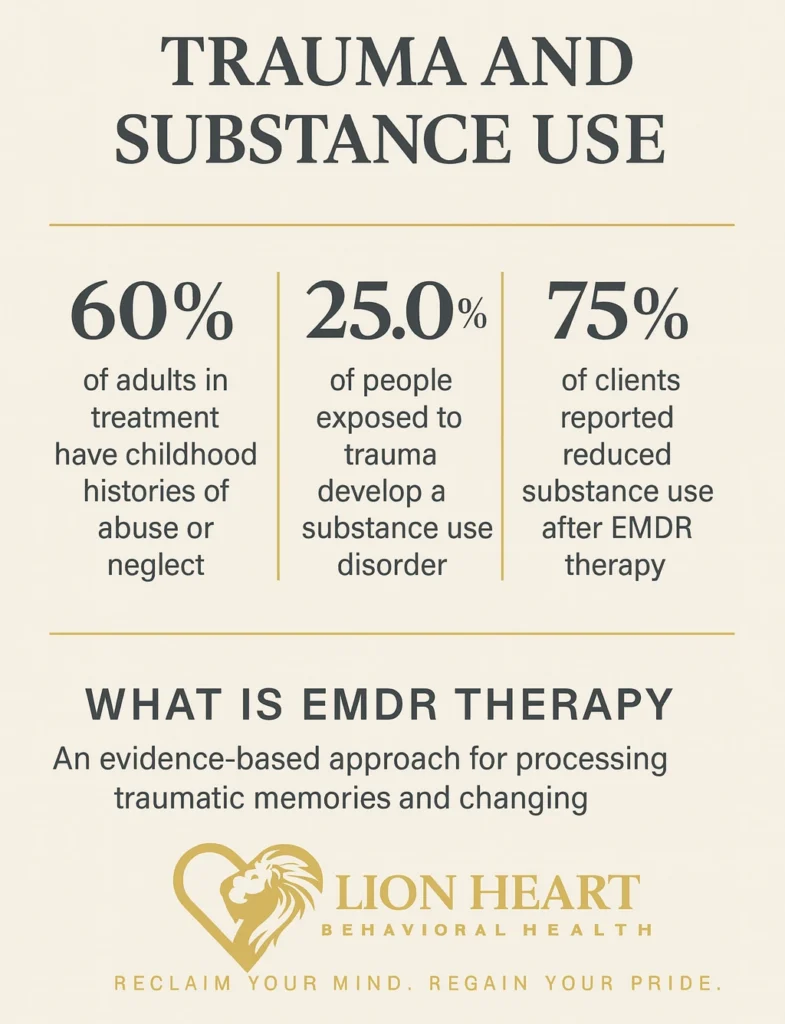
EMDR (Eye Movement Desensitization and Reprocessing) is a powerful trauma therapy that helps your brain reprocess painful memories, beliefs, and sensations—without needing to talk about everything in detail.
Instead of reliving trauma, EMDR uses bilateral stimulation (such as guided eye movements or tapping) to help your brain and body finally release what’s been stuck.
Clients often say it feels like finally being able to finish an emotional sentence that’s been trapped for years. You’re not just “coping better”—you’re actually healing the wound.
Sober Curiosity Is a Form of Self-Trust—EMDR Can Support That
If you’re not sure whether you “need” therapy or if your drinking or use is “bad enough,” you’re not alone. Sober curiosity doesn’t require a rock bottom moment. It’s about choosing to live with more clarity, presence, and agency—even if your relationship with substances isn’t extreme.
EMDR can be part of that exploration. It doesn’t label you. It simply helps you understand:
- What emotional needs substances may be meeting
- Where your patterns started
- What your body and mind still carry from earlier experiences
From that place of insight, you can make more grounded, self-connected choices—whether that means cutting back, staying sober, or simply feeling more emotionally regulated.
How EMDR Therapy Can Help You Reconnect to Yourself
Trauma doesn’t just live in the past—it shapes how we see ourselves. You might carry quiet beliefs like:
- “I’m too much.”
- “I’m not safe unless I’m in control.”
- “If I slow down, I’ll fall apart.”
These beliefs can drive perfectionism, emotional numbing, or substance use. EMDR gently helps untangle those messages so you can begin to feel:
- Safer in your body
- Less reactive in relationships
- More able to sit with emotions—without needing to escape them
Healing doesn’t mean becoming someone new. It means finally getting to feel like yourself—without the static of old pain or coping habits running the show.
What EMDR Looks Like at Lion Heart Behavioral Health
We know it can feel vulnerable to start something new—especially something like trauma therapy. That’s why our EMDR sessions are built on safety, consent, and collaboration.
Here’s what you can expect:
- A gentle, nonjudgmental intake process
- A therapist who moves at your pace—not the clock’s
- Options for in-person EMDR in Raynham, or telehealth when appropriate
- A focus on your goals, not ours
You don’t have to commit to anything long-term up front. You can try a session. Ask questions. Feel it out.
Looking for EMDR Therapy in Raynham or Nearby?
If you live in Raynham, MA, New Bedford, MA, or anywhere in Bristol County, you have access to compassionate EMDR care that respects your pace and your story.
FAQ: EMDR and Sober Curiosity
What if I’m not sure I have trauma?
That’s okay. You don’t need a specific trauma event to benefit from EMDR. Many people use it to work through stress, emotional patterns, or lingering memories that still feel unresolved—even if they don’t call it “trauma.”
Can I do EMDR if I’m still drinking or using sometimes?
Yes. EMDR doesn’t require complete sobriety. Your therapist will talk with you about what feels safe and helpful for your process. We work with people at all stages—whether you’re cutting back, curious, or newly sober.
Do I have to talk about everything that happened to me?
No. One of the strengths of EMDR is that you don’t need to tell your full story out loud. You can process trauma internally while still receiving guidance and support from your therapist.
How many sessions does EMDR take?
It depends on your goals and what you’re working on. Some people find relief in just a few sessions, while others continue for a longer period. We move at the pace that works for you.
Is EMDR covered by insurance?
At Lion Heart Behavioral Health, we accept many insurance plans and offer flexible payment options. Our team can help you check your benefits and understand your options.
📞 Let’s Explore This—Together
If something in this spoke to you, maybe that’s worth listening to. Healing doesn’t have to wait until you’re in crisis. Call (774)238-5533 or visit our EMDR Therapy program in Raynham, Massachusetts to learn more. No pressure—just support, clarity, and a safe place to start.