

You’re doing what needs to be done. Maybe you’re even successful on paper—career, family, responsibilities all intact. You’re functioning. But behind that performance, you’re asking a quiet, persistent question:
Is this drinking actually a problem?
That question doesn’t come out of nowhere. And it doesn’t show up unless something inside you already knows it’s time to look closer. This isn’t about shame. It’s about honesty—the kind that frees you, not burdens you.
Let’s unpack it.
“If I’m high-functioning, can it still be addiction?”
Yes. Let’s start there. Yes.
You can maintain your job, hit the gym, make dinner, coach little league—and still have a serious alcohol problem. High-functioning alcoholism doesn’t look like what most people imagine. It’s rarely chaotic or public. It’s discreet. Predictable. Controlled-looking.
But it comes with real consequences, even if they’re invisible to others:
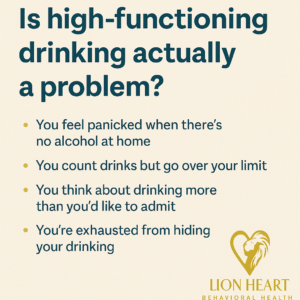
- You feel panicked when there’s no alcohol in the house.
- You count drinks but always go over.
- You think about drinking more than you want to admit.
- You’re exhausted from hiding how much, how often, or why.
Functioning isn’t the measure of health. Coping isn’t the same as healing. And “still managing” doesn’t mean well. That’s why so many people benefit from Alcohol Treatment Programs in Massachusetts that are built for those who look like they’re doing fine—but know something’s not right inside.
“What are the signs I might actually need treatment?”
You don’t need to hit bottom. You don’t need to lose everything. You just need to notice what’s already slipping:
Signs it might be time to explore alcohol addiction treatment:
- You’ve set limits—and broken them.
- You wake up promising to cut back, but the evening tells a different story.
- You’re the only one who knows how much you’re drinking.
- You use drinking to soften the edge of anxiety, loneliness, or burnout.
- You’re not sure who you are without it—and that scares you.
If drinking is the thing you look forward to most—and regret the most—you’re not alone. And you don’t have to stay in that loop.
“Why do high-functioning drinkers hesitate to get help?”
Because the world rewards performance.
If you’re not falling apart, if you’re checking the boxes, if you’re making it look easy—who’s going to challenge it?
The idea of needing help feels dramatic. Embarrassing, even. But addiction isn’t always a scene. Sometimes it’s quiet, hidden under routines, masked by “I’m fine.”
Treatment isn’t about being broken. It’s about being ready.
“What kind of treatment is available in Raynham, MA?”
At Lion Heart Behavioral Health, we offer options that respect your reality. We know you may have a career, a family, or a life that doesn’t allow you to pause everything. That’s why we tailor care around you—not the other way around.
Programs we offer:
- Outpatient Alcohol Treatment: Get evidence-based support while maintaining your schedule.
- Day Treatment / Partial Hospitalization: For deeper structure when you’re ready to face the roots.
- Individual Counseling: One-on-one sessions that go beyond just “stopping”—they help you understand why you drink in the first place.
You don’t need a label. You just need to be tired enough of what’s not working.
“What happens if I wait too long?”
Waiting often means one thing: escalation.
The secrecy gets heavier. The shame grows. The line you swore you wouldn’t cross creeps closer. Relationships suffer—not in explosions, but in erosion.
It’s like watching a house rot from the inside while the paint still looks fresh. And by the time others notice, you may feel like you’re already too far gone. You’re not. But you don’t have to wait to prove that.
Recovery is possible before collapse. You don’t need to fall apart to justify wanting more from life.
Frequently Asked Questions (FAQs)
Do I have to quit drinking forever to start treatment?
Not necessarily. Some people start treatment just to understand their relationship with alcohol better. The goal isn’t always immediate abstinence—it’s clarity, stability, and choice. At Lion Heart, we meet you where you are.
What if I don’t want anyone to know I’m getting help?
Confidentiality is a cornerstone of what we do. You’re not alone in wanting privacy. Many high-functioning clients feel the same way. We work discreetly and respectfully so you can get help without disrupting your life.
Can I still work while in treatment?
Yes. That’s one of the reasons outpatient alcohol addiction treatment is so effective for high-functioning individuals. We offer flexible scheduling that allows you to keep your commitments while getting support.
Is treatment only for “serious” alcoholics?
No. Treatment is for anyone who wants to change their relationship with alcohol. Whether you drink daily or occasionally binge, if it’s hurting your life—or just running it—you’re allowed to get support.
What if I start and decide I’m not ready?
That’s okay. Starting the conversation doesn’t mean locking yourself in. You’re allowed to explore, pause, ask questions. What matters is that you made a move toward truth.
Ready to Talk to Someone Who Gets It?
Call us at (774)238-5533 or Contact Us. At Lion Heart Behavioral Health, we understand the pressure of keeping it together—and the courage it takes to admit when you’re not okay.
You don’t have to let it get worse to get help. You just have to be done doing it alone.